
In the depths of the Covid Pandemic, the decentralised future illuminates upon the Bank of England, the foundation of the Union through the British Pound since 1694 (source)
Introduction
Part One of the essay will deal with the Past, the history of Wales as an independent Nation from Roman roots, the evolution through the Middle Ages and Gwynedd’s supremacy over the rest of Wales, up to the Acts of Union with England in 1535 and 1542 under the reign of Henry VIII, bringing to an end the Catholic and Feudal order as Wales suffers its Protestant Reformation and the multi century process of Anglicising and Britainisation of the Welsh. The essay will discuss the all important role of the British Pound, particularly since the founding of the Bank of England, imprisoning the peoples of Britain in a common Currency and Customs Union, and a monumental subsidy to enrich London and the South East of England at the expense of impoverishing the North and Midlands of England, Scotland and Wales.
Part Two of the essay will deal with the Present, and the probabilities of an independent Welsh future based on monetary systems, exploring three different options: joining the EU and Euro, breaking the Union and inventing a new Welsh Pound and monetary system, or adopting a new worldwide monetary/accounting standard in Bitcoin, before demonstrating Bitcoin as the most likely choice for breaking the Union and reversing the last five century trend of increasing centralisation and interference by London Parliamentarians and the British Government over its subjects.
Part Three will discuss the Future and Independence Strategy, encompassing Monetary Policy, Taxes and Tariffs Policy, Energy Policy, Defence, Migration, Welfare, Education, Agriculture, Agriculture, and Language, highlighting the incentive structures adopting deflationary currency will drive for strengthening Welsh Independence against Government and Cardiff Senators, and the Labour Party in Wales.
As we move further into the digital future that originated with the Internet in 1994, and has accelerated since the invention of Bitcoin and internet native money since 2009, the Twenties of the Twenty First Century will see further decentralisation of information and communication alongside the growth of digital money outside the control of governments, undermining government influence over our lives and encouraging the movement of individual, family and community sovereignty, in rebuilding a flourishing Wales from the ground up. An exciting but cathartic next decade is ahead of us!
Following the publication of this essay, the Three Parts will be published on welshmoney.blog as independent and standalone essays, to be read or dissected separately.
PART ONE: PAST
History of Wales as a Nation
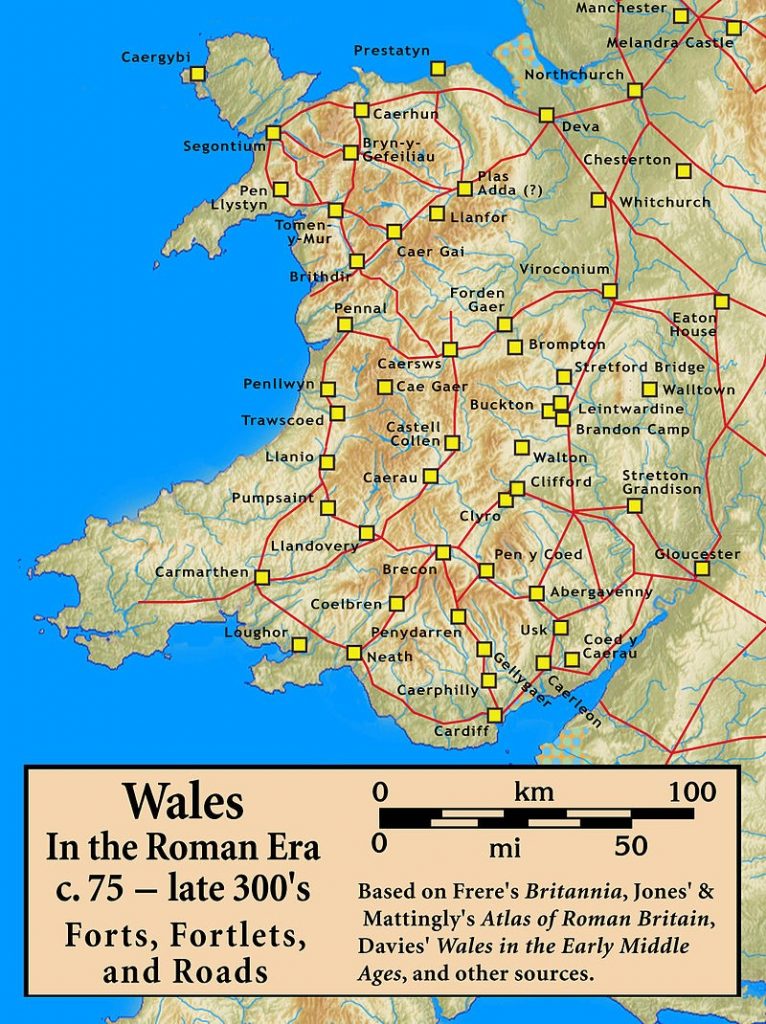
Roman Wales at the end of the Fourth Century (source)
While archaelogical evidence of people in Wales originates around 9,000 year ago, the history of Wales as a Nation is inextricably linked to the Romans following the conquering of Wales in 43 BC, in the reign of Julius Caesar. The Romans remain in Wales and Britain for over three Centuries and until the Year 383, when the slow motion demolition of the Empire on the Continent leads to their gradual withdrawal.
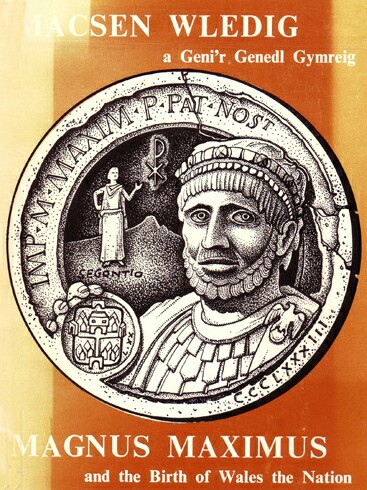
The Dream of Macsen Wledig Legend (source)
The establishment of Wales as a Nation is linked to the legend and mythology of the real life Magnus Maximus, the late stage Western Roman Emperor between 383 and 388, and the families of the Kings and Princes of Wales during the Middle Ages claim these Roman roots and lineage.
The Early Middle Ages (5th to 10th Century)
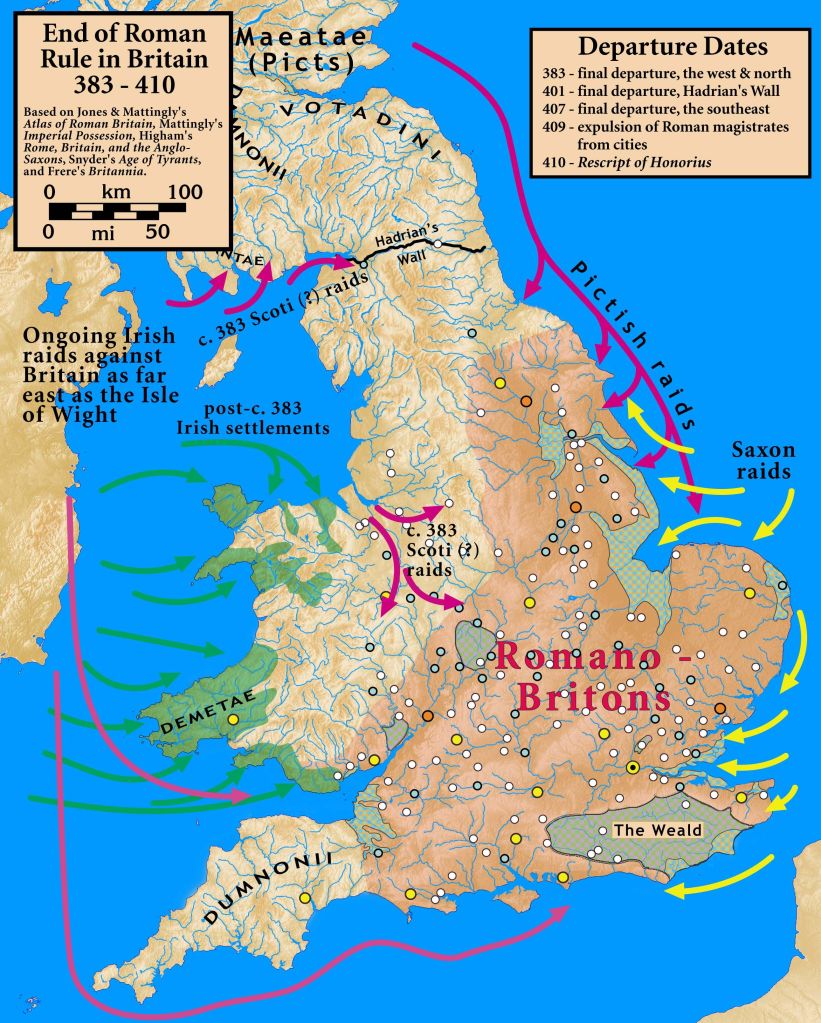
The decentralisation of the British Isles following Roman Departure (source)
Rome finally departs in the Year 410, leaving numerous regions controlling themselves distributing centralised power. Under the Romans the Welsh are already connected to Christianity, and the Age of the Saints lasts nearly three centuries from 400 AD to 700 AD, establishing churches and monasteries throughout Wales, through pioneers in Saint David, Illtud and Teilo.
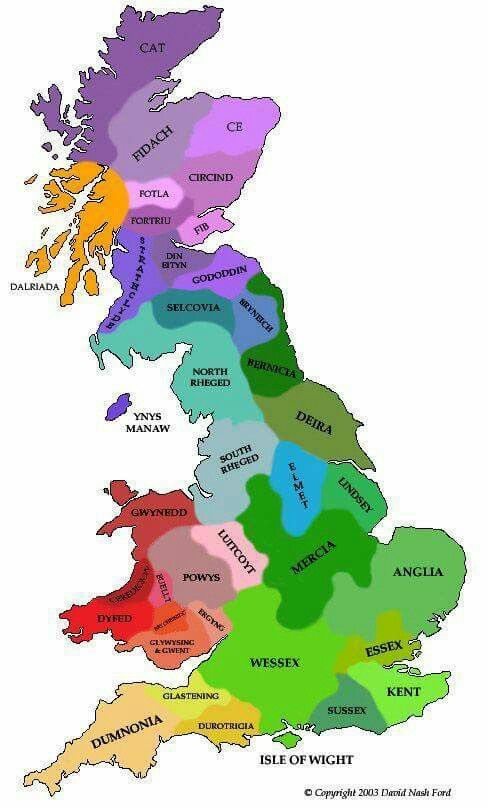
The British Isles of the Seventh Century (source)
Roman departure encourages the Continental Saxons to invade and settle in the South East of England, and the Angles in the North East, over the Seventh Century the Britons lose the territory of England, and the Brythonic disconnection of Wales, Cornwall and the Old North.
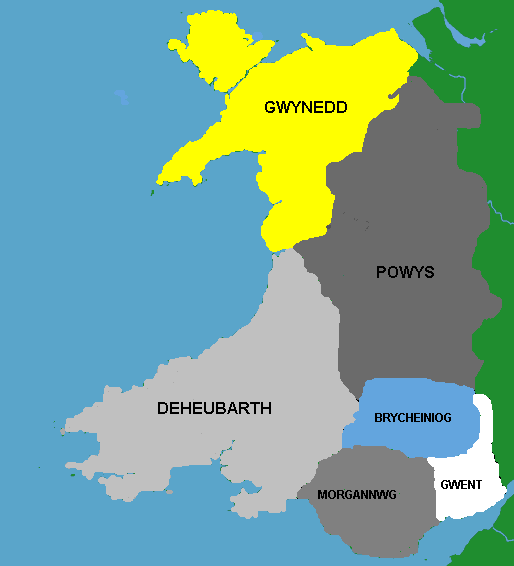
Early Welsh Kingdoms (source)
Within Wales there is a distribution of Kingdoms, the largest being Gwynedd in the North West and Powys in the East, because of the geography of Powys on the border with Mercia and their defensive battling against the English, ensures the supremacy of Gwynedd as the strongest Kingdom by the 8th Century. Despite Gwynedd’s fortitude, it is very difficult to unify Wales during this period because of the nature of Celtic Law that divided property and kingdoms between all sons, rather than Anglo-Saxon Law and the usual inheritance by the eldest son. The result is advantageous for the distribution of powers within Wales, but also at a disadvantage in weakening Wales as a defensive force against an united and more centrally controlled England.
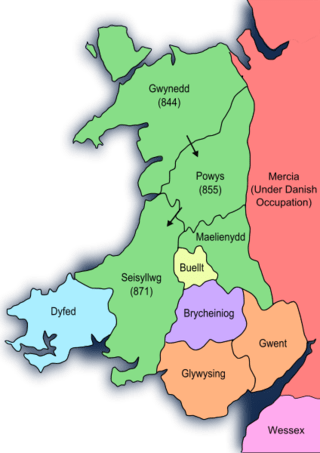
Gwynedd expands under the reign of Rhodri the Great (source)
The Ninth Century sees the rise of Rhodri the Great King of Gwynedd, who also comes to rule Powys and Ceredigion. His Grandson, Hywel Dda (Howell the Good) would create the Kingdom of Deheubarth and standardise Welsh Law, aka The Laws of Hywel, and negotiates peace with England. After the death of Hywel in 949, Gwynedd breaks away from the Kingdom.
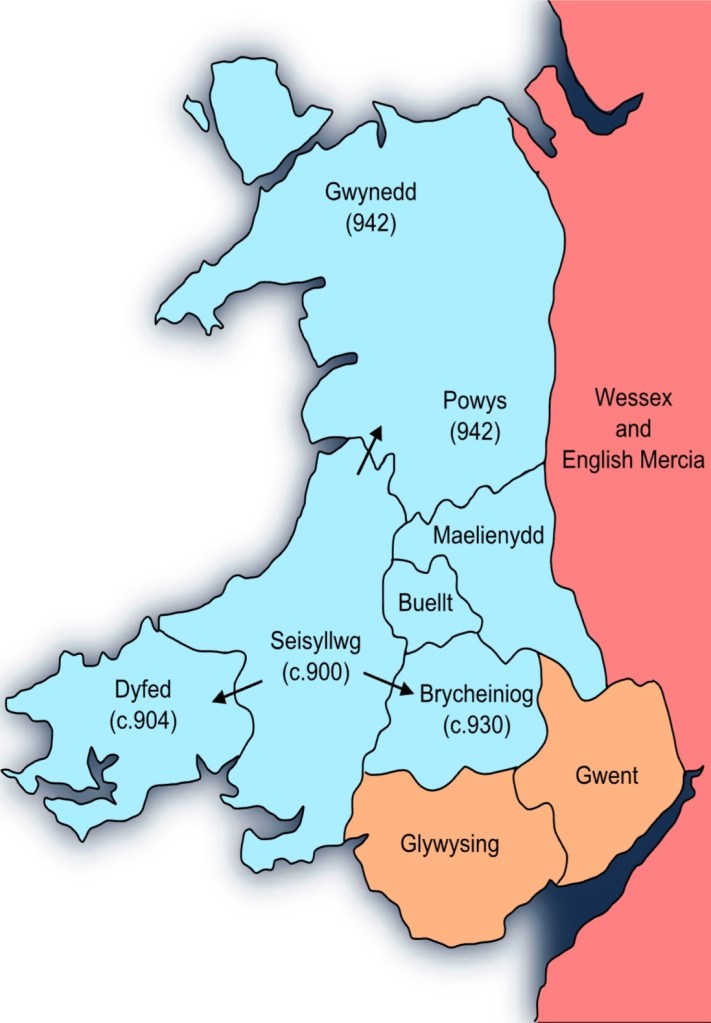
Wales is nearly unified under the reign of Hywel Dda (Source)
Late Middle Ages (11th to 15th Centuries)
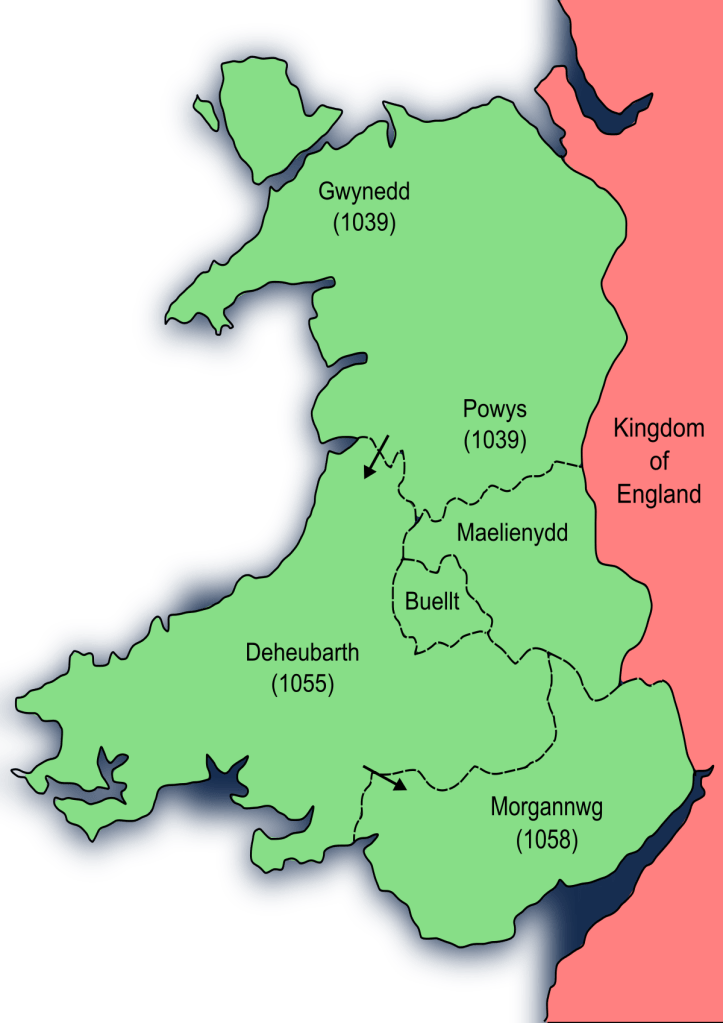
Wales is unified for seven years under the reign of Gruffudd ap Llywelyn (Source)
The only king to unify Wales is Gruffudd ap Llywelyn, who also defeats English armies winning territory from England, but only for a period of seven years between 1055 a 1063. Llywelyn is killed in 1063 by his internal enemies, after defeat by the last Anglo-Saxon king in Harold Godwinson, Wales again distributes into diverse kingdoms at the worst possible time.
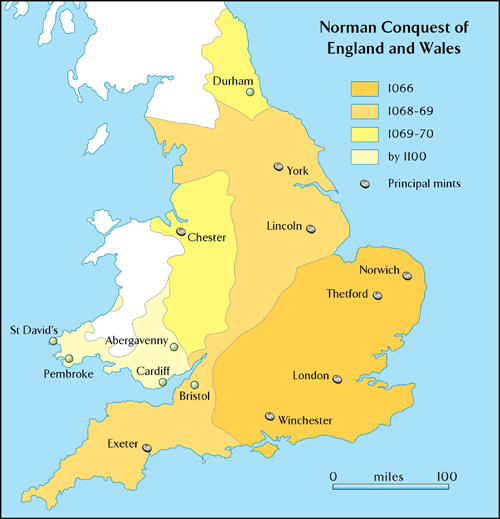
The Norman Invasion (source)
Wales suffers greatly from the Norman Invasion from 1066, and is conquered largely in its weakness, despite periodic counter-warfare in defence of Gwynedd and Deheubarth.
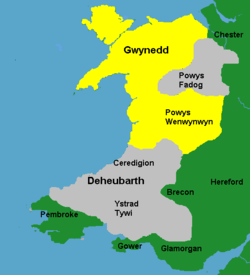

The rough borders of Wales in the Year 1217 (source)
Gwynedd again rises to prominence in the Thirteenth Century, with Llywelyn ab Iorwerth (Llywelyn the Great) Prince of Wales in 1195, and by his death in 1240 ruled most of Wales.
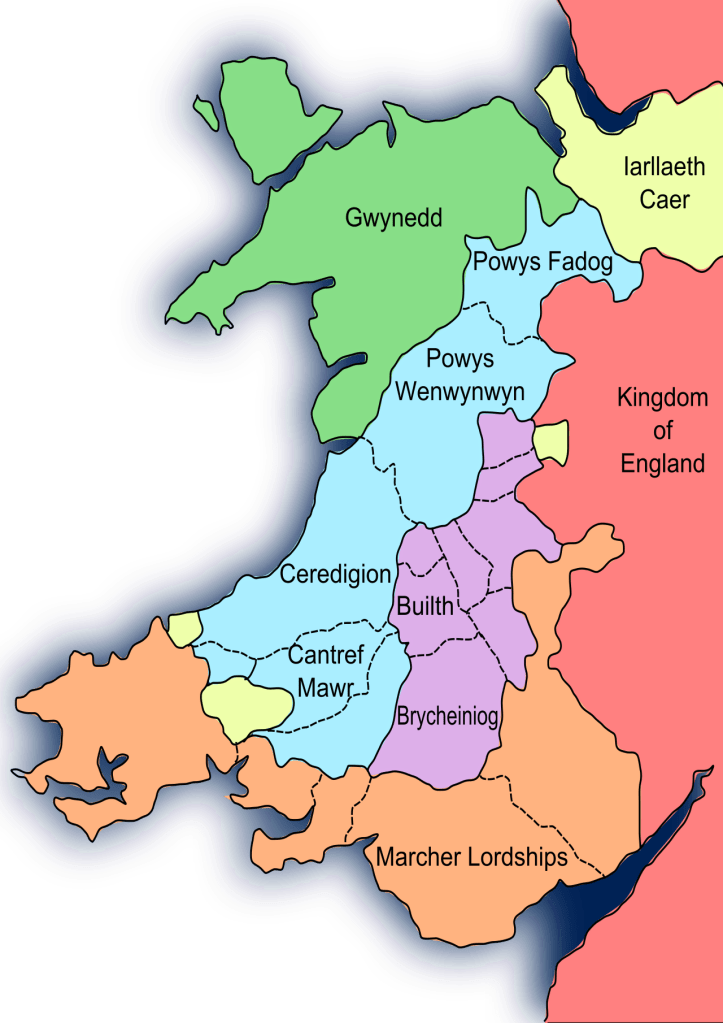

Welsh borders following the Treaty of Montgomery (source)
After a period of internecine squabbling, would see the rise of Llywelyn ap Gruffudd (Llywelyn The Last), grandson of Llywelyn The Great and the last true Prince of Wales negotiating the Treaty of Montgomery in 1267 with King Henry III of England, which unfortunately would not last long. The death of Henry and the crowning of Edward I (longshanks) would end with Llywelyn being deceived, ambushed and killed during a battle in Cilmeri in 1282.

The Ring of Iron – nine castles built at the command of Edward I to conquer and passify Gwynedd (source)
It is Edward I that ends Welsh independence and the stronghold of Gwynedd, and erecting a network of castles over North Wales to maintain control. He also decrees the Rhuddlan Statute of 1284, impinging upon the Laws of Hywel and a Constitutional change in absorbing the Welsh Principality under English Crown and Law. Longshanks crowns his conquering of Wales by making his son the first English Prince of Wales, and ever since 1301 the eldest son of the King of England has been invested Prince of Wales.
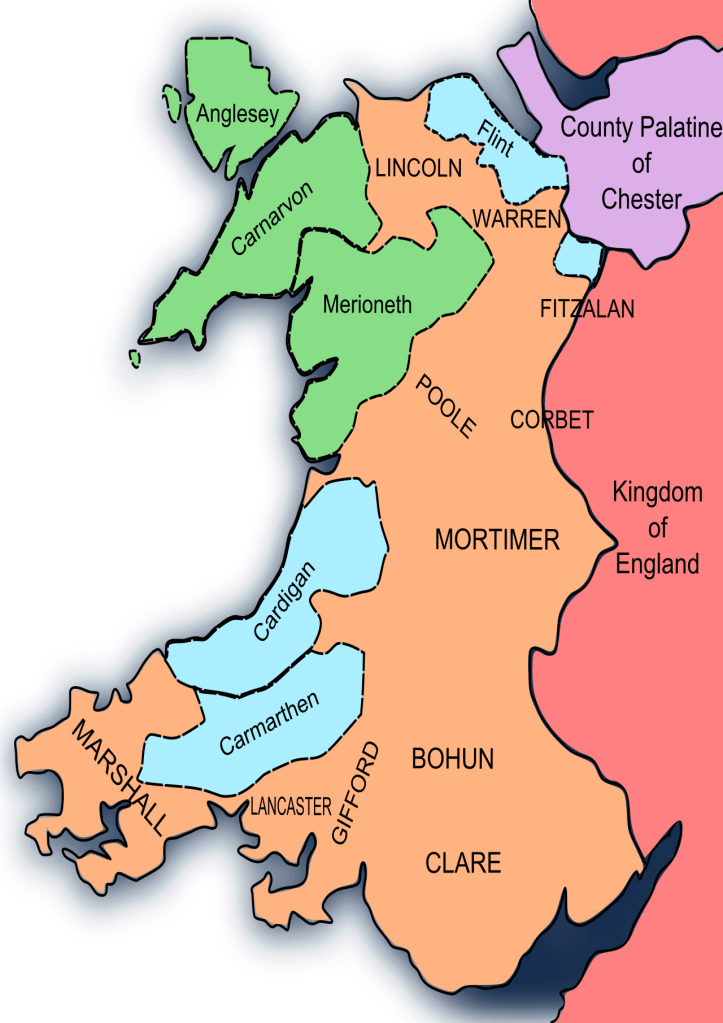

Welsh borders following the Rhuddlan Statute of 1284 (source)
Despite the end of the lineage of Gwynedd Princes with the murder of Owain Lawgoch by an English assassin in 1378, a self inheriting noble named Owain Glyndŵr rises to prominence defeating the English in a few battles, and for a short period rules Wales with the support of most of the Welsh. Owain establishes the first Welsh Assembly in Machynlleth, and plans for two Welsh Universities. Alas, the English eventually re-establish order, and Owain disappears into the shadows.

The fifteen year campaign of the “The Destined Son” against the English Crown (source)
With the beginning of Glyndŵr’s campaign, the English Parliament pass the Penal Laws of 1402, forbidding the Welsh from bearing arms, public office, or buying property in English buroughs, even though these laws would be inconsistently applied for the next century and a half.
Wales plays a prominent part in the Wars of the Roses between the Houses of York and Lancaster, in a three decade civil war over the English Crown, beginning in 1455.
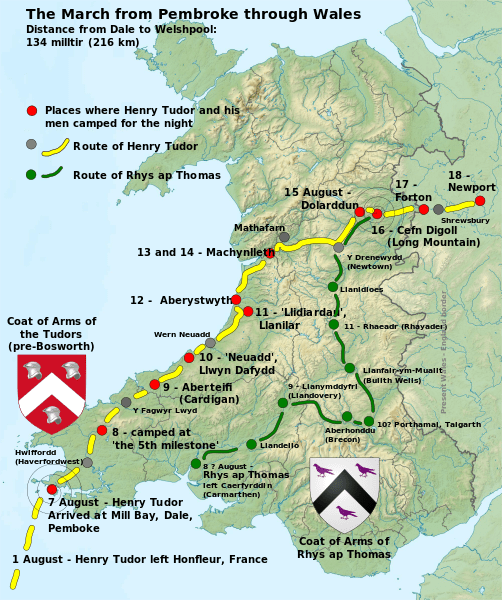
The journey of Henry Tudor from Pembroke to the English Crown, in August 1485 (source)
In 1485 Henry Tudor, of Welsh ancestry and claiming lineage from Welsh Princes such as Rhys ap Gruffydd, lands his army in Pembroke to battle for the Crown of England, with much support inside Wales. Henry’s armies defeat the forces of Richard III in the Battle of Bosworth including many Welshmen, and according to eye witnesses in Guto’r Glyn and Tudur Aled, it was Rhys ap Thomas that killed Richard. Victory promotes Henry to King of England, as Henry VII.
The Protestant Reformation
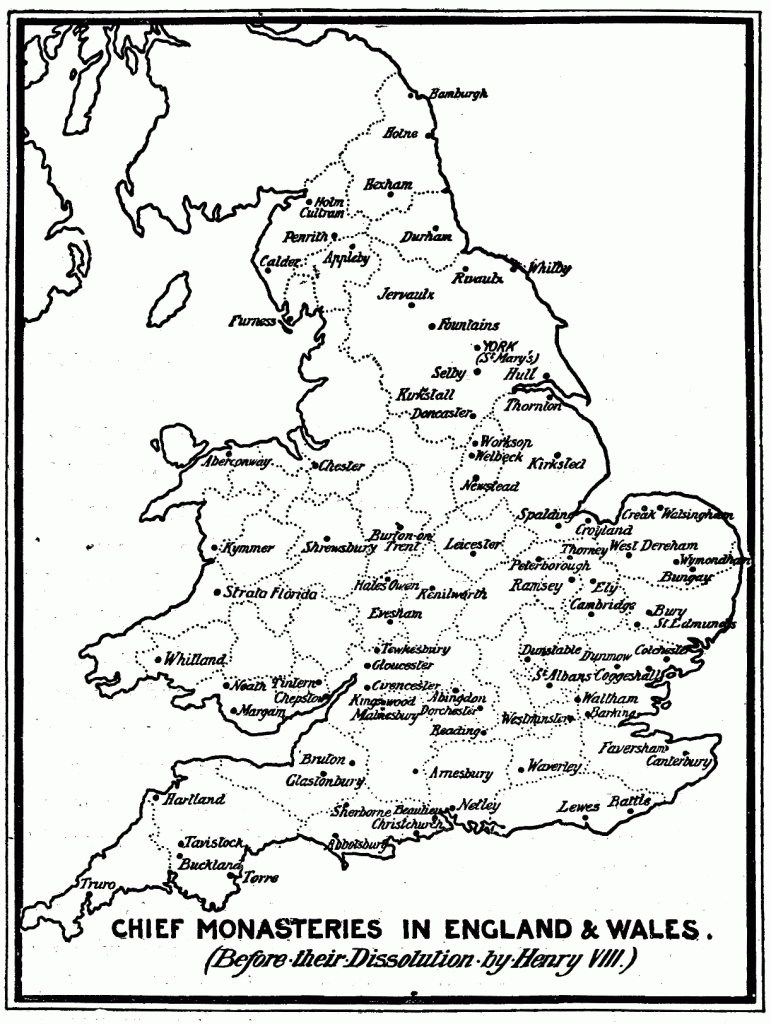
A thousand years of monastic and Catholic culture is sabotaged by a single madman (source)
We reach Henry VIII, the king that destroys the last millennium of English and Welsh history as Catholic countries, and the centrepoint of the Protestant Reformation in Britain. His divorce in search of a male heir leads to the creation of his own Church, the Church of England and Anglicanism, by stealing and destroying churches, desecrating the altars of saints, and dissolution of the monasteries of the “Old Religion’” over England and Wales. As the first king to weaponise Parliamentary powers against his enemies, and via the vandalism of Chief Minister Thomas Cromwell, the tradition of the monks end between 1536 and 1541. Henry is the first king to invade Ireland to undermine Catholic Ireland, following the Crown of Ireland Act 1542.
More importantly for Wales, Henry unifies Wales with England via the Laws in Wales Acts 1535 and 1542, extinguishing the remnants of Welsh Law and the Laws of Hywel, subjecting Wales to English Law. The Welsh Language is prohibited in official role or status, and for the first time the border between Wales and England becomes official, with the Shire/County system spread throughout Wales, for the first time giving Wales representation and Members of Parliament in London’s Westminster.

New Shire administrative order for Wales following the Acts of Union. One Member of Parliament for every Shire/County (source)
Following the vandalism of Henry VIII, Wales treads English footsteps into Protestantism and Anglicanism, with the publishing of William Morgan‘s Welsh Bible in 1588. The Bible standardises the Welsh Language and the dialects of North and South Wales, and the use of the Bible keeps the Welsh Language alive as an oral and religious language, against the creeping strength of the English Language in Wales.

Wiliam Morgan’s Bible and the main reason Welsh is still alive as a language today (source)
The Civil War – The Parliament versus the King
Wales predominantly supports the Monarchy in the Wars of the Three Kingdoms (England, Scotland and Ireland) between 1639 and 1651 against London’s Parliament, and many Welsh soldiers would fight in the armies of Charles I. After succeeding in the Civil War, Parliament publicly chops off the head of Charles I in 1649, and England (and Wales) begins the experiment as a Republic or Commonwealth. The history of Oliver Cromwell and the Roundheads are especially bloody for Britain and Ireland, persecuting Catholics and supporters of the Monarchy.
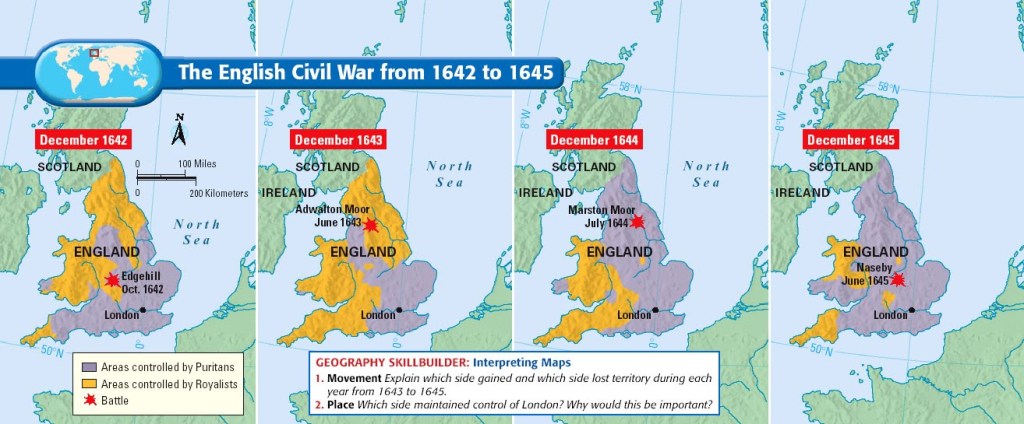
Wales remains monarchist on the whole despite Oliver Cromwell’s Welsh ancestry, and supporters like his brother in law John Jones, Maesygarnedd Member of Parliament for Meirionnydd and one of 59 signatures on the death warrant of Charles I, and the poet and author Morgan Llwyd (source)
Following the death of Cromwell there is a Restoration of the Monarchy in 1660, but tensions remain between Stuart Kings and Parliament culminating in 1688 with the Glorious Revolution, the deposition of Catholic King James II (VII) and imposition of Protestant King William III of Orange, with heavy Parliamentary backing. Catholics are forbidden from the throne under the Act of Settlement 1701, and Protestantism (and Parliament) takes over Britain once and for all.
The Pound, The Bank of England, and The Union
The Pound, Shilling and Pence (£sd) is a historical monetary standard based upon silver, established first in France by Pepin The Short (father of Charlamagne) in 755 AD, before spreading to the rest of Europe and to Britain. The pound therefore has been money in Britain for nearly a millennium before the invention of the Bank of England, with minting of coins initially by a distributed network of mints over the British Isles that eventually centralised (by Royal decrees) in the Royal Mint.
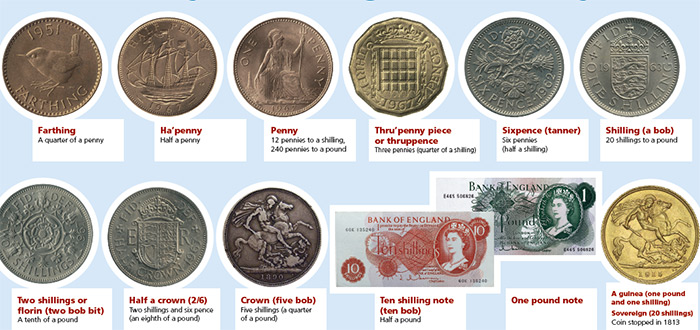
Britain’s monetary standard before Decimalisation in 1971 – Pound, Shillings and Pence. 12 pence to every shilling, 20 shillings and 240 pence in the pound. Values over a Pound became paper money (banknotes) with the development of banking (source)
Only six years following the Dutch Invasion of 1688, the Bank of Holland England is established in 1694, to finance the wars of the burgeoning British Empire against the Dutch and French Empires over the Eighteenth Century, beginning with the central planning of ironworks and agriculture.

The Bank of England’s charter and the detrimental centralisation of Britain via Pound Sterling (source)
One of the ealiest projects of the Bank of England is financing the Acts of Union between England and Scotland in 1707, enlarging a Customs and Currency Union via the British Pound. In essence, England bribes the Scottish Elite to create the Union despite centuries of prior Scottish wars to maintain independence, for the main reason that Scotland’s Government had very unsuccessfully founded a trade colony in the Darien scheme of New Caledonia (today’s Panama) that had completely failed, threatening Scotland with bankruptcy and forcing them into the Union and the Kingdom of Great Britain.
In the first half century the Bank would work on behalf of the government, in financing the Royal Navy to supervise the oceans between Britain and her foreign colonies, chiefly in America, but later in India, Honk Kong and China, the Far East the Middle East and Africa. The Bank of England initially has little direct influence over the financial system and the rest of the British banking system, that is distributed locally over Britain.
Over the Eighteenth Century however, the Bank’s influence over the financial system increases and centralises, and by the the Renewal Charter of 1781 the Bank of England has become the “banker’s bank”, with the rest of Britain’s banks using it for trade settlement, with BoE banknotes exchangeable for gold, under the Gold Specie Standard invented by Sir Isaac Newton in 1717, dislodging the Silver Standard as the metal of choice by the end of the Nineteenth Century.
The Bank Restriction Act 1797

Satirical cartoonist James Gillray lampoons London’s Parliament under Prime Minister William Pitt the Younger, for turning to the paper money printing press to finance the ruinous wars of the Empire (source)
Britain has defanged The Dutch Empire by 1800, leaving France as its biggest international rival. The bloody French Revolution decapitating Catholic Monarchy between 1789 and 1799 turns France upside down and worries Britain, and in 1793 Pitt’s Parliament declares war on France. To finance the Armies and Navies for the French Revolutionary Wars, it is decided to print an excess of Bank of England banknotes without the gold reserves in the Treasury to back them.
This fraud fractional reserve banking leads to bank runs in the North East of England late in 1796, and worsens once news spreads that French soldiers have landed in Pembroke for the Battle of Fishguard in February 1797.

The legend of Jemima Nicholas rounding up French soldiers with her pitchfork in The Fishguard Tapestry, and the last time a foreign navy invaded Mainland Britain. (source)
The bank runs spark a panic in Parliament, and to avoid bankruptcy passes the Bank Restriction Act of 1797 forcing Britain off an internal Gold Standard to print the Napoleonic Wars (1803-1815) and the chronic inflation the domestic population has to suffer to defeat France, and establish Briain as the world’s greatest Empire over the Nineteenth Century.
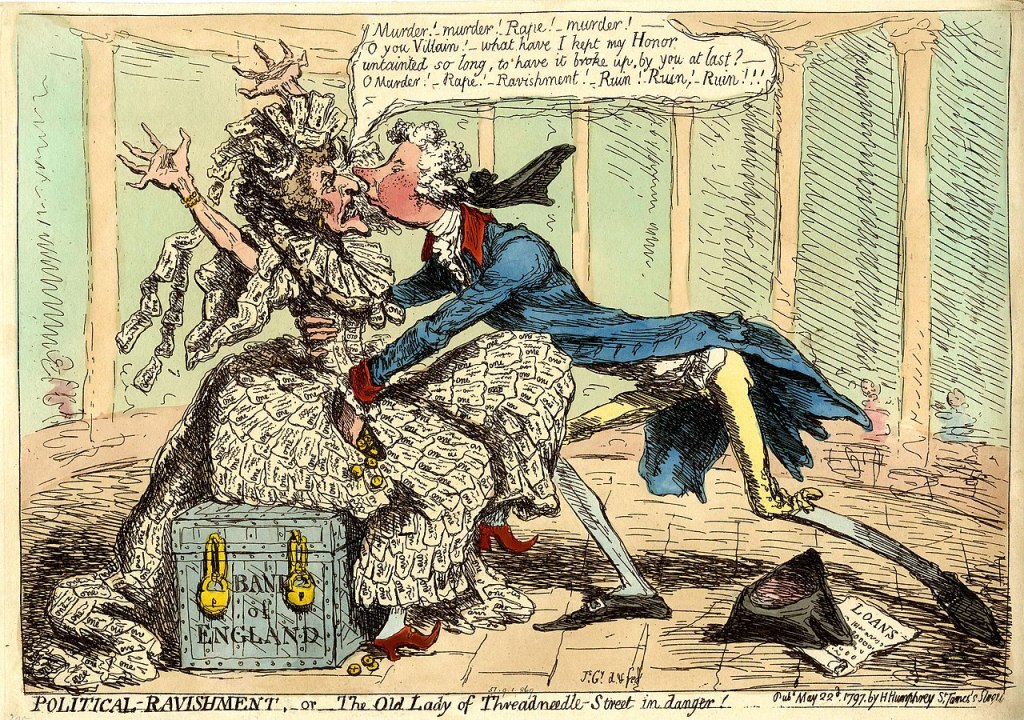
Another satirical cartoon by James Gillray mocking the fall of the Old Lady of Threadneedle Street to a back street political prostitute, seduced and ravished by William Pitt the Younger. The Bank’s historical nickname “The Old Lady of Threadneedle Street” derives directly from this artwork (source)
William Pitt’s vandalism of Britain’s monetary standards (not to mention the introduction of the first income tax in 1799) would sever the domestic gold standard for 24 years, until the 1st of May 1821, accelerating the massive changes within Britain during this generation, from English population explosion to the energy revolution and industrial and agricultural revolutions. Reneging on the gold standard is a historical pattern that repeats, and even though this was the first time for Britain it would surely not be the last…
The Industrial Revolution
(source)
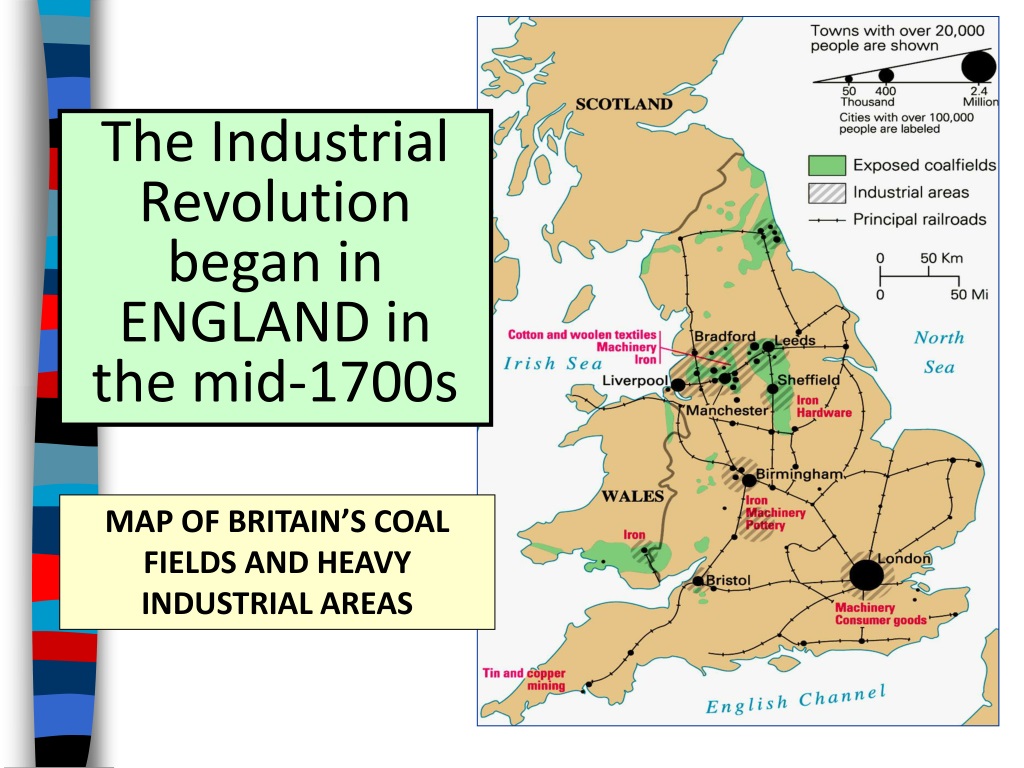
There is some disagreement on the beginning and end dates for the Industrial Revolution but roughly the Century between 1750 and 1850, barely half a Century since founding the Bank of England. The Watt Steam Engine is an important step forward in 1776, the same year as the American Declaration of Independence during the Revolutionary War of 1775 to 1783, against British Parliament and Empire.
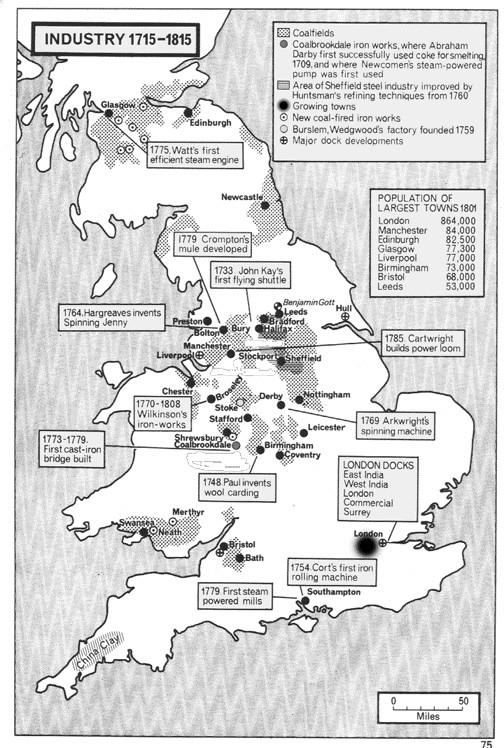
Coal, iron, steam and bank loans fuel the rise of the machines (source)
The Industrial Revolution is created out of London and the Bank of England, as it increasingly becomes a centrepoint for the British Banking system during the second half of the Eighteenth Century, accelerating with severing the Gold Standard in 1797, and explodes largely outside London and the South East, in the North and Midlands, the South of Scotland, and South Wales.
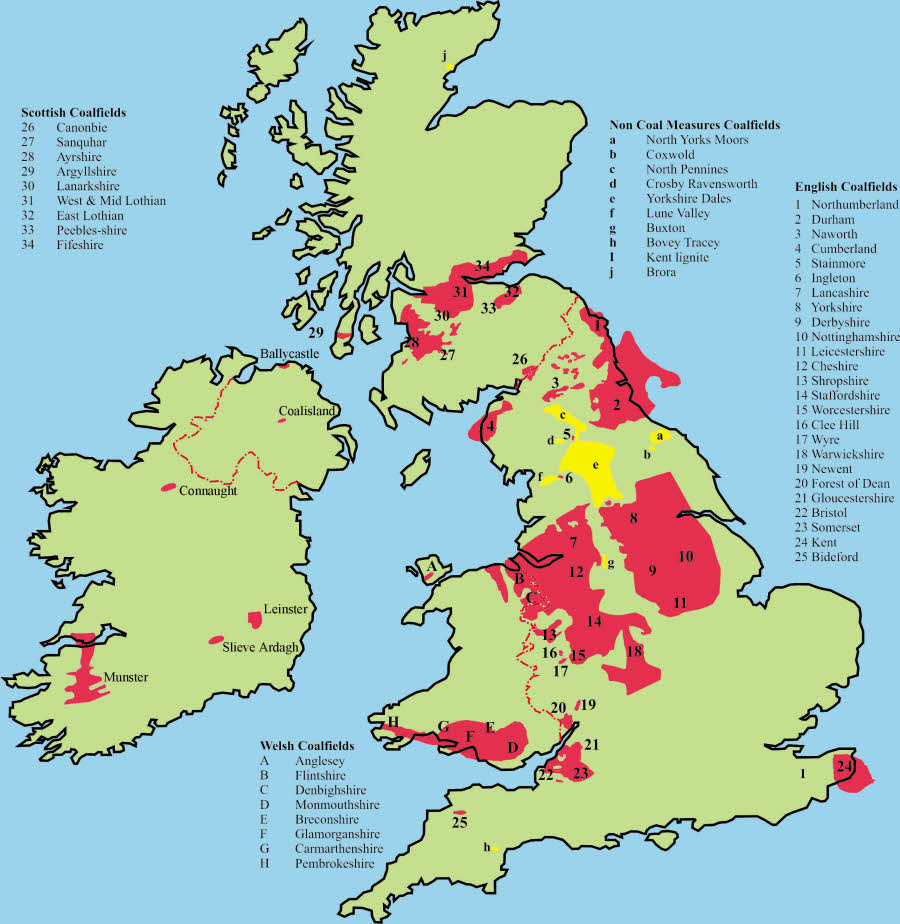
The Energy Revolution – geology and coalfields of the British Isles (source)
The energy revolution was based on geology, with discoveries and establishment of coal mines and pits to power industrial iron works over England, Scotland and South Wales. There is also an agricultural revolution, beginning to interfere with the traditional labour based rural economy, as the machines drove unemployment and migration from the countryside to create new industrial cities. In short, machines and machination explode throughout the British economy, co-inciding with England’s population explosion and the Child Labour revolution from 1800.
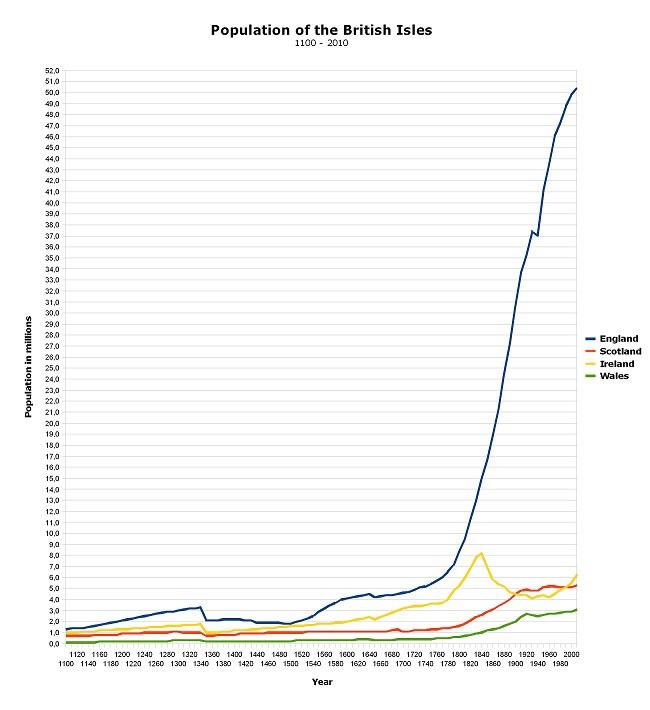
After rising on average by one million people every Century from 1100 to 1800, England’s population explodes from 8.3 million in the 1801 Census to 30 million by the 1901 Census (source)
The population explosion and rise of the machines eliminates labour, creating huge unemployment in the English countryside particularly, therefore forcing the rise of English industrial towns and a workforce for the factory system to increase the Country’s productivity, alongside the revolution in child labour to maintain families living standards due to the grinding poverty fueled by the debasement of the Pound’s purchasing power. The Industrial Revolution exhibits all the symptoms of inflation, first in the money supply and loss in purchasing power, inflating family size, the population, and demands upon energy, industry and machinery.
South Wales plays a prominent part in the Industrial Revolution, in the coal and iron industries. Following the invention of Watt’s condensing steam engine, Cornish mining engineer Richard Trevithick would develop the earliest train and railways for coal fields and iron works, two decades before public trains and railways. The first recorded steam hauled railway journey is February 1804, from the Penydarren ironworks near Merthyr Tudfil, down to Abercynon.

The Penydarren Loco – the world’s oldest locomotive in the Welsh National Museum (source)
The Industrial Revolution has enormous effects upon the power structures within Wales, away from the North and the historical supremacy of Gwynedd, down to the South Wales valleys and the industrial cities of Cardiff, Swansea and Newport. The population of South Wales explodes compared to the North, as English and other outward migration swamps the native Welsh population. By statistics, the population of South Wales doubles from half a million to over million between 1801 and 1851, and doubles again to 2.4 million by 1911.
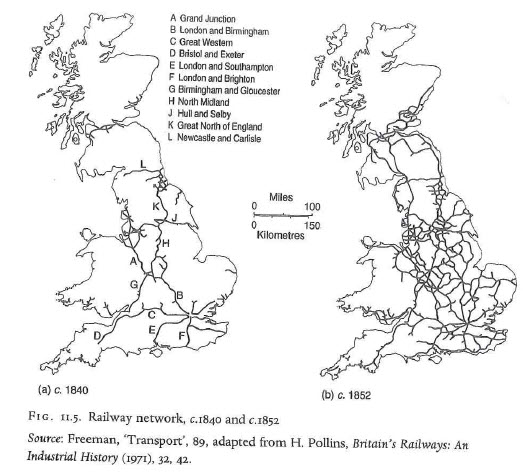
The Public Railways explode in the mid 1840’s, mostly due to the Bank of England lowering interest rates and hundreds of Parliamentary Acts passed by greedy politicians profiting from the Railway Mania (source)
The first half of the Nineteenth Century co-incides with the last half century of the Industrial Revolution in Britain, with the spread of public railways and trains, enabling tourism and immigration and the opening up of Britain, undermining localism and cultural diversity as London and Westminster politics takes more control over the infrastructure of the island. Industry and transportation also transforms Cardiff and Swansea into rich and powerful port cities of the Empire. Industrialism in its nature also centralises power and control, mostly in English hands, leading to Welsh counter-rebellion on occasion. The Merthyr Rising is one but example, in 1831 during a recession amid unemployment and low wages, the natives riot against the ironmaster William Crawshay, calling in the British Army to maintain order, and the hanging of Dic Penderyn and exile of Lewis Lewis to Australia. The rise of Labour Unions and Socialism will play an important part in the future of Wales, with Keir Hardie elected as the first ever Member of Parliament for the Labour Party in Britain, in Merthyr Tudfil in 1900.

The Red Flag symbolic of Socialism and labour revolutions, flown for the first time in Merthyr Tudfil in 1831 (source)
Under the Prime Ministership of Robert Peel, London’s vice grip over the rest of the Union via the British Pound would also strengthen. In 1844 the Bank Charter Act makes the Bank of England’s Banknotes legal tender, prohibiting any other bank from issuing their own banknotes. Even though the BoE is still an institution with private shareholders, its banknotes are nationalised throughout Britain by Parliament.
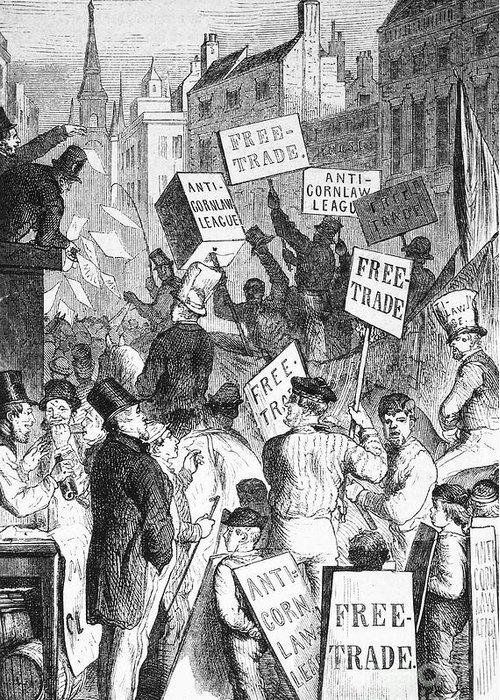
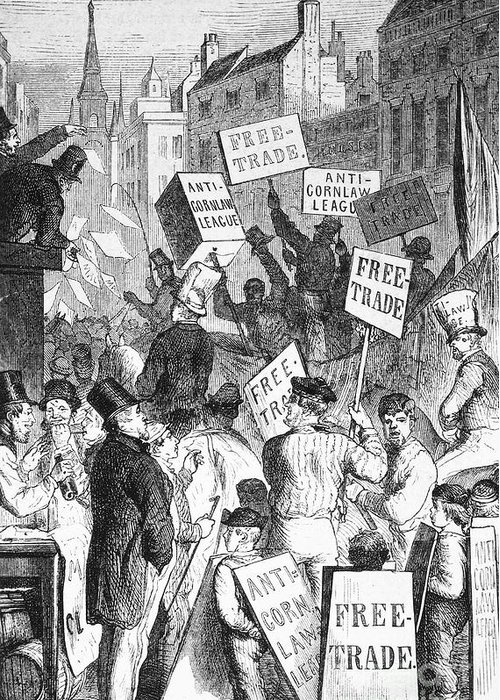
A Conservative Government turns its back on Mercantilism, and takes the Liberal path towards Free Trade (source)
Additionally, in 1846 a Conservative Government repeals the Corn Laws splitting the Party and forcing the resignation of Peel, the shift toward Free Trade and promotion of financial flows into Pound Sterling and London as the World Reserve Currency and Financial Centre of the Nineteenth Century, while undermining the long term by running trade deficits with its two main international competitors, Germany and the US.
Indeed, in 1850 the British economy is twice the size of the United States but by 1900 the British economy is half the size of the US, and the same size as Germany who under the Chanchellorship of Otto von Bismarck following the founding of the German Empire in 1871, had adopted Mercantilism and the American System of protective tariffs on imports. The by-product of a half century of Free Trade was to build up the economic forces of the two main countries that would end the hegemony of Britain as the world’s biggest Empire in the First World War.
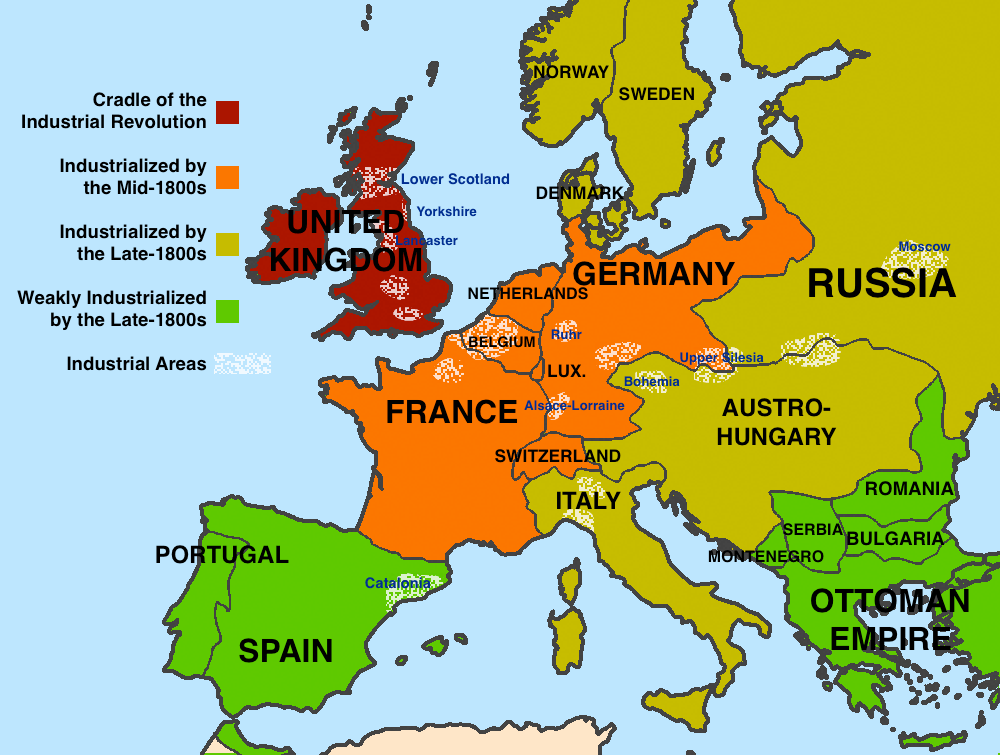
The Nineteenth Century witnesses the export of the Industrial Revolution, Empire and Central Banking to the rest of Europe and the United States (source)
The Twentieth Century
With the growth of the German Empire by the beginning of the Twentieth Century to the same size as Britain, they have become a threat. Germany would have likely defeated France and Russia in a continental war enlarging their empire a little to the West and East, but Britain as the world’s foremost Empire creates the First World War by joining the Allies to halt the further growth of Germany.
Britain and Europe abandon the Classical Gold Standard, extending the War from six months to a genocidal four years that destroys the Monarchical governing structures of Europe, destroys Britain’s future as the World’s biggest Empire, and establishes its dependence on the United States to win wars and the gradual transition of the world’s policeman over the Atlantic.

An estimated 35,000 Welshmen are killed in the First World War (source)
The evidence of the destruction of the First World War can still be seen today, in every cemetery in the villages, towns and cities of Britain and Europe, the genocide of a generation of Europe’s finest men, plunging a generation of families into grief and poverty, the first industrial war, and the destruction of an economy via inflation and shortages. Thanks to the warmongering Winston Churchill and David Lloyd George, dragging Britain into the war that cripples its future.
The inter-war years are hard times for Wales after losing so many men in the war and in every village, as poverty increases over the period. The Labour Party replaces the Liberal Party in the industrial valleys and population centres of South Wales, as Socialism and Labour Unions takes hold, and essential to the growth of the Labour Party and the Nationalisation of Welsh and British industry to come.
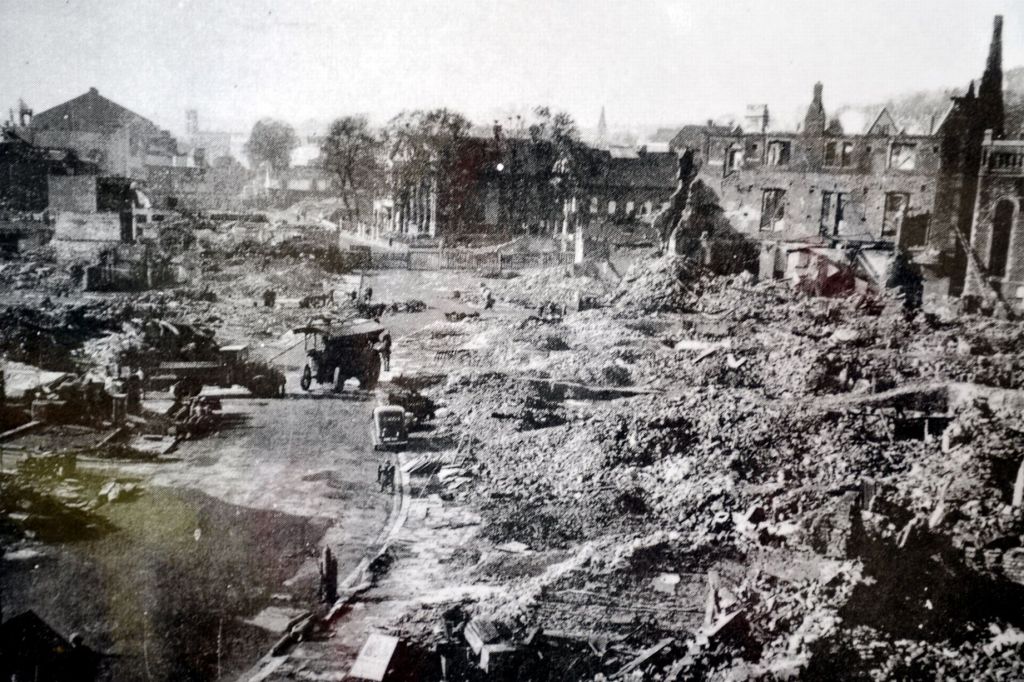
In addition to losing an estimated 15,000 Welshmen, the Second World War comes home through the bombing raids of the German Wehrmacht targeting British infrastructure, especially the port cities of Swansea and Cardiff (source)
The Second World War destroys the populations and countries of the UK, Europe and Russia for the second time in a quarter of a Century, leaving Britain essentially bankrupt as Pound Sterling and the Bank of England cedes World Reserve Currency status to the United States and the Federal Reserve. The US establishes the Gold Exchange Standard aka the Bretton Woods System, fixing the gold price at $35 an ounce, with the British Pound being exchanged for it. To rebuild Britain and Europe following the war, the US finances the Marshall Plan with Britain receiving a £5 billion loan, 26% of the total.
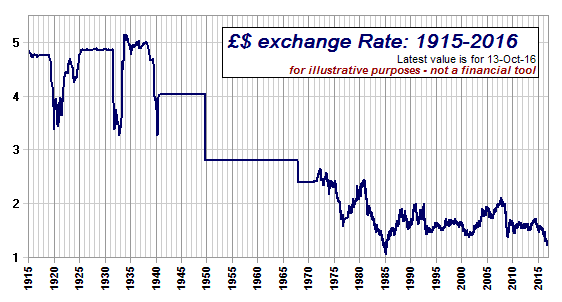
The Pound is devalued to 4 dollars following the Bretton Woods agreement, meaning an ounce of gold was £8.75 following the war. For comparison, to demonstrate the unending debasement of Sterling over the last eight decades, an ounce of gold today is over £2,000! (source)
Post War Britain – Shadow of the Sickle
After leaving Eastern Europe in the hands of Stalin, in 1946 Communism comes home to Britain, under Clement Attlee’s Labour Party following the landslide defeat of Churchill and the Conservatives in the Election of 1945, Britain’s economy and infrastructure is nationalised.
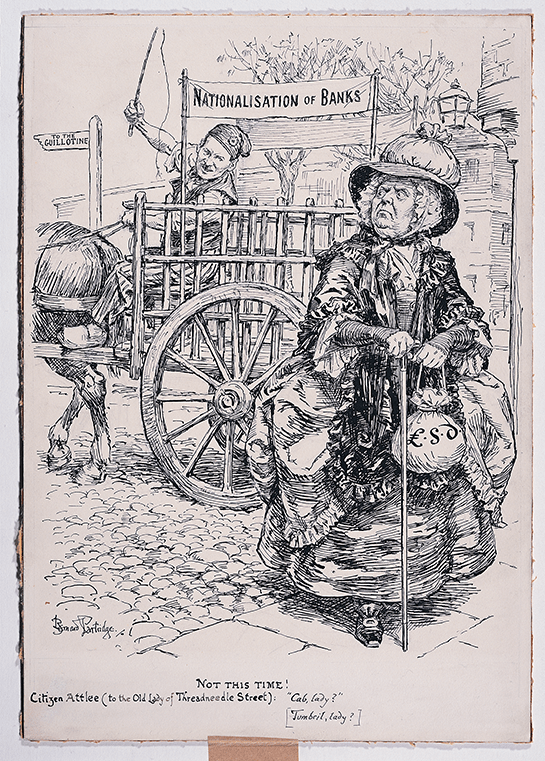
Punch Magazine’s satirical cartoon from 1935 portraying Clement Attlee offering a lift to the Old Lady of Threadneedle Street, on her way to the guillotine. Eleven years later, it is realised (source)
The most important element of perpetuating Nationalisation and financing Communism, is the Bank of England itself in 1946. After existing as a bank with private shareholders for 252 years, two years after Bretton Woods and loss of World Reserve Currency, the Bank is now owned by the Parliament of Westminster.
To follow, the Nationalisation of the Country:
In 1946 the coal industry is nationalised with the Coal Industry Nationalisation Act.
In 1946 healthcare, with the National Health Service Act and National Insurance Act, expanding the Welfare State under Health Minister Aneurin Bevan.
In 1947 under the New Towns Act and Town and Country Planning Act, the government gets into Social/Council Housing and the construction of new centrally planned towns to ease the overpopulation of cities such as London and Glasgow, creating a myriad of new social problems from unemployment and welfare, driving poverty and crime.
In 1947 the Transport Act nationalises the highways, the railways, the canals, ports, bus companies and even lorries!
In 1947 the Electricity Act fully nationalises the Electrical Grid, alongside Cable and Wireless (Telegraph and Telephone).
In 1948 the Gas Act nationalises the Gas Industry.
In 1949 mae’r Iron and Steel Act nationalises the Iron and Steel Industries.
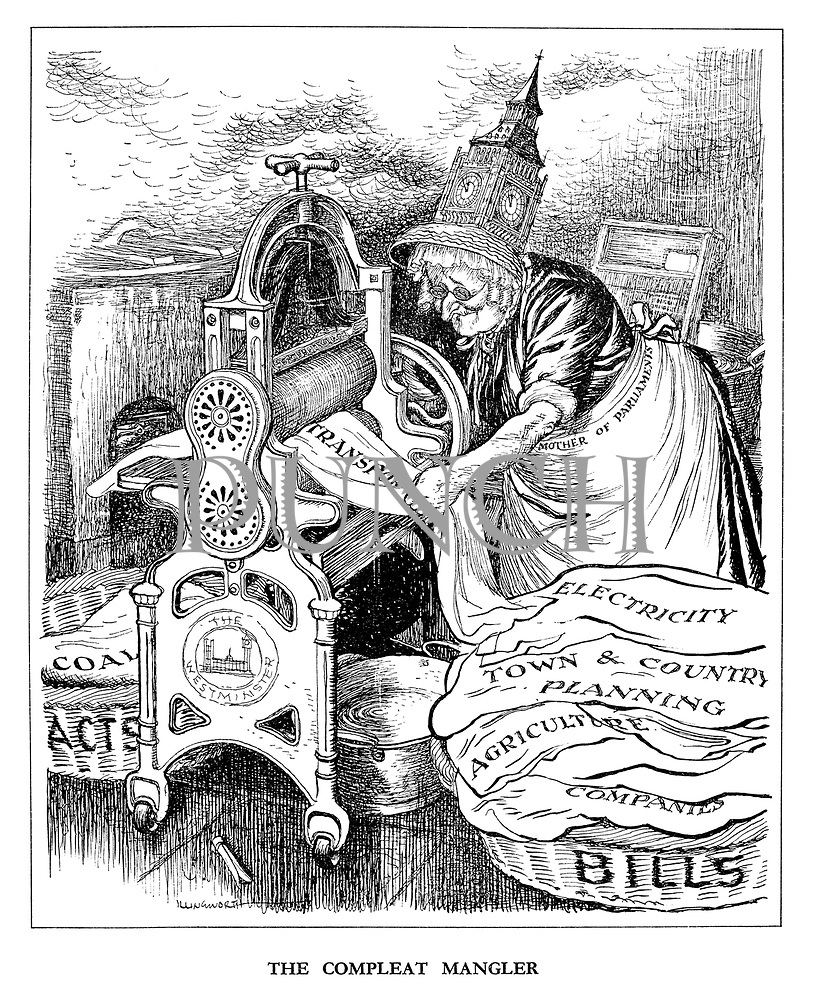
Another satirical cartoon from Punch Magazine, depicting the predictable catastrophe of Government controlled infrastructure, via the mangle of Westminster (source)
In effect, the Labour Party and British Government become owners of South Wales industries, and so South Wales becomes a hostage to the whims and perfidy of London’s Parliament for their economic future and way of life.
Outside the urban and industrial centres, in the countryside by some mercy the Agricultural sector escapes full Nationalisation and repeating the famines of other Communist countries such as Soviet Russia and Maoist China, but even in the greenest depths of rural Wales the shadow of Socialism and Central Planning threaten the old Welsh way of life, strikingly depicted by Islwyn Ffowc Elis in the Welsh Language novel Cysgod y Cryman (Shadow of the Sickle) published in 1953, and awarded Welsh Book of the Century in 1999.

Book of the Century – the Sickle is of course Communism
Welsh Nationalism strengthens following the War, and even though Plaid Cymru had been established since 1925, it takes until 1966 to win its first seat in Westminster. In 1967 the Welsh Language Act gives rights to the use of Welsh in the legal system within Wales, that had been illegal for over four centuries.
The Stagflationary Seventies – End of the Gold Standard

The United States defaults on settling its debts in gold – the leash upon inflation is severed
In 1971 Richard Nixon takes the US off the Gold Exchange Standard onto The US Treasury Exchange Standard and National Debt machine, severing the leash upon the purchasing power of money, sending inflation of living costs to the moon in the Seventies.
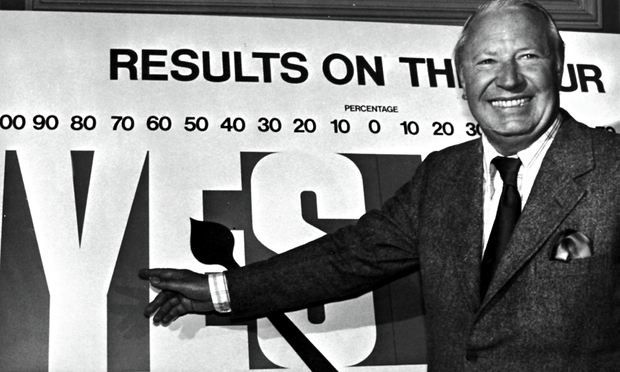
Primary Architect of dragging Britain into a bigger, centralised trade union – Edward Heath and the Conservative Party (source)
1973 is an important year, as the Tories swindle Britain into the EEC as the European Union was called back then, in an age when Conservatives were Europhiles and Labour were Eurosceptics, concerned over the future of domestic Labour Unions and British Industry in an enlarged customs union, and the foreign tide of cheap goods and labour undermining the Unions, domestic industries and the nationalised electorate of the Labour Party. The half century since have confirmed the concerns of Old Labour about the Union of Britain with the Continent, and our current Trade Deficit of a hundred BILLION per annum with Europe (especially Germany) has massively contributed to the undermining of the British industrial economy since the Seventies.

The Three Day Weeks that last three months in early 1974 ending Ted Heath’s political career, Labour retake power in the Elections of February and October 1974 (source)
The chronic inflation of the Pound in the early 70’s drives national industrial strikes over Britain to increase wages to protect workes and families enduring a cost of living crisis, especially the Miner and Railway strikes of 1974, forcing the Tories into Three Day Weeks on companies and industries to conserve electricity between January and March, that also ends Tory Rule in the second General Election of 1974 as Labour return to power.

The Sterling Crisis in 1976 forces Britain to default on its debts and beg the International Monetary Fund for a bailout (source)
In 1976 the Government of James Callaghan defaults on loans and is forced to seek an IMF bailout, a humiliating episode for the Country that had run the world only a few decades earlier. It is remembered as the Sterling Crisis and the loan of £4 Billion, the largest in IMF history up until then, to prop up the exchange rate of the Pound suffering 10% annual inflation rates, echoes the last few years the UK has suffered since the Covid Crisis debacle.

Union strikes meant that rubbish collection was suspended over the towns and cities of Britain in the Winter of 1978 (source)
The Winter of 1978 is remebered as the Winter of Discontent, with labour union strikes bringing the Country and the Labour Party to its knees, and paving the way for Thatcherism and the Conservative Eighties. The strikes of the bin men chokes the towns and cities of Britain in rubbish, and strikes amongst the grave digging unions stopped the dead from being buried. Three decades of nationalised infrastructure and unions in every major industry nearly brings Britain to a halt for wage bargaining, all because of the chronic mismanagement of the common currency, the Pound, comes close to destroying Britain.
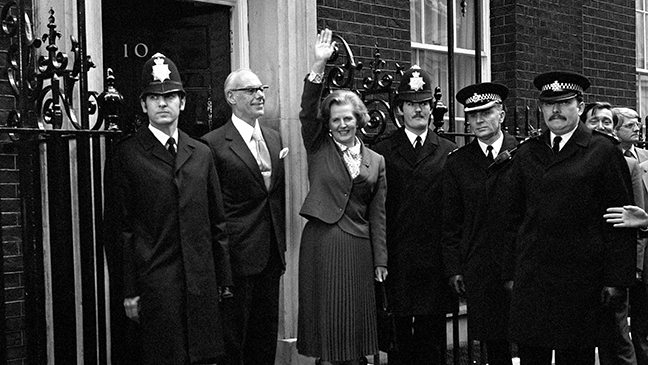
Prime Minister Margaret Thatcher following the 1979 Election (source)
In the last year of the turbulent Seventies, Thatcher and the Conservative Party gain power, that will decimate the industries and economy of South Wales during the Eighties, the peak of Welsh Industry and labour union leverage over the British economy ends with the sweeping away of the Labour Party following the 1979 Election.
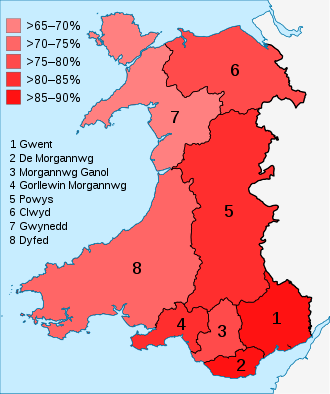
The percentage against Devolution for Wales – even in West Wales two thirds voted No! (source)
Additionally, on the First of May (St David’s Day) 1979 Wales receives a Referendum on Devolution and a Welsh Assembly, and a stregth test within Scotland and Wales for the Union, and any strength in Welsh Independence. 80% of the Welsh public vote against the referendum and only 20% in support, closing the debate around any devolution for the next twenty years.
The Eighties – Privatisation
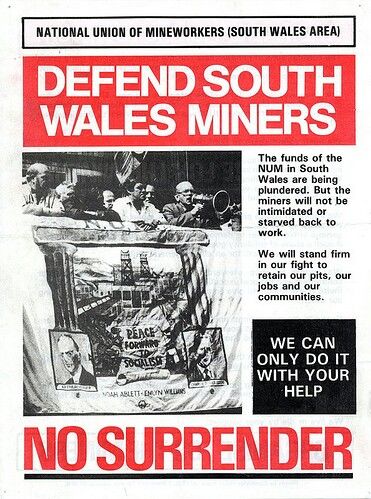
The Miner Strike of 1984-5 against closing South Wales collieries, and other coal areas in Britain. The Coal Industry was privatised and put out of business nearly overnight (source)
The Eighties are of one of Welsh history’s most destructive and saddest decades, removing much of its power and influence, especially Welsh labour workers over the rest of the Union, and most of this is down to one woman, in Maggie. But before she is dragged out of her grave for recrimination, she must be discussed in the context of the earlier mistake in Nationalising the energy and heavy industry sectors.
As already discussed, the beginning of the destruction of the Eighties is in the Fourties, and the Nationalisation of the coal, gas, electricity, transport, and steel industries. Central Planning and working outside of any profit motive in competitive industries, suffers from the “Socialist Calculation Problem“, in that because the government does not have to run on a profit to survive, it is impossible to ascertain what is profitable and what is not. It was becoming increasingly clear that the British Government was running Britain’s heavy industries at a massive loss, reflected in large part by the inflation and monetary problems of the Pound during the Seventies.
By the Eighties, British Industry had become increasingly uncompetitive with rest of the European Union and the World, lacking investment in new machines and engineering, and over dependent on labour and the unions that had become powerful, and could bring the British economy to a halt with strikes. This is a major reason in Thatcher’s decision to break the unions, via privatisation of Britain’s public companies, and the following list gives a flavour of the extent of public ownership: Royal Mail, Capita, British Aerospace, Cable & Wireless, British Gas, British Coal, British Telecom, British Steel, British Petroleum (BP), Rolls Royce, British Airways, Water Boards, Electricity Boards, National Power, Powergen, British Rail.
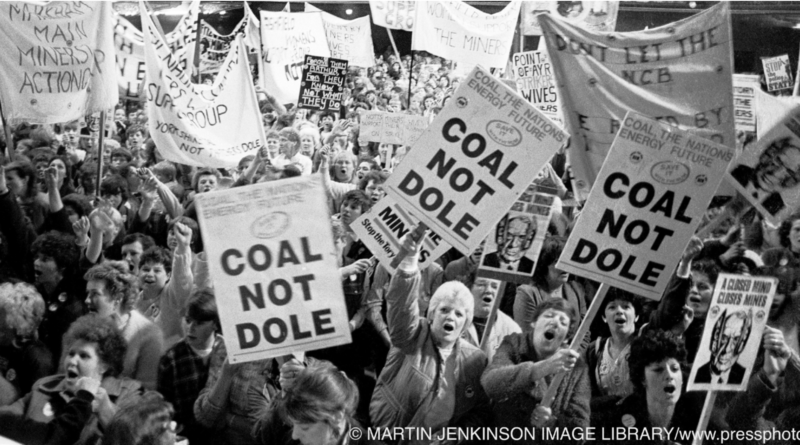
Instead of continuing to subsidise industrial areas creating domestic energy and commodities strengthening independence and national security, the Tories throw everyone on the dole prefering to subsidise unemployment and despair instead (source)
Where Thatcher and the Conservatives deserve judgement was in a chaotic and premature privatisation, throwing large swathes of Britain’s heavy industries out of work overnight, creating mass unemployment and poverty in British industrial heartlands and especially South Wales, feeding the Welfare State and Government subsidies for not working, and the second order effects of alcoholism, drug addiction, crime and suicide. Indeed, Welsh wounds have yet to heal since the Eighties. Privatisation has also, in many cases, put these state sponsored monopolies in the hands of people who have ravaged the institutions for a small gang of private shareholder profits, at the expense of inferior and more expensive utilities for the public that subsidise it through bills and/or taxes. Many of these companies have become worse and under-funded than in direct government hands, meaning that today we have another brewing infrastructure crisis in Britain, see the condition of the railways and the Thames Water scandal recently. Privatisation and mismanagement in many examples have degraded our infrastructure and made us more dependent on foreign imports from other countries for resources such as steel, coal and gas.
The Nineties – Decentralisation Emerges

Time Magazine Cover, November 1994 – the year the Internet was privatised (source)
It could be argued that the trend of political centralisation that began with the Protestant Reformation five Centuries back, reaches its peak under the Labour Party at the end of the Fourties or under Labour in the late Seventies, the Eighties was the beginning of a new trend of devolution and decentralisation, but it is the Nineties that sees the decentralisation of communication, confirming a multi-decade trend of decentralisation. Critical to this trend is the internet, previously a communication technology reserved for National Militaries, Educational Institutions and within the Public Sector, privatised in 1994 for the public over the world to use. Despite little demand in the beginning, as few of the public had a computer or internet access, three decades later digital technology has changed all our lives and we are today undoubtedly completely dependent on our mobile phones for mobile banking, e-mails and social media for information and communication. Indeed the explosion of online peer to peer communication in the last thirty years is undermining the power and influence of the legacy media that once monopolised the flow of information, and is contributing to the increasing censorship of the internet and online, as Politicians and the State wake up to the perils of freedom of speech, and our judgements on the madness and incompetence of our political elites who believe they are above any judgements. Despite the increasing Parliamentary Acts to “Protect Safety” and taxpayer funds thrown at calming the “anti-democratic” waters via restrictions and banning the freedom to broadcast and communicate online, the ongoing trend of tension and struggle between the forces of centralisation and decentralisation will increase for the next decade.
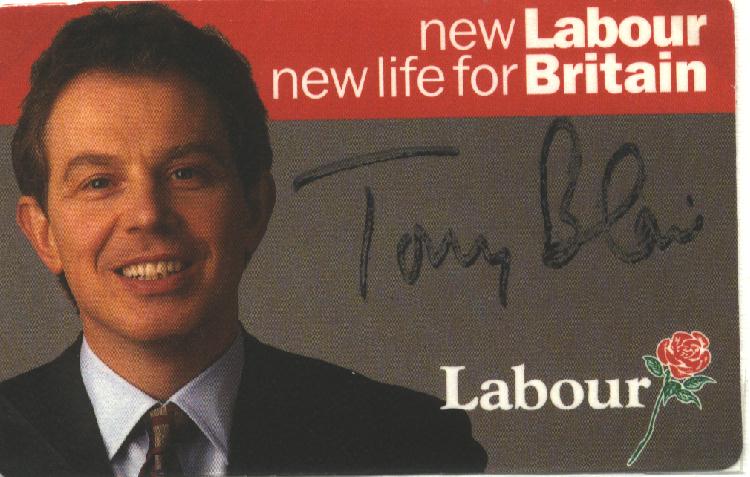
New Labour (minus the Union), and the Conservatives in Red (source)
By the late Nineties eighteen years of the Tories has become too much, and with New Labour’s landslide in the 1997 Election and the coming of Tony Blair and Gordon Brown, there is the promise of hope for a demoralised Wales within the Union. In keeping with the origins of the Labour Party and Kier Hardie in the South Wales valleys, three of Labour’s original four pledges are realised by New Labour, in Devolution, the Minimum Wage, and the abolition of heredity in The House of Lords. The only pledge to fail is the prohibition of alcohol.
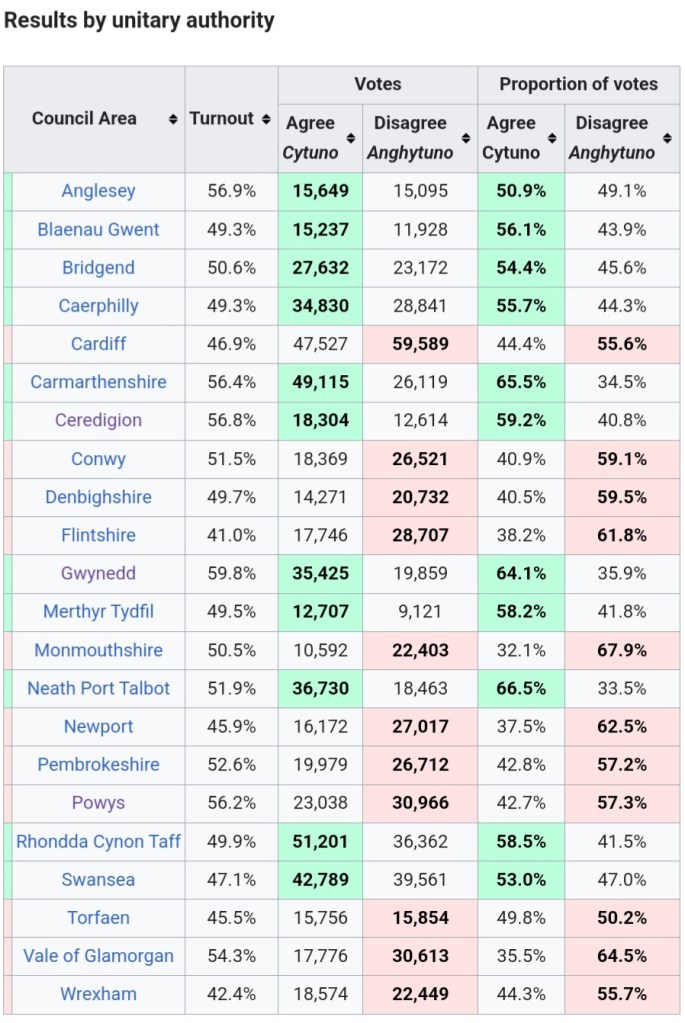
Wales, thanks to the South Wales valleys, votes marginally for Welsh Devolution (source)
Devolution of the Union is realised after Labour victory with the 1997 Referendum, and in 1999 the National Assembly for Wales is established after Wales narrowly votes in favour. The Assembly becomes the Senedd in May 2020. It can be argued that Devolution has been a success with new Welsh Government powers, it could also be argued that Welsh Devolution has been a failure due to the monopoly of the Labour Party in Wales socialising and slowly killing off Wales productive sectors, with the public sector and its destructive policies addicting Wales further to London’s Treasury.
Brexit 2016 – Further Devolution
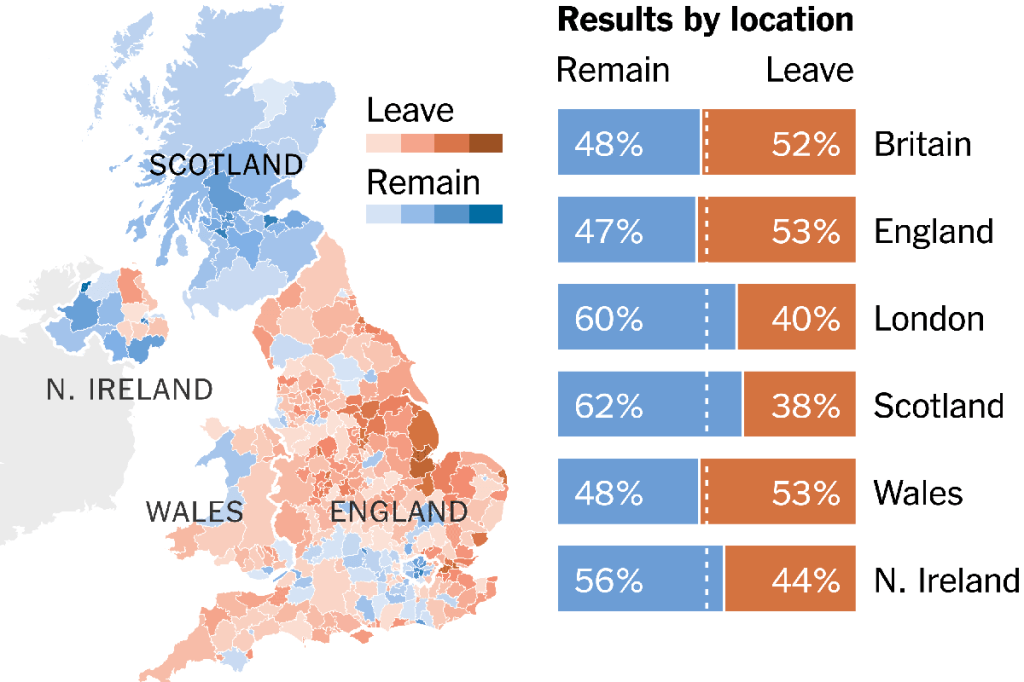
The main drivers of Brexit were England (outside London and the South), and Wales (source)
The Brexit Referendum is one of the most important political earthquakes of the Twenty First Century so far, and in the author’s opinion fatally weakens the European Union and the United Kingdom, as we are likely to see over the next decade.
Brexit was a source of mirth to the author as a devolutionist who is suspicious of Political Unions in general, in realising that the biggest supporters of the British Union were against the European Union, and the biggest supporters of the European Union were most hostile to the British Union!

In the end, Britain voted narrowly to exit the European Union after nearly half a Century, to take back powers and laws from the Brussels Commission back to the Parliament of Westminster, for Britain to run more of its economy, negotiate its own trade deals, and compete more flexibly and effectively outside the EU’s trade union monopoly and the mad bureaucrats of Brussels.
Alas, the fatal flaw of this independent outlook since 2016, was that neither David Cameron or the Conservative Party that allowed the referendum, nor Westminster politicians and Whitehall civil servants, nor London’s media and press (the BBC particularly), ever expected the majority of Britain to vote leave, therefore there was no desire or will in the British Establishment and no plan to grasp the independence nettle and take back control of their own Country, by severing the Acts and Laws of the Continent.
The result is that today, over eight years since Brexit, we have done nothing with the gift of British Independence, still subservient to most of the nonsensical laws and regulations on the Continent, still without control over our fisheries industry, and still running massive trade deficits of now over £100 Billion per annum, in other words Britain is purchasing over £100 Billion of European goods (mostly from Germany) more than the sell to us. We are exporting our industries and companies and jobs to German industrialists and French farmers, while Britain exports the Pound and our National Debt via our FIRE (Finance, Insurance and Real Estate) sector to pay for this catastrophic subsidy, and only running a balance of trade with Europe would return over £100 billion a year worth of industries and jobs back to Britain!!!

According to House of Commons statistics on trade for 2023, Britain has run a trade surplus of £75 billion with the rest of the world while running a trade deficit of £109 Billion with the European Union. This is the reason that what is left of our industries is disappearing, making us increasingly dependent on imports from foreign countries (source)
Brexit is increasingly being recognised today as a catastrophic mistake by those who voted to remain and those who voted to leave, but this due to the political hash the Conservatives and the British Establishment have made of Leave, unsurprising upon the realisation that the British State is run by left wing liberals. The blowback for Brexit impotence for the Conservative Party was its landslide defeat in the 2024 General Election, likely leading to the collapse of the Party in the next five years as the centre and right fight over the carcass, while europhile Labour now have a simple majority in the House of Commons to slow up and sabotage Brexit further, with the same Permanent Bureaucracy scheming secretly in the shadows pulling the strings of Labour, as they did the Tories. We are headed into darker days for this Country in the next few years.
In terms of the long term decentralisation trend there is light, and we will likely look back at Brexit in the next decade or two as the beginning of the end for the European Union and the United Kingdom, and a very positive development in the author’s opinion. Europe has now lost one of its main financial contributors in Britain, increasing the burden on Germany and France as core foundation of the currency and debt union, forcing Germany to pull the plug on the European experiment sooner. It has to be remembered that the EU and Euro are extremely young and immature compared to the long established United Kingdom and Pound Sterling, therefore it is logically the EU and the Euro that will disintergrate first.

Results for the National Identity question in the 2011 Census, showing that only a few areas of London (and Northern Ireland) consider themselves British first. This important question has changed by the 2021 Census, more discussion here (source)
Within Britain, Brexit has exposed the differences between the mindset of London’s population (and media establishment) and the rest of England, and between England and the Celtic Countries, currently manifesting as strengthening movements in Scotland and Wales for further Devolution, and even independence. Not only has Brexit fatally wounded the European Union in the long run, the author is also of the opinion that Brexit will break apart the United Kingdom in the next generation.
The Present and the Reality of the British Union
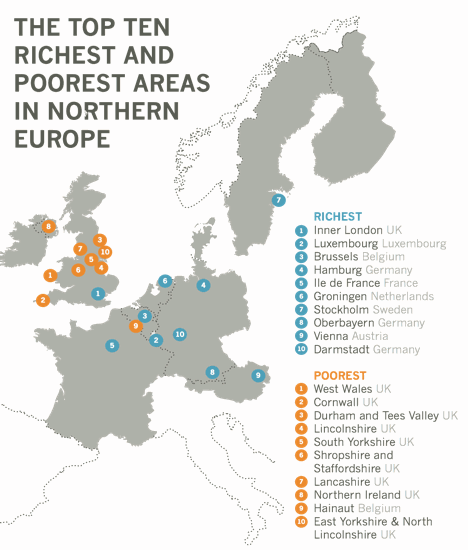
This map is from 2014, two years before Brexit, reflecting our trade deficits with Northern Europe and the debt and poverty this creates outside London’s financial centre, that benefits most from our current economy through the common currency, the Pound (source)
An important step is to get to the root of the truth of how Unions operate, who benefits and who suffers, and the State and Media work together in this realm to misinform, confuse and gaslight the British Public.
Listening to London’s media establishment in the dragon’s lair, London is the financial powerhouse and subsidiser of the rest of Britain, through Government, the Treasury, the Bank of England and the City of London’s financial sector.
Further, the English believe they suffer because they subsidise the economies of Scotland, Wales and Northern Ireland via local government, as public sector spending in the Celtic Countries is higher per capita and in GDP, which is true.
The Celtic Countries likewise complain they suffer at the hands of the English because they own the Treasury in London, and calculations like the Barnett Formula that decide the subsidies doled out to Scotland, Wales and Northern Ireland in exchange for their taxes.
Everyone is squabbling amongst each other, while the nature and reality of our monetary and currency union centrally issued out of London, gets lost in the noise. The reality is that London receives the ultimate subsidy out of this system via the Cantillon Effect, with those closest to the inflationary credit creation apparatus receiving the money first, and at the original purchasing power. As this money circulates outwards from the centre to the rest of the country, to the later receivers and as its purchasing power is diminished. This reflects the relative over-abundance of money (and the mirage of wealth) in London and England’s South East, and relative shortages of money and poverty in the rest of England, Scotland and Wales, depicted in in the graphics below.
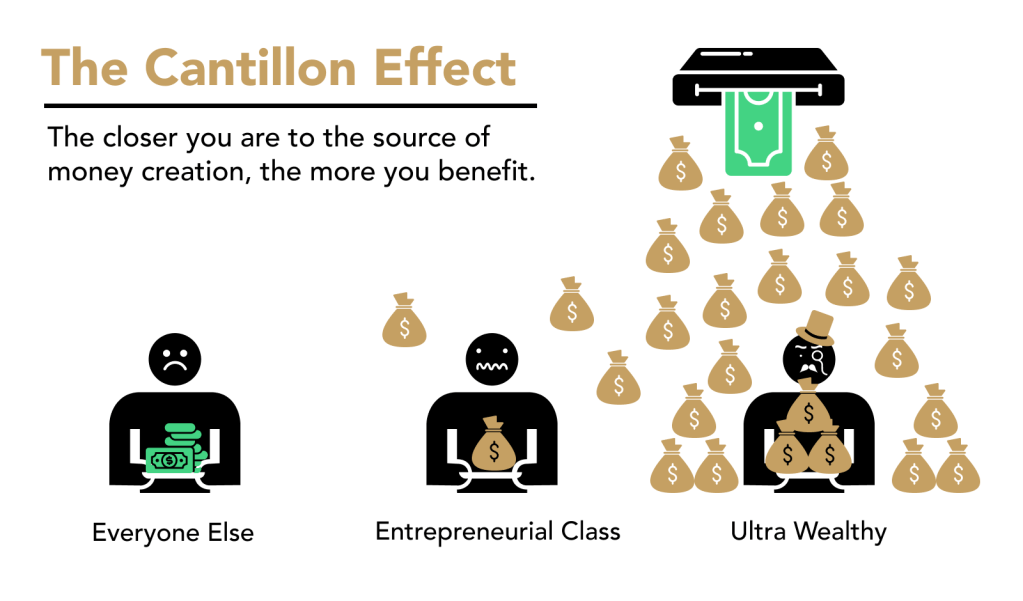
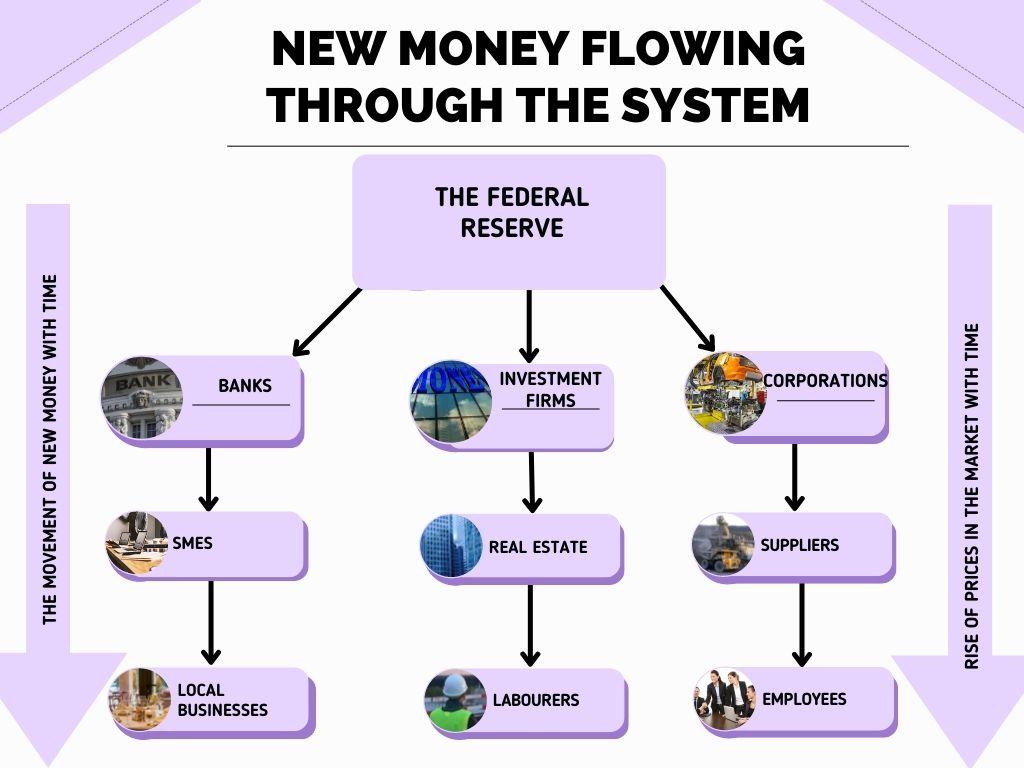
Two graphics that describe how money flows from the centre towards the peripheries, and losing its purchasing power on the journey. The Cantillon Effect also explains how London is the richest area in Northern Europe, while eight of the poorest areas are within the same Union (source, source)
Once the people of Wales, Scotland and the North and Midlands of England wake up to how the Pound and our present monetary union operates, it is possible to unify and turn their gaze towards the City of London banks, and the centre, the Bank of England. Unfortunately this is not likely to happen anytime soon, but the persistent inflation and debasement of the Pound will guarantee more debts out of London’s Treasury and more poverty in the rest of Britain, driving more inflation and taxation, and forcing more of the population to seek monetary solutions outside the Pound’s debt matrix, and into competing external currencies as the Digital Age proceeds.
End of Part One
PART TWO: PRESENT

As explained by Niccolò Machiavelli, human nature is inherently conservative and suspicious of new foreign paradigms compared to established and familiar paradigms. This is truest of all for monetary systems, especially the three century old Bank of England British Pound.
Predicting the Future – Probabilities and the Game of Unions
Part Two of the essay will attempt to predict the future by discussing scenarios of the three options for Wales as an Independent Nation and the probabilities of each, that will be of aid in ruling out less probable scenarios as well as ruling in more probable scenarios.
Option 1: Leaving the United Kingdom and joining the European Union and the Euro
This is the least probable option, because Wales (within the British Union) voted to leave the EU in 2016, and to rejoin Wales would have to gain independence from the UK first, which looks improbable to impossible at present. Additionally the Brexit vote was roughly 50% remain and 50% leave, so even in a future referendum the probability of joining the EU would be half, and would drive a clear divide and civil war (literary rather than literally) down the middle of the Welsh population.

Keep the Pound Campaign – despite the best efforts of newly converted europhile New Labour riding the wave of goodwill following the ’97 landslide to swindle swoon Britain into the Euro and a Continental Currency Union at the start of the new Millennium, the idea received little traction on the ground (source)
Even less probable than re-adopting the European Union, would be to adopt for the first time the Euro. As discussed in Part One, the Pound is a historical institution of Wales for over a Millennium, and especially since the establishment of the Bank of England (1694) the Pound is the lifeblood of British and Welsh trade and taxation, for financing the debts of the British Government. Despite the best of will for the effective propaganda from New Labour for adopting the Euro, money is the most essential element within society, that we produce into and consume with, selling a good or service to buy goods and services, and store our personal net worth for a future that is by nature uncertain. Adopting a new monetary and accounting system therefore is always riskier and dangerous to destroy personal and national debt wealth, than remaining with the familiar and trusted. Indeed the Pound Sterling standard of the Bank of England is now over three centuries old, with historical certainty in the psychology of Welsh and British populations, for living today and more importantly for producing and saving in a relatively stable currency for the future. Only for this reason, any campaign by a newly independent Welsh Government to persuade Wales to adopt the Euro would unleash a civil war and wealth destruction on a national scale, bringing the government to its knees, not to mention that Wales has no domestic financial infrastructure or banking network today, we are completely dependent on an English banking system and financial network with its headquarters in the City of London.
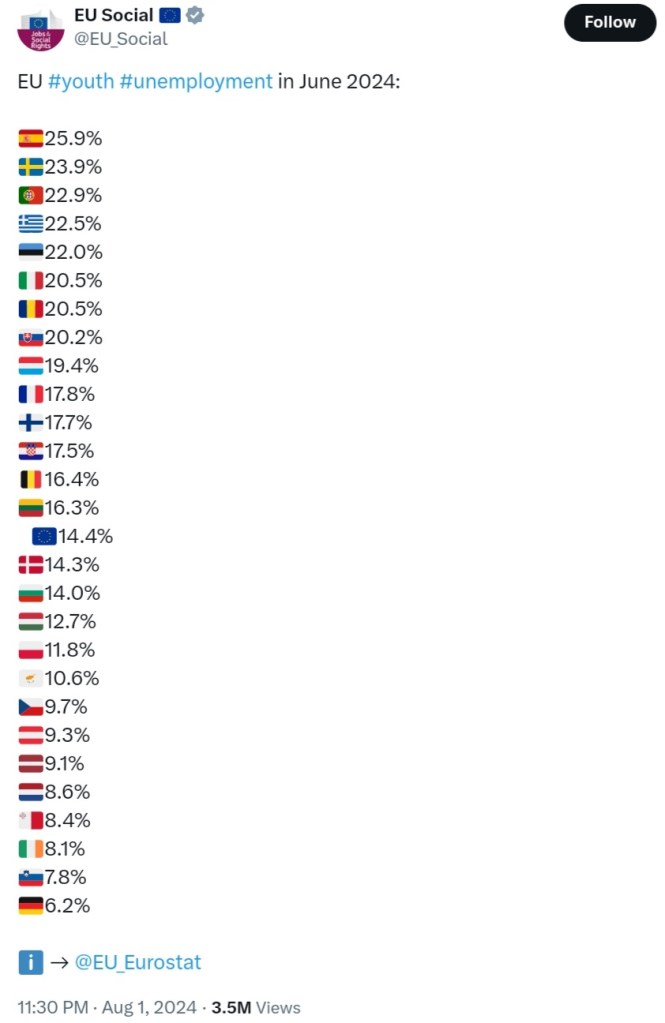
Unemployment and hopelessness among the youth is depressing the Southern countries, as their industries and jobs disappear towards the Northern countries in the monetary prison of the Euro. This would be Wales’ fate on the peripheries of Europe, which by comparison has a current youth unemployment rate of 13.1% according to Statista (source)
To expound upon the idea of Wales benefiting from membership of the Euro, the Cantillon Effect already discussed in Part One belongs to the Euro as well as the Pound. As bad as the inequalities the Pound produces between London as first receivers and the rest of the Union as last receivers, it is a far smaller Union compared to the European Continent and the twenty Nation States that are in the Euro today, with even more extreme inequalities between the North (including Frankfurt as the location of the European Central Bank and Brussels as the location of the Commission) and the EU producers, and the South on the whole being the consumer/debtor countries. The nature of the Euro as a Continental currency treats the economies of all twenty members as one, despite huge productivity disparities that in the old days could be remedied by twenty national currencies strengthening and weakening against each other, reflecting trade surpluses or deficits. In this system, having a weak currency depreciating against the strong currencies of the North, allowed Southern countries to maintain competitiveness by lowering the cost of exports (and domestic production) while increasing the cost of imports (and foreign products), but within the Euro this is impossible. It is inevitable therefore that unemployment in the Southern countries will increase as their industries disappear, largely to Germany and the Netherlands and the higher mechanised and productive economies of the North. By staying out of the Euro and keeping the Pound, the UK has been able to escape the worst of a destructive continental currency union.
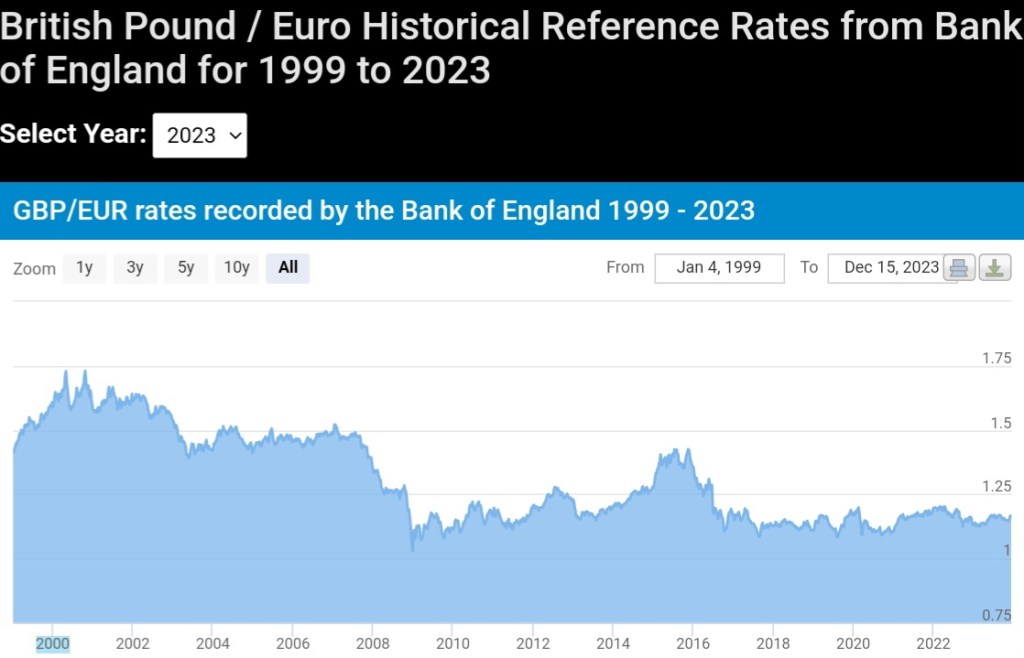
Despite the catastrophic trade deficits that Westminster Parliament chooses to run with the European Union, Britain has at least one mechanism to ease the pressure and compete more effectively, by devaluing the Pound against the Euro (source)
To tie off the discussion on the Game of Unions, the fact that the British Union and the Pound is 317 years old while the European Union has only been around since 1992 and the Maastricht Treaty, and the Euro has only existed since the 1st January 2002, makes Britain a far stronger Union than the Continent’s. Nowhere is this clearer than in the financial system, backed by Britain’s National debt market, the Treasuries and Gilts market, insofar as Britain’s fiscal union where debts are unified within a single Treasury. Europe on the other hand, has a Central Bank and Currency Union, but unlike Britain its debt markets are distributed between twenty disparate member state Treasuries, and for all the talk over the Age of the Euro about a Fiscal Union and the consolidation of debts via the issuance of EuroBonds, the European banking sector sits atop a collection of national bonds, mostly German Bunds, but also French OAT’s and Italian BTP’s. Because of the disparities between interest rates and credit ratings of these national bonds, in times of crisis the Euro Union wobbles because of the divided foundations and weakness of French and Italian economies, compared to the stregth of Germany. Indeed, the price Germany had to pay on French terms for Reunification following the collapse of the Soviet Union, was retiring the Deutsche Mark and adoption of the Euro and the Currency Union, however it is also Germany that has fought hardest against a Fiscal Union so that is doesn’t have to shoulder Continent wide European debts.

The European Central Bank keeps a Target 2 balance between its internal trading members, and the figures are eye watering. There is no possibility that Italy, Spain, Greece and France can repay their deficits to Germany, Luxembourg, the Netherlands and Ireland (source)
The Euro will end whenever Germany as the factory and most powerful country on the continent decides that enough is enough, there will be no Fiscal and Debt Union, and that it is time to bring the Euro experiment to an end. This will likely mean the Northern members breaking away to create a smaller Union with a stronger currency, leaving the Southern countries in an Union with a weaker currency, or Europe will once again revert to national currencies, correcting all the mistakes and imbalances created by a continental currency. The recent restrictions out of the German Constitutional Court on Government spending is an early example of the rebellion against increasing debt issue on deck the Titanic.
Probability of Option 1 for Welsh Independence: No Probability
Option 2: Leaving the United Kingdom and Creating a New Currency (Welsh Pound)

The Barnett Formula for redistribution of British taxes flowing into London’s Treasury, back out as public spending to the rest of the Union (source)
As the future of the EU depends upon Germany’s continuation as the most productive country running the largest trade surpluses, the United Kingdom is dependent upon England as the most productive running trade surpluses with the deficits of the rest of Britain, as the Barnett Formula suggests. Indeed as the author believes that it will be Germany that breaks up the EU, also believes that it will be England that breaks up the United Kingdom, for a few reasons.

The dissolution of the Union requires an Act of Parliament, so who is going to control the process with 543 constituencies out of 650?! (ffynhonell)
The most obvious reason is the power of England domination in Parliament compared to the rest of the Celtic nations, and to make this crystal clear Welsh incorporation into England in 1535 and 1542 were via Acts of Parliament, as was the Union of 1707 with Scotland and the 1800 Union of Ireland. Also in the case of the breakaway of the Irish Free State in 1922 in agreement with David Lloyd George, officially via the Act of Parliament. We also have a recent case to shed more light on the process of breaking up the Union, to study in some more detail.
The 2014 Scottish Independence Referendum gives an extremely interesting case study of an agreement if London Parliament would ever agree to separation, when David Cameron as Prime Minister agreed to the calls of the Scottish Parliament for a referendum. Via the Crown of Elizabeth II, it was decreed to transfer temporary powers to the Scottish Parliament to hold the referendum, with the question “Should Scotland be an Independent Country?”, with the British Government promising that a simple majority voting “Yes” would be enough for Scotland to become an independent country following a period of negotiation.

David Cameron, destroyer of Unions? – A far closer result than London’s Parliament had expected perhaps, but the Scots voted against Independence. Obviously Cameron and London Parliamentarians weren’t expecting Britain to vote in a Referendum to Leave the European Union either, less than two years later. Oops! (source)
Analysing the main reason over voting against Independence and for keeping the Union amongst the Scottish population, boiled down to keeping the Pound and the stability of Britain’s familiar monetary standard, over the uncertainty and chaos of splitting a three century old currency and customs union. This makes intuitive sense to anyone who owns a bank account and uses the Pound today, and opens up the discussion of what would happen if a future referendum were ever successful in Wales.
If the Currency Union came to an end under a hard money standard such as gold and silver as it was before the Bank of England standard from 1694, dissolution would be relatively straightforward, but in a Currency Union based upon a Central Bank and the value of money derives from paper or by today from electronic digits on a computer or mobile phone screen, this becomes a far more complex question. Today, Scotland has barely a domestic banking system and Wales has no domestic banking system, the UK’s monetary standard is completely dependent upon English banks, deriving their currency value from the Bank of England. Dissolving Britain’s monetary union would force the decentralisation of money, and for the modern world that runs on perpetually increasing debt and inflation to afford our socialist economy with public spending nearly half the size of the economy, then true independence would mean a Welsh Pound. In the modern world, an Independent Wales requires a Central Bank, the Bank of Wales and a Welsh Pound, which brings us to the monetary and banking infrastructure that enables our current reality.
As part of the 1707 Union Scotland kept its own Legal system and to a extent kept its banking system too, but Wales has been in the Union nearly two centuries earlier, and therefore completely dependent on the English Legal system and London banking network. Indeed, despite a colourful history to Welsh Banking such as Bank y Llong (1762 to 1806), the Black Ox (Llandovery) Bank (1799 to 1909), The Black Sheep (Aberystwyth and Tregaron) Bank (1810 to 1815), and the most successful in the North and South Wales Bank (1836 to 1908), the Bank Charter Act of 1844 handed the monopoly on creating banknotes to the Bank of England as already discussed in Part One, impinging upon credit creation in rural Wales and since the early Twentieth Century Wales has been completely dependent on English banking infrastructure (North and South Wales Bank is swallowed by Lloyds Bank in 1908, and the Black Ox Bank swallowed by Midland Bank in 1909). Wales today therefore lacks its own financial infrastructure, and creating one overnight ex nihilo is practically impossible. There will be further treatment on the monetary policy of an Independent Wales in Part Three of the essay.
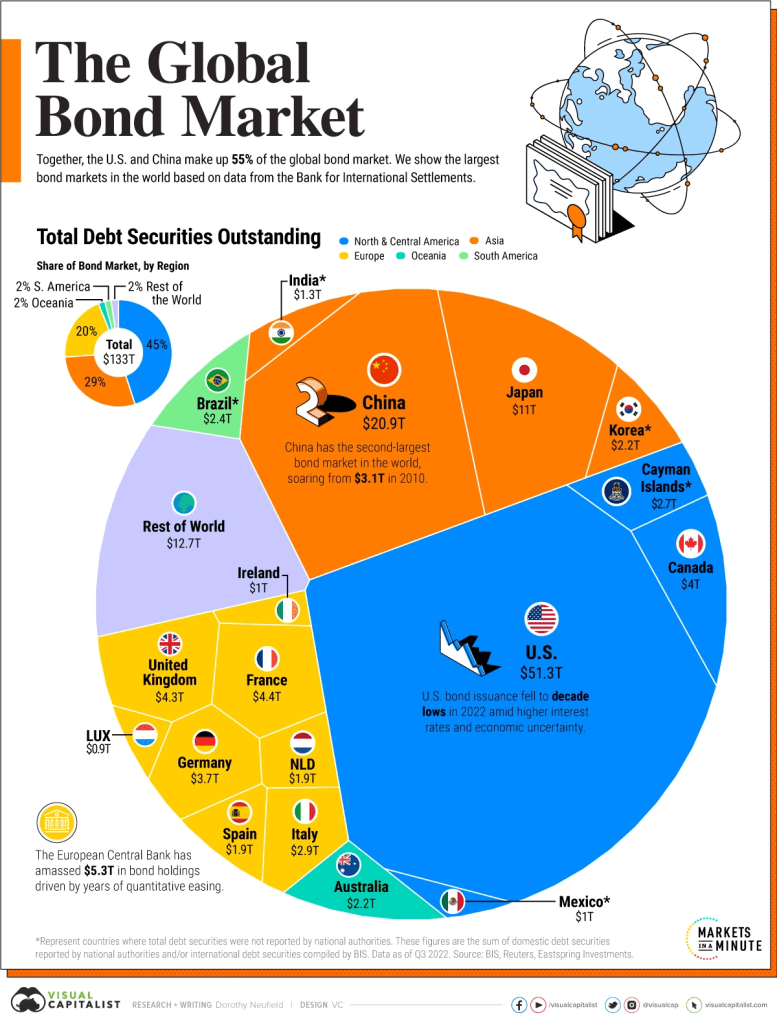
The foundation of the Monetary Union is the Fiscal Union, and the foundation of the Fiscal Union is Treasuries, national bonds (debt) created by Treasuries. The market for British debt is over £3 TRILLION up to year end 2022 (source)
Even though the UK is a monetary union that enforces by Legal Tender the use of Pound Sterling for trade in order to pay the taxes (and the invisible inflation tax) to London’s Treasury, there is an even more important element to discuss which is the Fiscal Union and the chronic debts that underpin the monetary union. Despite all the taxes the Treasury collects by threatening UK taxpayers with imprisonment, which was a record of £787 Billion in the 2022/23 Financial Year, it is nowhere near enough to cover Westminster Parliament’s out of control public spending with the UK currently nearly £3 TRILLION in the red, with deficits increasing over time. There has been no treasure in the Treasury for a very long time, and the future of the Union is more debt, more taxes and more inflation to pay the interest costs to the lenders still stupid enough to invest in the national debt of the British Government.
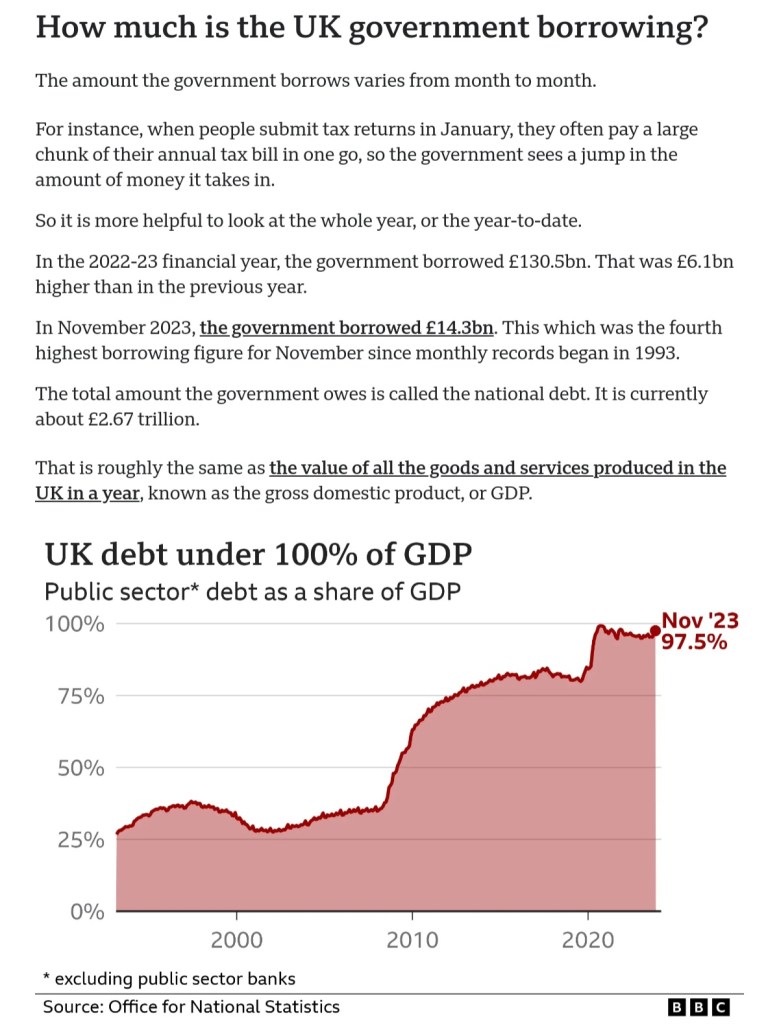
Britain’s national debt is £2.67 Trillion or 97.5% of Gross Domestic Product according to ONS statistics (source)
Who then is still stupid enough to lend money to increase the spending and public liabilities of Britain? The answer is complex but to simplify they are investors of Britain’s financial (FIRE) sector, from banks to pension funds, investment funds, and insurance funds, effectively compelled by accounting laws and regulations to invest in Britain’s national debt. Additionally, the Bank of England can purchase UK Treasuries and take them out of circulation by a scam process called “Quantitative Easing“, guaranteeing a continuous demand for UK Treasury debt in the near term future, enabling Parliament to escalate the National Debt enslaving the population and the unborn to service the debts of our political elites.
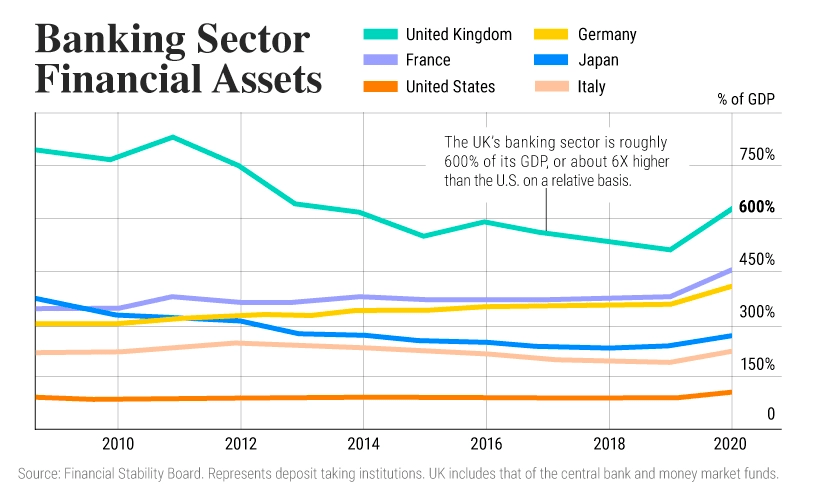
To answer the question of how Britain can run trade deficits of £100 BILLION a year with the European Union, is through our banking and FIRE sector and the household, corporate and national debt that perpetuates this financial serfdom. This also means that any financial and debt crises will hit the British Banks and economy far harder in the coming recession of 2025 and 2026 (source)
To close the discussion on the probability of Welsh Independence through the front door, via the breakup of the Pound and Britain’n monetary and fiscal union, people must understand that this would mean the end of Britain as a socialist country, where public spending is nearly half of GDP and public sector employment is a quarter to a third of the population. The only reason we are still able to operate like this is the long and trusted history of the British Debt Union, and an Union that can maintain its debt service costs at low enough interest rates to maintain our socialist experiment, especially in the Celtic countries, as the Barnett Formula attests. Dissolving the British fiscal union would mean starting from scratch, dividing the debts of the Union between four new independent Treasuries, severely effecting upon the ability to borrow and at far higher interest rates, to reflect the far higher risk and uncertainty of investing in newly independent nations, than the historic stability of London’s Treasury and three centuries of tradition in increasing paying its debts.

The breakup of the British debt union would bring to an end public sector spending that is nearly half of GDP today, the Welsh public sector would have to be gutted for us to afford leaving the Union (source)
The above should explain to Welsh readers, even the most passionate independence believers, the cratering in purchasing power of a new currency and the collapse of the NHS, the education sector, state pensions and everything else that would become unaffordable outside Britain’s indebted Union, it should become clearer that the voluntary dissolution of the Union to its home nations in reality will never happen, because of the damage and destruction it would wreak on our present social order and the lives of everyone who works and lives in the Pound Sterling matrix, including Wales.
Probability of Option 2 for Welsh Independence: Very Low Probability
Option 3: Technological Change and Breaking the Pound and United Kingdom Via Adoption of External Money
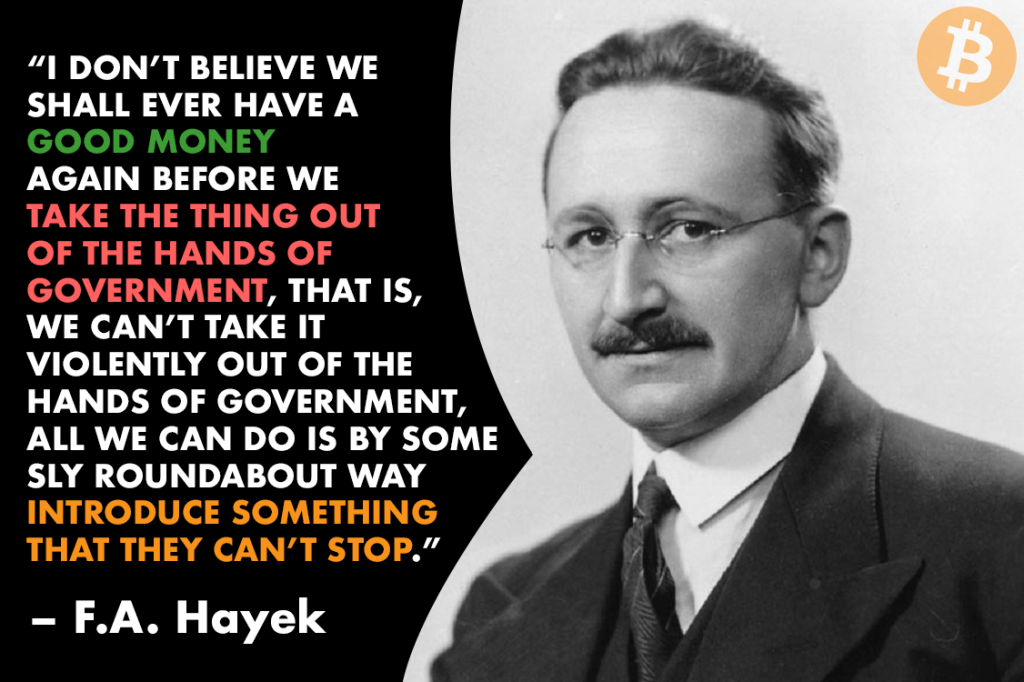
It is worth listening to Hayek’s words in this short two minute video from 1984, on the denationalisation of money, via an alternative and superior accounting system. Hayek predicts the birth and rise of Bitcoin 25 years earlier (source)
This Option is already superior to the other two options, because it exists outside of any national law and is therefore already independent of the present order. This makes the monetary and accounting standard voluntary, allowing the population to adopt gradually and over an extended period of time, and avoids a disorderly dissolution of monetary and fiscal unions, which is critically important for the stability of the present order that would create economic destruction in an un-controlled demolition, as would be the case in the prior two options.
Another advantage of Bitcoin is that it is a worldwide standard that cuts out many of the regulations and barriers that are an intrinsic part of national fiat currencies, it works over borders enabling peer to peer trade, business to business, and even country to country, in the same way gold used to be a worldwide monetary standard for national and international trade settlement.
Bitcoin is an accounting standard native to the internet, and therefore dependent upon electricity and opeartes very similarly to online banking, but rather than trusting a bank you are trusting in the network that has had a permanent uptime for the last sixteen years, without limitations of banking hours or weekends, it can be sent or received 24 hours a day, 365 days a year.
The most important element of Bitcoin’s monetary policy is its currency issue schedule, based upon Proof of Work and the dense use of electricity reinforcing the network, and receiving new bitcoins as a reward, currently issued at 3.125 every ten minutes plus any transaction fees included in the same block. This makes Bitcoin mining possible in any part of the world, that has led to the distribution of the mining network and electricity supply over the world. The nature of bitcoin creation also allows individuals, businesses or governments to mine currency in their own countries, as will be discussed in more detail further on.
For these reasons, if independence comes to Wales this is the most likely Option, therefore it is worth exploring further.
Probability of Option 3 for Welsh Independence: Most Probable
Defining Money and Currency
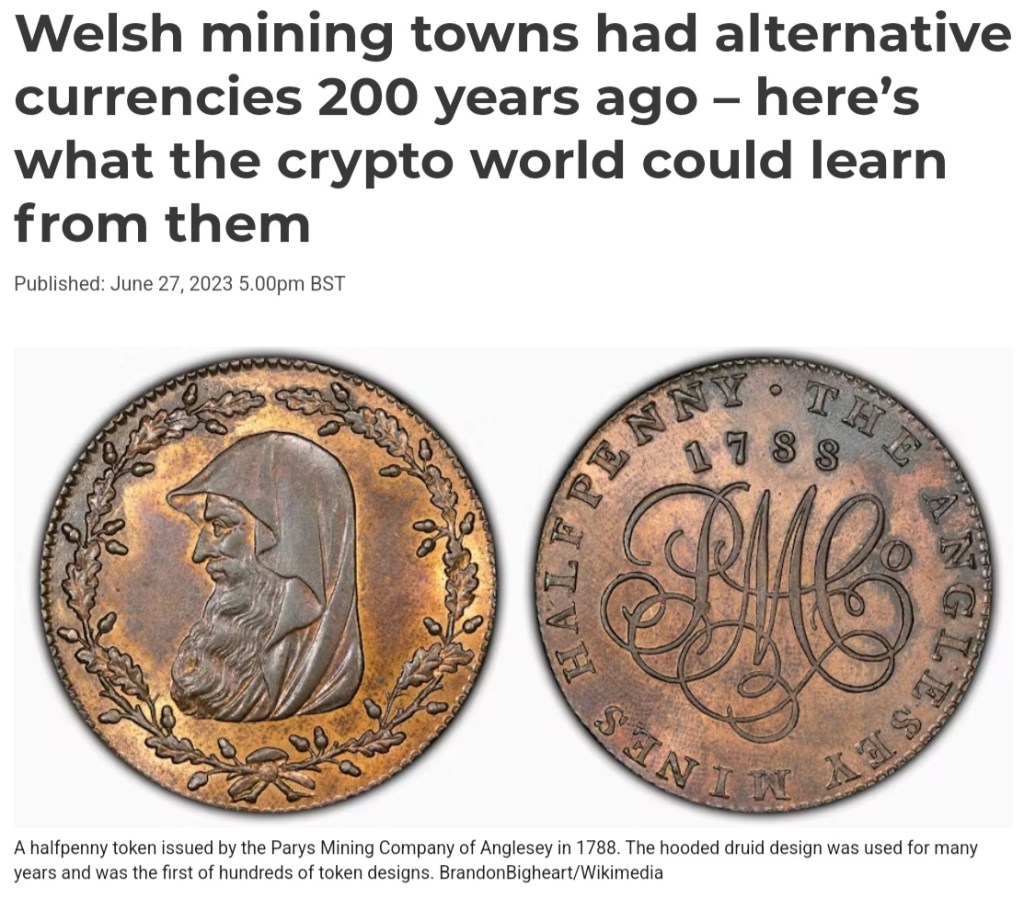
Monetary shortages early in the Industrial Revolution forces a copper mining company on Anglesey to create tokens for local trade settlement, in an interesting article (source)
Before delving deeper into Bitcoin, it is important to spend a section on the vagaries of money and currency, and the way to think about them in the modern world. Even though the Welsh words “arian” and “prês” derive from silver and brass (copper) because these were the foundation of the Pound, Shilling and Pence (£sd) standard for over eight centuries, gold and silver coins are only half the story, indeed there are long tracts of the Middle Ages where local shortages of precious metal coins necessitates local economies and trade to adapt to monetary substitutes, via accounting ledgers or paper currencies produced from wood, leather or paper.
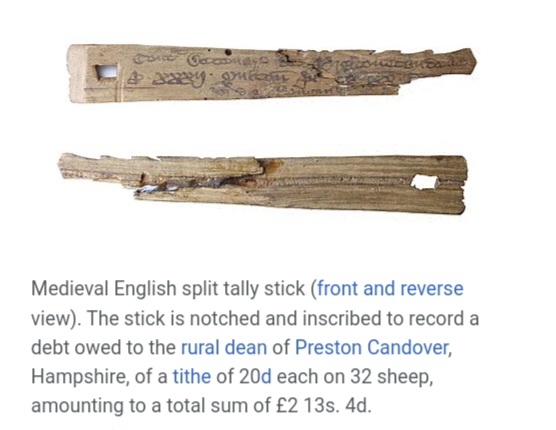
Rather than transacting in money, debits and credits can be settled via book-keeping and accounting, and the tally stick is an example. Once agreement is reached, the stick is split in half for each party to keep a contract copy, as an anti fraud measure (source)
Another example of a monetary substitute is paper currency (banknote), that explodes over the West at the end of the Medieval Period, and in the wake of the Protestant Reformation that establishes modern banking and double-entry book-keeping, giving control of credit creation to local banks that keep the precious metals in their vaults. This method also centralises credit creation, increasing fraud and fractional reserve banking.
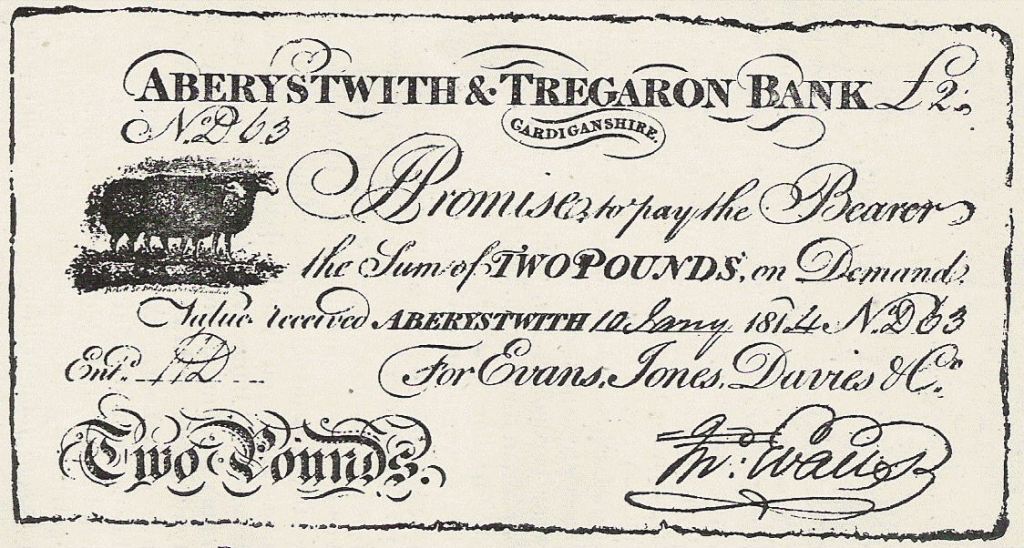
Two pound banknote of the Black Sheep Bank – While small value transactions would be settled on the ground in shillings and pence, paper currencies were a convenient method of settling medium to large value transactions (for example two tower pounds (700 grams) of silver (two pounds) at today’s value of 75 pence per gram is worth £525! The custom of local paper banknotes came to an end with the Bank of England’s banknote issue monopoly in 1844 (source)
By the beginning of the Twentieth Century medium to large transactions were being settled in paper rather than metal, either via Bank of England banknotes for standard sums and increasingly through cheques for more specific and higher sums, the trend should be clear, trade settlement moves from physical money to promissory and abstract credit. The speed of trade settlement also increases with the invention of the Telegraph enabling Wire tranfers, that has only accelerated since the Second World War, with communication inventions such as Telex using the Telephone.
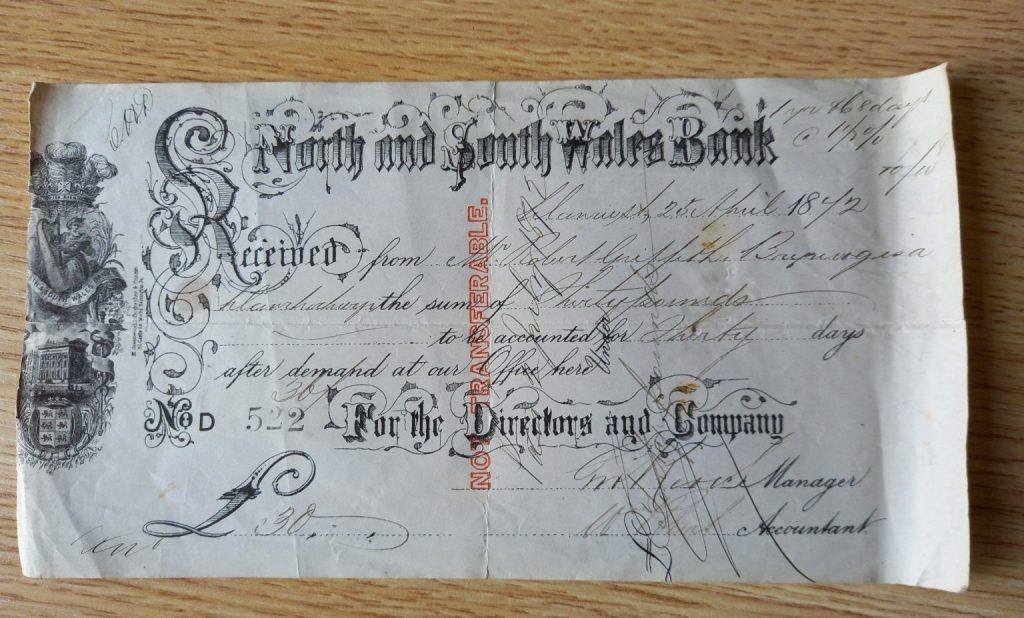
An example of a North and South Wales Bank cheque from 1872 for Thirty Pounds (nearly £8,000 priced in today’s silver) (source)
In the Sixties the payments revolution and credit cards start to hit Britain and 1966 sees the introduction of the Barclaycard, credit cards became far more popular in the UK and US than in Continental Europe for example.
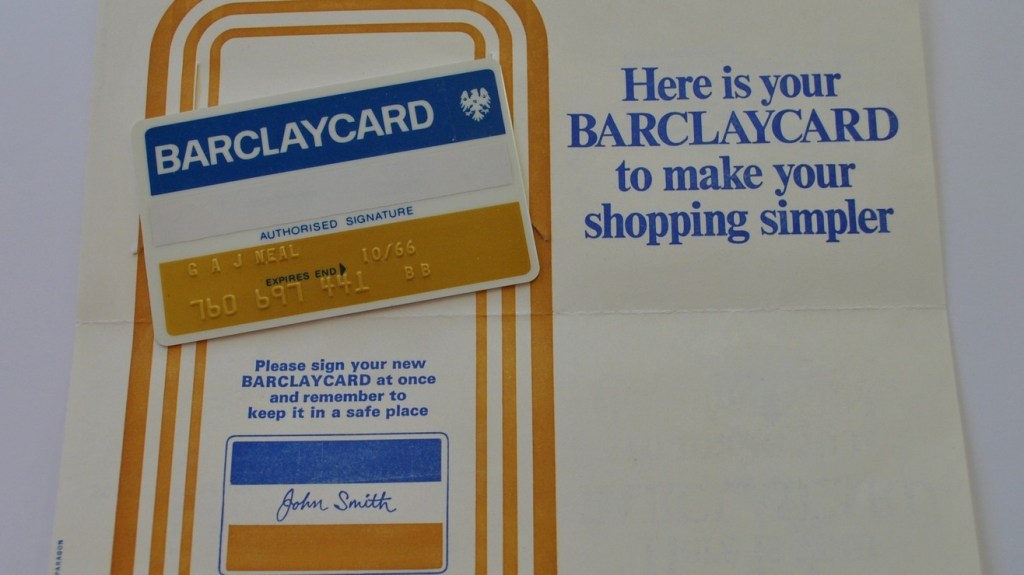
Credit cards start competing with banknotes at the end of the Sixties, while Debit Cards are not introduced until 1987 with Barclays Connect (source)
The largest technological communications leap in the history of humanity and money/currency, begins with internet privatisation in 1994, beginning the Age of experimentation of computer money and digital currency. Indeed, within the internet’s first year and years ahead of the banks, David Chaum released DigiCash, a digital cash that communicated with correspondent banks to settle trade peer to peer, anonymously through blind cryptographic signatures, with the first payment completed in 1994. Unfotunately for Chaum, a lack of interest by the banks in his digital and anonymous e-cash, meant that DigiCash would go bankrupt in 1998.

The first e-cash of the internet – David Chaum’s DigiCash. Satoshi Nakamoto cites DigiCash in the 2008 Bitcoin Whitepaper (source)
Since the turn of the Millennium banks over the world have continued building on the internet, and every modern and popular bank has developed their own version of online banking. It began on personal computers, and since the advent of the iPhone and the smartphone revolution since 2007, mobile banking has exploded the growth of digital money and is actively swallowing up the old cash economy and the demand for local bank branches, as the banking system has pledged their future to the internet and turning their backs on the old methods of credit creation and transfer.
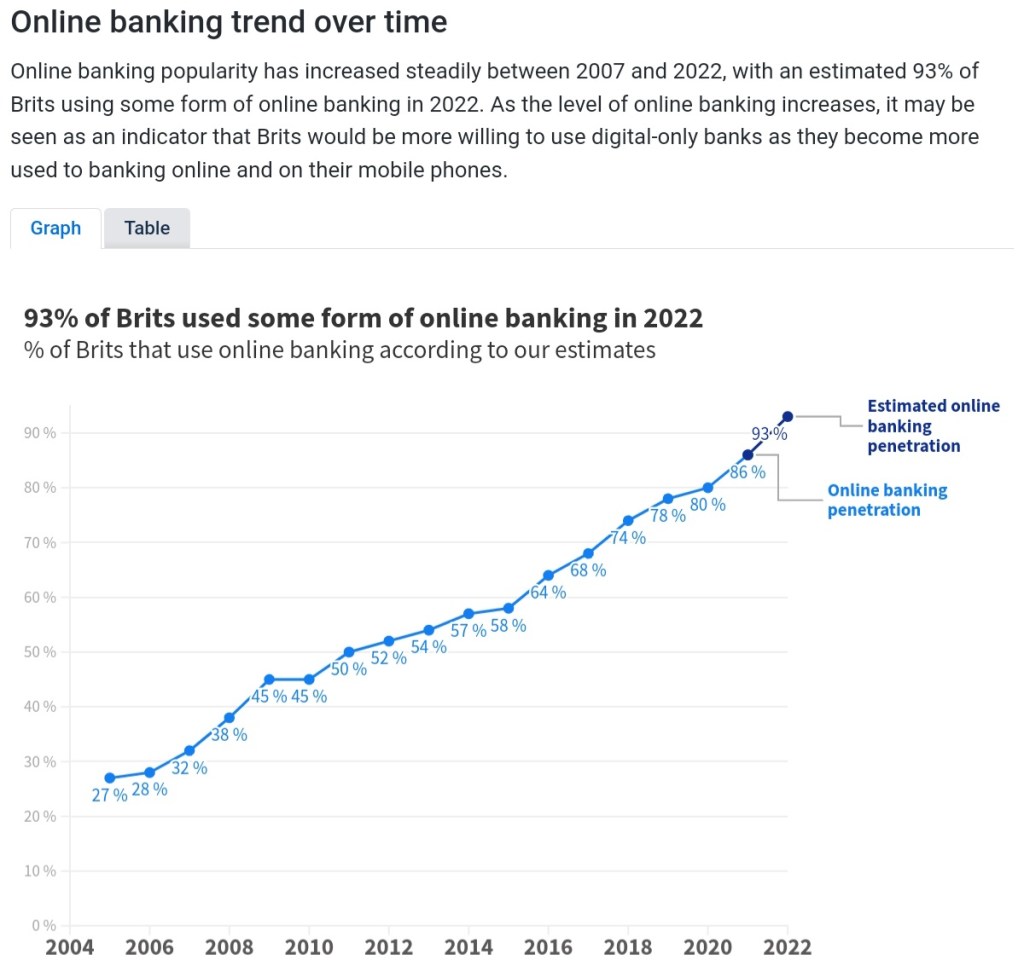
An interesting read on modern banking trends. As the old generations die out, the new generations forget the monetary age before the internet (source)
The future should therefore be clear, the Banks operating under the licences and regulations of the British Government have turned their backs on the analogue monetary world of metal and paper, and bet the entire future on the internet and mobile phones, the British population and the rest of the world will adopt digital currency via the front door, which also makes it intuitive and familiarises the public with adopting Bitcoin, via the back door.

An example of a Bitcoin wallet on a mobile phone, bluewallet (source)
Tracing the Roots of Bitcoin
We begin discussing Bitcoin at its roots, and for what purpose was it created?

The Bitcoin Whitepaper, posted on bitcoin.org (source)
On the last day of October 2008 as the global financial system collapsed into the largest crisis of the new century, a link was e-mailed to a paper authored by Satoshi Nakamoto with the title, Bitcoin: A Peer-to-Peer Electronic Cash System, describing methods of a peer to peer financial network without a central counter-party. The Paper also lists other digital currency projects in the first fifteen years of the internet that inspired and contributed to the invention of Bitcoin, from David Chaum’s DigiCash 1994, Hashcash by Adam Back yn 1997, to Wei Dai’s B-money in 1998, Nick Szabo’s bitgold in 1998 and Hal Finney’s rpow in 2004. By combining elements of these earlier projects, the decentralised protocol design is presented to the world.

Bitcoin’s Genesis block on the 3rd of January 2009 refering to the financial crisis in Britain, and the banking bailout by Chancellor of the Exchequer Alistair Darling via the British taxpayer
The Bitcoin protocol is released quietly on the 3rd of January 2009, with Satoshi nurturing the project and mining to protect the network in its earliest days, while trying to spread awareness to other cryptographers. The following quote is also from the first weeks of the protocol:
“The root problem with conventional currency is all the trust that’s required to make it work. The central bank must be trusted not to debase the currency, but the history of fiat currencies is full of breaches of that trust. Banks must be trusted to hold our money and transfer it electronically, but they lend it out in waves of credit bubbles with barely a fraction in reserve. We have to trust them with our privacy, trust them not to let identity thieves drain our accounts. Their massive overhead costs make micropayments impossible.
Bitcoin’s solution is to use a peer-to-peer network to check for double-spending. In a nutshell, the network works like a distributed timestamp server, stamping the first transaction to spend a coin. It takes advantage of the nature of information being easy to spread but hard to stifle. For details on how it works, see the design paper at http://www.bitcoin.org/bitcoin.pdf” ~ Bitcoin open source implementation of P2P currency, 11th of February 2009 (source)
The purpose of Bitcoin therefore was to decentralise money and accounting over the world, by-passing the need for central trust in intermediaries, whether a banker, an accountant, a lawyer or regulator, and rather trust in Bitcoin’s distributed network increasing adoption and the value of the network. It is incredible that this project is not only still alive, but as it crosses sixteen years old on the 3rd January 2025 with its market capitalisation over One Trillion Dollars and an unit of its currency at £50,000 each, threatening and terrifying the inflation and taxation apparatus of the Legacy Regimes all over the world, Bitcoin is stronger than ever looking towards the future and monetary independence.
Who Was Satoshi?
There has been so much discussion and misinformation surrounding this question, it is worth commenting briefly. Firstly, the fact that this person is still anonymous, considering the open and permanent nature of the internet as his invention slowly takes over and changes the world, is quite incredible. There are many investigators and journalists who have tried to discover the identity of Satoshi, using his pseudonym, his online hours posting pattern, his references, and of course his language, writing style, grammar and spelling. Satoshi’s online correspondence lasts approximately two and a half years from August 2008 to his last recorded e-mail in April 2011, providing insights into the writing patterns of the author (Satoshi’s complete collected writings can be read here).

“Sorry to be a wet blanket, but, writing a description of Bitcoin for general audiences is bloody hard. There’s nothing to relate it to.” – Satoshi, 5th of July 2010. This sentence suggests a Briton, or native of the Commonwealth (source)
Despite not knowing with any certainty leaving us guessing in the dark, when taking the Front Page Headline of the Times of London newspaper in the genesis block, alongside his English writing style in words and spelling, does suggest that Satoshi is derived from the British Isles with the strongest probability of being an Englishman. Even so, it leaves the possibility that he was a Scot or a Welshman! In any case, his long term will was bent on disrupting and loosening the noose of London’s Parliament, the Bank of England and the Pound over the rest of Britain, and undermining the Union that enslaves us in this destructive monetary system.
Bitcoin’s Elemental Trinity – Users, Developers, Miners
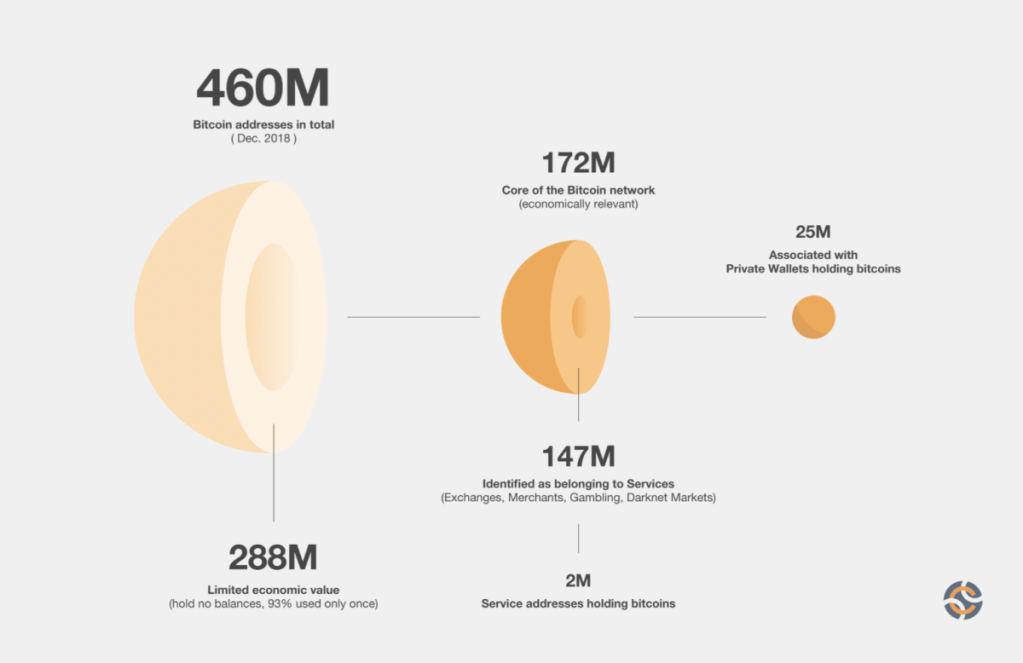
An interesting read on the approximations of Bitcoin and crypto users in general. Up to August 2023, there are estimates of 172 million Bitcoin users, and 25 million self custodying their bitcoins (source)
To expand further, Bitcoin can essentially be divided into three categories of network participants, in users, developers and miners.
Users – The most popular division are those that invest in Bitcoin as a store of value and payment network by either purchasing or accepting bitcoins or spending and selling bitcoins, for goods and services or national fiat currencies. This is by far the most common group and is a far easier method for the average person to adopt the network via its currency, rather than the more specialised developers or miners. Because of the nature of Bitcoin as a worldwide network operating on some level in all 195 countries of the world simultaneously, the technology is being adopted from the bottom up via the development of Bitcoin to Fiat currency exchanges that grows by the day. While Bitcoin began from scratch with zero users and zero value, it has today reached estimates of 25 million self custodial users, within a burgeoning ecosystem of 200 million users that have bought bitcoins on an exchange, and approximately 400 million crypto-currency users worldwide.
Developers – Having spent the first eighteen months nurturing Bitcoin through developing and mining, from Summer 2010 Satoshi Nakamoto’s contribution diminishes at exactly the time there was more demands on him to captain the inexperienced ship, by the end of 2010 he had disappeared completely leaving the project in the hands of a handful of early disciples. By disappearing Satoshi essentially left competing developers to fight it out for future direction, that has created Bitcoin’s bottom up and anarchic leaderless developer structure. There have been numerous Wars the most famous being the Blocksize Wars between 2015 and 2017, pitting big blockers and network centralisers against small blockers and network decentralisers. It was a ragtag band of small blockers that won the scaling War against big blockers, and since 2017 developers have surged from the hundreds into the thousands, which also means that the fighting and competing over Bitcoin development grows over time, making Bitcoin ever more resistant to change as should be expected, as its value grows over a Trillion Dollars. Even so, there have been a few upgrades that have achieved network consensus, such as SegWit in 2017 and Taproot in 2021, and it likely the future will see further consensus on improvements, to scale the network to more self custodial users.
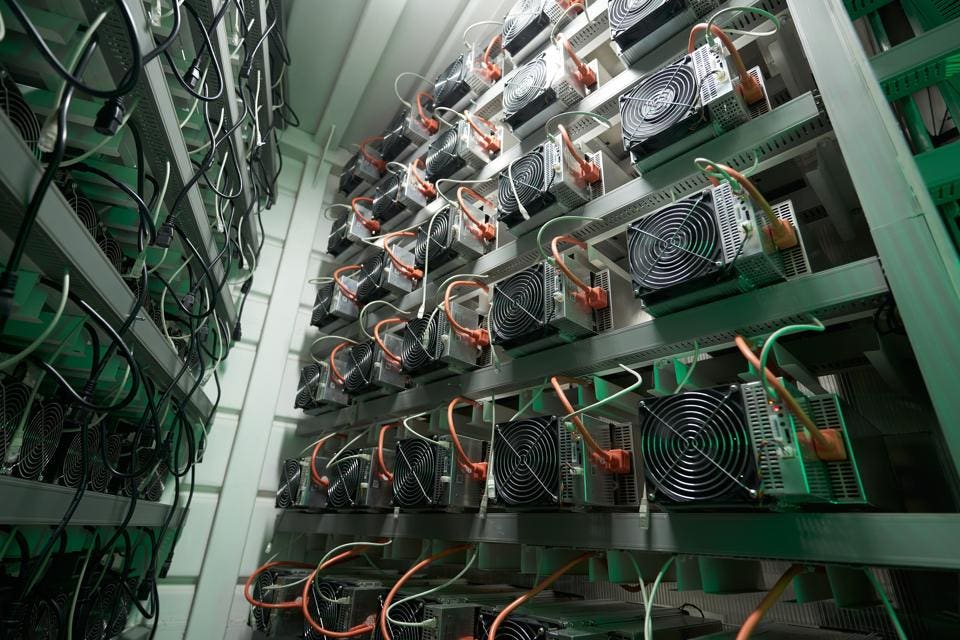
Powerful and specialist computers consuming electricity to mine bitcoin (source)
Miners – Completing the trinity are the miners, who manufacture and deploy specialised machines and electricity to protect the Bitcoin network from attacks, and in return get rewarded in currency, bitcoin. In the beginning it was possible to mine on personal computers and laptops, and this is how Satoshi mined the first million coins (fifteeen years later have still not moved). As interest in and the value of Bitcoin increased, competition in mining led to increasingly dense use of electricity, and a shift in processing power from CPU (Central Processing Unit) to GPU (Graphics Processing Unit), and by 2012 had advanced to ASIC (Application Specific Integrated Circuit). Since the Age of the ASIC electrical costs have become increasingly important to mining Bitcoin, reflected in the centralisation of mining in low cost electricity countries, especially China between 2012 and 2021. In May 2021 the China Communist Party (CCP) officially banned Bitcoin mining within the country, and even though mining remains healthy in the shadows and dark energy markets within China, global hashrate has migrated and decentralised to the rest of the world and especially to the West in the last three years, which strengthens and distributes the mining community geographically.
The miners are an essential element of the Bitcoin network, which they have leveraged to try and gain hegemony over users and developers, indeed the big blockers in the BlockSize Wars of 2015-2017 were the miners in order to increase their fees from transactions, the users and developers had to assert their supremacy over the miners and force them to submit, in the process recognising the supremacy of users (and full node runners) over the network.

The most successful distributed consensus network we have ever seen, works like this! (source)
The Fourth Element – Bitcoin Exchanges
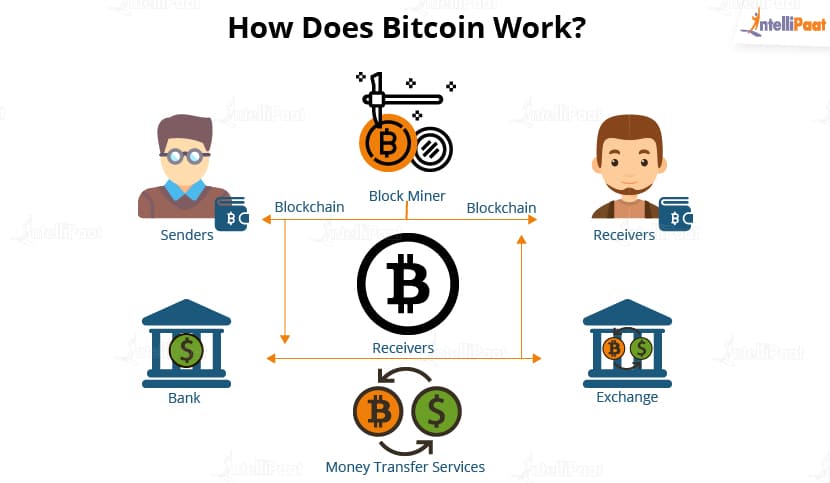
Bitcoin at its essence is a peer to peer ledger and network, but our present reality is trapped within a fiat currency world. The most convenient way of entering Bitcoin currently therefore, is through an Exchange for national fiat currencies (source)
Exchanges could be considered a sub-set of the users but they are also unique by financialising the Bitcoin network, by connecting to the banking system that currently imprisons the world’s debts wealth. Because Satoshi created Bitcoin with the miners as sole issuers of currency and first receivers, in the early days there was as such no exchange built to allow anyone other than a miner to own bitcoins. The first major exchange of note in those early years was Mt Gox in Japan and launched in July 2010, that allowed both miners to sell their bitcoins for fiat and for outside retail investors to sell their fiat to own bitcoins, and therefore it became the premier price discovery point of Bitcoin’s early value in fiat currencies. Other notable early exchanges were Bitstamp launched in November 2011, LocalBitcoins in June 2012, Coinbase in October 2012, and Bitfinex launched December 2012, but Mt Gox dwarfed them all as the most liquid exchange with an estimated 70% of global network share heading into its cataclysmic bankruptcy in February 2014, and its aftermath was the worry that the death of Gox would also kill Bitcoin.
In the wake of Mt Gox, Bitcoin exchange has decentralised to all of the world’s two hundred countries, and developing in different ways and means depending on national governmental regulations and banking restrictions, that will contribute to financialising and the success of Bitcoin in the long term, while in the short and medium term Bitcoin will be threatened by governments and banks that will attempt to control and co-opt, via the banking system and their leverage upon Bitcoin Exchanges.
Bitcoin Monetary Policy and Issue Schedule
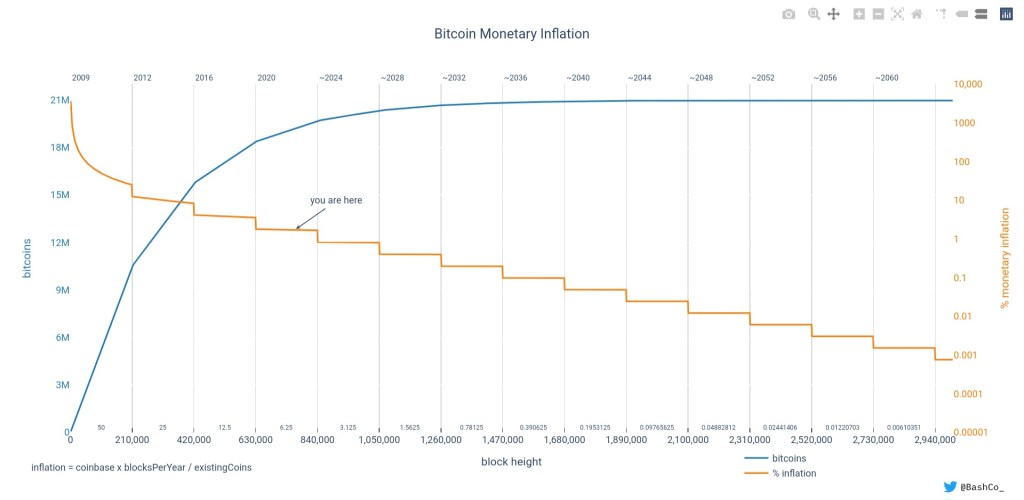
Chart of Bitcoin’s issue schedule, quantity (stock) in blue, and inflation rate (flow) in orange (source)
Bitcoin’s issue schedule has been pre-programmed with a maximum cap of Twenty One Million (21,000,000) units, that began on the 3rd of January 2009 issuing 50 bitcoins every ten minute block up to 28th November 2012, 210,000 blocks were mined, issuing 10,500,000 bitcoins (210,000 x 50), or half the maximum cap.
On the 28th November 2012, the block subsidy halved to 25 bitcoins every ten minute block (3600 per day) lasting until the 10th of July 2016, mining 5,250,000 bitcoins (210,000 x 25), for a cumulative total of 15,750,000 and/or 75% of total issue in the first eight years.
The issue once again halved following July 2016 down to 12.5 bitcoin every ten minutes (1800 per day) with the third halvening epoch lasting until the 11th of May 2020, to create another 2,625,000 bitcoin (210,000 x 12.5), for a cumulative total of 18,375,000 and/or 87.5% of the maximum…
The fourth halving epoch that dropped the subsidy to 6.25 bitcoin every ten minutes (900 per day) ended on the 19th of April 2024, when another 1,312,500 bitcoin (210,000 x 6.25) were mined for a cumulative total of 19,687,500 and 93.75% of maximum issue…
The fifth halving epoch between 2024 and 2028 will mine just over 600,000 at 450 per day for 96.975% of the maximum, with less than a million left to mine for the next over hundred years.
Digital scarcity and deflation are therefore intrinsic properties of the Bitcoin protocol with monetary flows halving every four years, fueling the increasing the user base that is today estimated at over 100 million people, and reflected in Bitcoin’s price in fiat currencies on exchanges globally.
Bitcoin Ownership Distribution
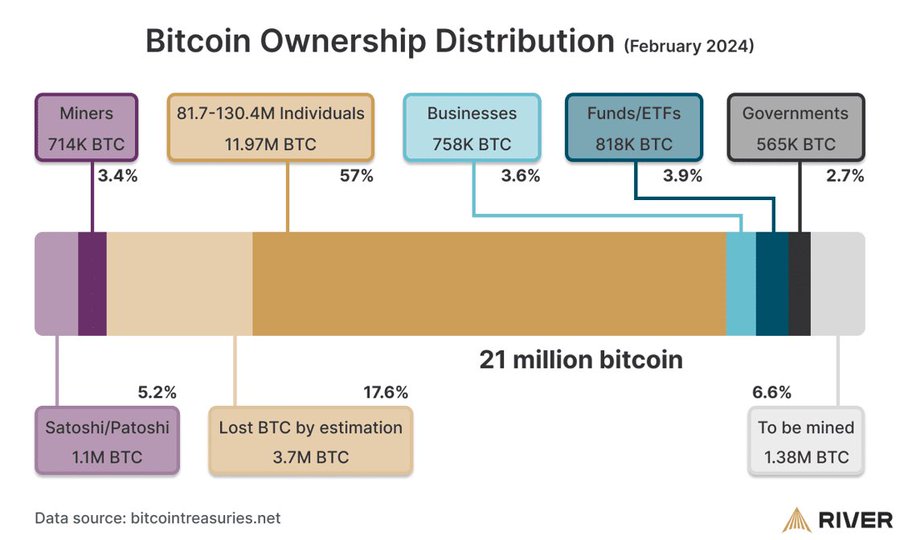
A very useful graphic for Bitcoin’s ownership distribution up to February 2024 (source)
Bitcoin’s Price and the Boom and Bust Cycle
To demonstrate the deflationary properties of Bitcoin in fiat currencies, the table below records the price of bitcoin on the 3rd of January (and Bitcoin’s birthday) in Pound Sterling every year since 2009, taken from this chart…
| Date and Year | Bitcoin Price in Pounds | Green/Red Dot |
| 3rd January 2009 | £ 0.00 | N/A |
| 3rd January 2010 | £ 0.00 | N/A |
| 3rd January 2011 | £ 0.19 | N/A |
| 3rd January 2012 | £ 4.27 | 🟢 |
| 3rd January 2013 | £ 8.34 | 🟢 |
| 3rd January 2014 | £ 576.71 | 🟢 |
| 3rd January 2015 | £ 189.00 | 🔴 |
| 3rd January 2016 | £ 313.08 | 🟢 |
| 3rd January 2017 | £ 735.74 | 🟢 |
| 3rd January 2018 | £ 12,138.06 | 🟢 |
| 3rd January 2019 | £ 3,151.18 | 🔴 |
| 3rd January 2020 | £ 5,436.28 | 🟢 |
| 3rd January 2021 | £ 29,032.95 | 🟢 |
| 3rd January 2022 | £ 35,236.97 | 🟢 |
| 3rd January 2023 | £ 13,743.49 | 🔴 |
| 3rd January 2024 | £ 35,755.59 | 🟢 |
Three green years and one red year have repeated the last three halving cycles. If the historical pattern repeats, 2024 and 2025 will also be 🟢
The above table provides a brief snapshot to Bitcoin’s value on one particular day in every year since inception to demonstrate its deflationary and currency appreciating powers over the last fifteen years, however does not tell us much on how the halving effects upon what I would call the Bitcoin boom and bust cycle.

Bitcoin’s Yearly Candles Chart captures the boom and bust cycle well –🔴🟢🟢🟢(source)
Bitcoin Intra-Cycle Volatility – Boom and Bust Cycle

Following historical patterns Bitcoin should have taken out all time highs in Quarter 4 of 2024, however it has already broken all time highs this cycle in Q1, probably due to the ETF Approvals that are a big deal! (source)
To try and explain the above chart, the block subsidy halving halves the inflation and flow rate that are created remember, by the miners. The halving effectively doubles the cost of production to mine bitcoin overnight, that will force the more uneconomical and unprofitable to turn off their machines and disconnect from the network for the time being. The halvening is also a Supply Shock increasing the scarcity of supply compared to its demand from the four corners of Earth, the only way to balance supply and demand is via prices, and a rising Bitcoin price.
While the supply shock may not show up in the price of Bitcoin on the day of the halving, history has demonstrated that the price has started shooting up in the six months following the halving, passing the all time high around the end of that year. The year following the halving is the parabolic bull market, when it is being talked about by everyone believing the moon will be reached, before imploding by 80% in the year after, shaking out all the corrupt exchanges and institutions, paper hands investors and gamblers, and re-setting supply and demand for the next four year cycle.
In the 2012-2016 Cycle, Bitcoin halved on the 28th of November 2012 around $10, before mooning to over $1,100 in the cycle high on the 5th December 2013, one year and one month since the halving. Bitcoin then fell 80% over 2014 to hit its cycle low around $200 on the 17th January 2015.
In the 2016-2020 Cycle Bitcoin halved on the 10th July 2016 at $650, before zooming to the cycle high of $20,000 on the 17th December 2017, one year and five months since halving. Bitcoin then again imploded another 80% to the cycle low of under $3,500 on the 15th of January 2019.
In the 2020-2024 Cycle Bitcoin halved on the 11th of May 2020 around $8,000 before thundering to hit a cycle high of $70,000 on the 10th November 2021, eighteen months since halving. Bitcoin then fell another 80% to a cycle low of $16,000 on the 20th November 2022.
It should be noted here rather astoundingly that Bitcoin’s cycle highs in the last three four year cycles, have hit in December 2013, December 2017 and November 2021, four years apart in the last twelve years, and in the eighteen months following the halving. It should also be noted that Bitcoin’s cycle lows hit in January 2015, January 2019, and November 2022, one year following the cycle high, and eighteen months before the next halvening.
If the historical pattern strikes for a fourth time, the halving in April 2024 will likely lead to the cycle high at year end 2025, fifteen months from today.
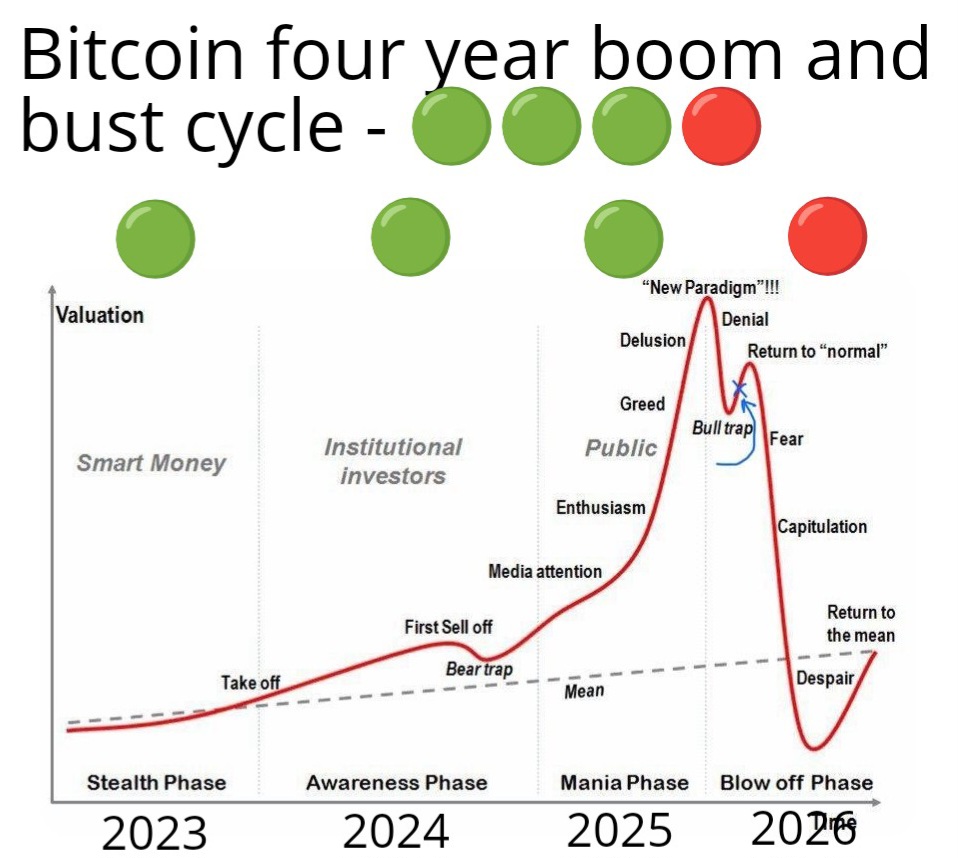
At year end 2024, we will be halfway through another four year boom and bust cycle. Next year, the mania phase!

Interesting tweet thread on price targets for 2025 mania phase between $150,000 and $275,000 (source)
Adopting Bitcoin – The Global North and Global South

The adoption of crypto-currencies on the whole are spreading fastest in countries with weak national currencies, and under developed banking systems. According to statistics, out of the top twenty countries on the above index, nine are in Asia, three are in South America, and two are in Africa (source)
Most of the geopolitical discussion divides the World between the West and East, but for this section we will divide between the North and South. The Global North is on the whole developed countries with stable governments and banking/financial systems with relatively high trust levels by their domestic populations and lower cost inflation, including Europe, the UK, the US, Russia and China. The Global South on the whole are developing countries with less stable governments and financial systems, lower trust among domestic populations and higher cost inflation, including The Middle East, India, Southeast Asia, Africa and South America.
In the Northern countries with more developed financial systems, Bitcoin has developed more as a store of value and a method of saving for the population, while banking remains superior on payment rails and medium of exchange and unit of account at least for the time being. In the Global South where the banking systems are still developing and where sections of the population are under-banked or even unbanked, Bitcoin is developing as a store of value AND the payments system, alongside crypto-currencies more generally, for example stablecoins. It is likely therefore that the Global South will adopt Bitcoin sooner as a payments rail and every day money, than in the Global North where Bitcoin is developing more as collateral and a future foundation for the banking system and payment rails.
Adopting Bitcoin – From the Private Sector to the Public Sector
As already discussed, Bitcoin started from scratch and from the bottom up, the earliest adopters were individuals, businesses and corporations in the private sector, building the exchanges and infrastructure to scale the network to more users, and in a time when national governments and the public sector didn’t know and didn’t care about Bitcoin. As Bitcoin passed its Tenth Birthday in 2019 things started changing in this respect, with National Governments and traditional financial systems waking up to the opportunities and threats of adopting Bitcoin before other countries.
Bitcoin Adoption by Countries

Nayib Bukele, President of El Salvador, the first country to legalise Bitcoin as money (source)
El Salvador with a population of 6.5 million, became the first country to make Bitcoin legal tender on the 7th of September 2021, and the Central African Republic with a population of 5.5 million became the second country on the 27th April 2022. Additionally there is reporting on the islands of Tonga (population of 105,000) and Fiji (population of a million) considering accepting Bitcoin as legal tender to ease their dependence on Western currencies, there is also the case of Panama (population of 4.3 million) where there are clear regulations, and even though Bitcoin is not legal tender, there are no capital gains taxes, putting Bitcoin on the same footing as the US Dollar and the Panamanian Balboa, the official currencies in Panama.
Additionally, acording to recent whispers Suriname (population of 630,000) and Colombia (population of 52 million) in South America are considering a Bitcoin adoption strategy, while the rise of Javier Milei in Argentina (population of 47 million) has led to freedom in using bitcoin to settle contracts, and more importantly has removed all taxes on bitcoin exchange removing governmental barriers, that will fuel domestic adoption of Bitcoin and attract capital and expertise of Bitcoin’s worldwide ecosystem, to flood into Argentina to build the future.
What do the above countries all have in common? They are all developing countries on the periphery of the global financial system, dependent on Dollars and Western currencies, with financial and banking defects that stop the people and the economy from creating and growing capital and wealth, and even more heartbreaking suck the youth out of these countries into the West to work and send money home. The trend should therefore be clear, politicians in the poorer countries on the peripheries will drive Bitcoin adoption for financial freedom and independence from the West, for the benefit of the future. The likelyhood at the Nation State level is that the developing countries of the South on the peripheries will adopt Bitcoin as legal tender first, and the developed countries of the North at the core will adopt Bitcoin as legal tender last.
Nation States Mining Bitcoin
From the above, and the movement of eight countries containing over 100 million people towards Bitcoin, the question arises of how to conveniently get hold of it? This is another aspect where Bitcoin excels, because bitcoins can be created within the Country by mining and via national electricity grids, that in most of the Countries of the world are in State hands already, one way or another. By diverting state electricity currency can be created domestically, thus strengthening National Security and Independence. For this reason, Bitcoin will become an important part of global geopolitics in the next decade.
Examples of Countries mining Bitcoin:

Iran – Because of Western economic and financial sanctions banning the sale of oil and gas in Dollars to settle trade, Iran has decided to burn its oil and gas into electricity and for mining Bitcoin. Indeed while the Iranian Government has banned Bitcoin mining for the public after mining operations were established in mosques as receivers of free electricity from the government, Iran is mining on the Nation State level through the Armed Forces, and explicitly with the blessing of the Government. The bitcoins are then used to pay for imports that cannot be paid for in Dollars, and Iran has been mining since at least 2019.
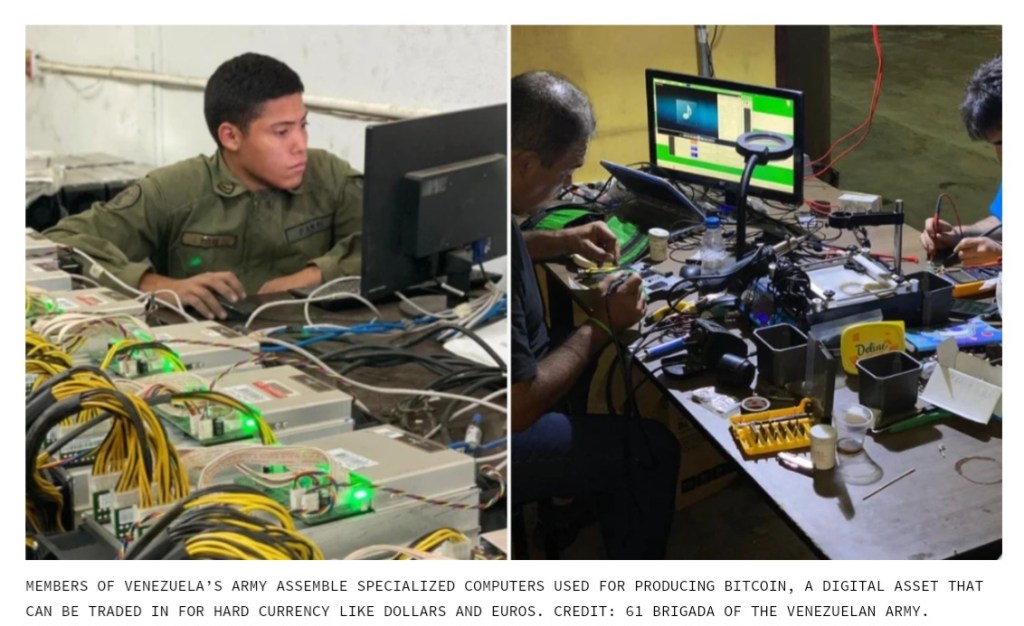
Venezuela – Another Country suffering Western sanctions, after jailing private bitcoin miners in a country where electricity is practically free for the public, Maduro’s Government and the Armed Forces have been mining bitcoin since 2020 to stabilise their financial foundations, as the Bolivar national currency melts in value by the hour in the hands of the public.

Bhutan – The news came out in only the last year that the tiny Kingdom of Bhutan, a Nation of 700,000 in South Asia, have been secretly mining since 2020 using renewable energy and hydropower to create electricity. Bhutan’s reasons for adoption of mining on a Nation State level, includes loss of tourism revenues since the Covid catastrophe, and an attempt to stem the flow of emigration of the young out of the Country to work in Western countries for their fiat currencies (1.5% of the population have emigrated to Australia alone in the last two years).

El Salvador – In addition to making Bitcoin legal tender, Bukele has gone a step farther in utilising renewable energy and geothermal heat from volcanoes to mine for bitcoin, for its national treasury and for leveaging debt in the form of Volcano Bonds to build out the country’s Bitcoin infrastructure further.
The four examples above demonstrate how Countries and Governments can produce bitcoins at home, breeding energy and monetary independence from the shortages and perfidy of Western currencies, as the global trust in the Eight Decade Eurodollar System wanes, and its financial sanctions and restrictions on the rest of the world increases. Iran, a country of 88 million, has already turned to Bitcoin to evade sanctions, that has extended to Russia and a country of 147 million people, in the process of legalising Bitcoin as a foreign payments system and rumours that the Government is secretly mining Bitcoin as a strategy to reduce dependence on the EuroDollar in international trade. It should also be clear that Governments can legalise Bitcoin on the State level, while stricly regulating or banning Bitcoin at the Public or individual level, and this is the strongest probability in the short term, that Nations will take advantage of Bitcoin at the international level while stricly regulating Bitcoin’s use as a domestic medium of exchange and payments rail, lest it threaten and undermine the monopoly of their national currencies over the domestic population. But over the longer term and as the value of Bitcoin increases, it will become a matter of National Security to legalise bitcoin for payments, even considering the mortal threat this would create for the banking and taxation apparatus.
Bitcoin in the West – New Foundations For Western Debt Unions
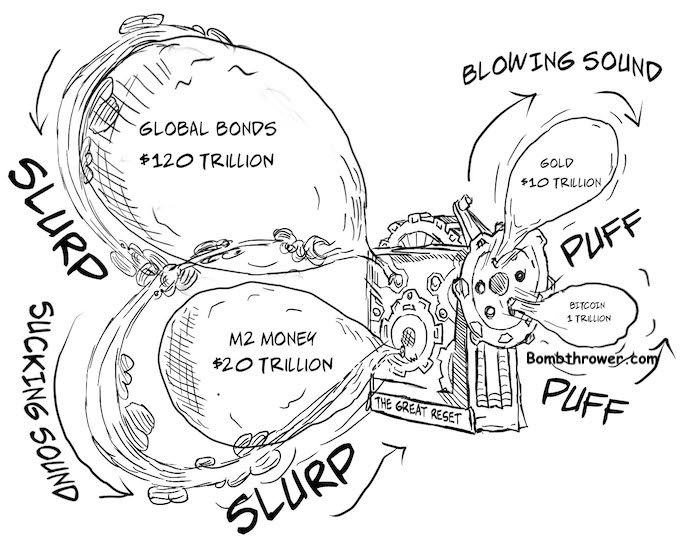
Re-setting global collateral standards will include the revaluation of Gold far higher, with Banks and Governments using Gold and Bitcoin and intrinsic scarcity both physical and digital as the foundations for a reformed financial system, at the expense of debasing national fiat currencies and government bonds disabling Western Unions and their ability to create national debt and government spending (source)
We arrive at the heart of the Global Financial System, and three monetary and fiscal unions that strangle dominate trade settlement over the world. Despite the neverending and nightmarish debts the United States, the European Union, and the United Kingdom have created since their inception, inflation and debasement is generally lower in these currencies and the banking and payments systems operate more efficiently, meaning the probability that it will take longer for Bitcoin to take over as a payment network, but Bitcoin offers far more short term value for the West as a store of value and scarce and valuable collateral to back the debts currency and treasury.

2008 was the peak of trust in the EuroDollar Financial System – ever since the world’s Central Banks have been preparing for a change in the financial order. Gradually, then suddenly
Because of Gold’s historical role as foundation of the old monetary and banking system, and for the simple fact that the Central Banks of the World still hold gold on their balance sheets as independent and sovereign collateral, then it is relatively easy to predict that the Western Debt Unions, amidst the collapse of their international bond and debt markets and increasing domestic inflation and currency debasement, will decide to revalue their gold reserves higher and through the fraud magic of Accounting, will revalue their balance sheets higher, increasing the demand for gold buying and storage in the West.

Latest Bitcoin to gold exchange and market cap, courtesy of Clark Moody’s Bitcoin Dashboard
What is true for Gold, is true for Bitcoin. If the Banking System and National Governments begin creating Bitcoin Treasuries as a foundational asset on their ledgers, as the price and value of Bitcoin rises to does the value of the collateral underpinning banking and treasuries increases, allowing the banks to increase loans and “economic growth”, increasing the tax take and government spending on the liabilities side. The price that will have to be paid for revaluing superior collateral in Gold and Bitcoin higher is by debasing the value of national debt lower, making Western debt undesirable to the rest of the world, disabling out of control Government spending and trade deficits, but this price will be worth paying compared to financial and debt crises and higher inflation and currency debasement.
Western Banks Adopting Bitcoin
We begin with the unelected financial bureaucracies that supervise the world’s Central Banks. The Bank for International Settlements is recognised as the Central Bank of Central Banks, with its god awful ugly headquarters in Basle, Switzerland, and its Committees decide capital and collateral standards for the global banking system, so it’s important to pay attention to regulatory developments in crypto-currencies at this level.
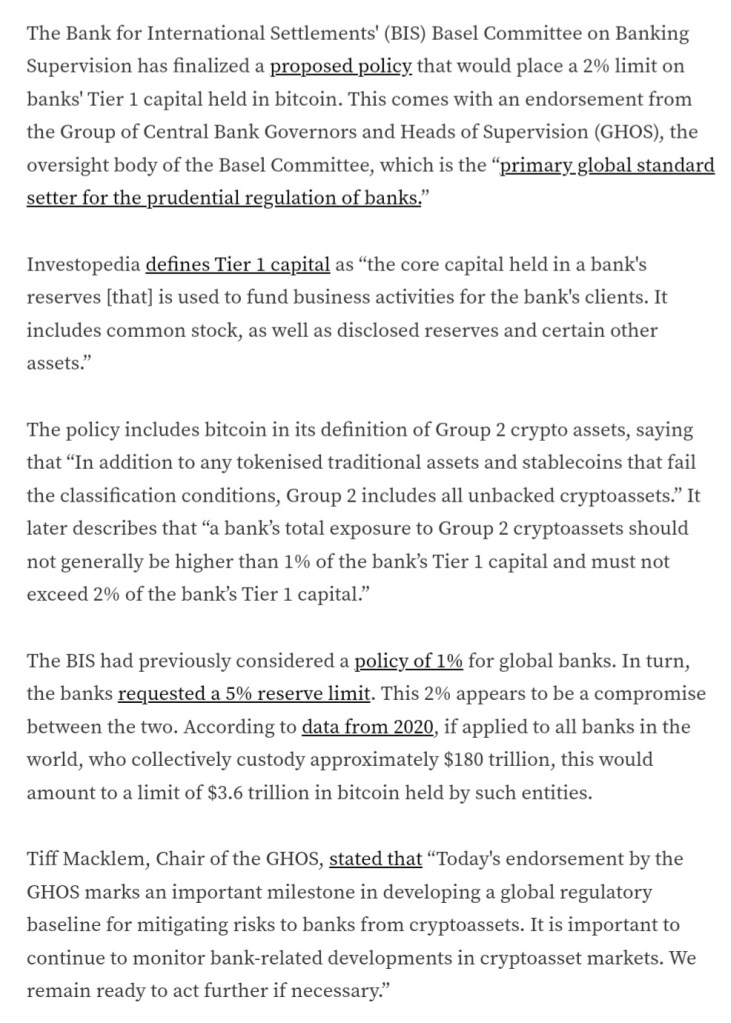
Basel Committee Finalises Policy Suggesting 2% Exposure Cap For Banks. With approximately $180 TRILLION under custody, 2% would be roughly $3.6 TRILLION, nearly 3X Bitcoin’s current market of $1.3 Trillion (source)
The Basel III Accord, is the latest framework that sets international standards for bank capital adequacy, stress testing, and liquidity requirements, and is intended to strengthen bank capital requirements by increasing minimum capital requirements, holdings of high quality liquid assets, and decreasing bank leverage.
It is Basel III that promoted physical and allocated gold to Tier 1 Capital, in December 2022 the Basel Committee on Banking Supervision (BCBS) finalised its proposed policy on hodling Bitcoin, after consulting with banking lobbies (including J P Morgan and Deutsche Bank), a limit of 2% of Tier 1 capital in Bitcoin. Based on $180 trillion in bank capital, 2% would be around $3.6 Trillion.
While the above does not mean that all the world’s banks are about to flood into Bitcoin in the near future, the door has been opened, by the banks themselves, into holding Bitcoin as collateral on their balance sheets. For example, if the price of Bitcoin were to increase 10X from here, 2% would multiply to 20% of balance sheet capacity, and ten times the capacity for banks to issue loans and the economic growth that would follow in its wake.
Updating Accounting Standards for Bitcoin
As well as Banking Accords that define capital allocation and balance sheet composition of the global private banking network, there is also the institutional side to explore, covering pension funds, insurance funds, mutual funds, money market funds, exchange traded funds, and the whole corporate space in general. Institutions, like banks are heavily regulated in what they can and can’t invest in, their hands are tied to accounting standards and the world of bean-counting.
While there are many institutions already investing and invested in Bitcoin, there are accounting penalties and disincentives for doing so at present, holding Bitcoin as a balance sheet asset for example under current GAAP Policy is classed as an indefinite-lived intangible asset, which has only downsides for Bitcoin in balance sheet accounting. If Bitcoin falls during a quarter, the company must recognise the impairment charge if the fair value decreases at any point below the carrying value, however if Bitcoin increases this is not recognised as a gain nor reflected in the asset’s carrying value on the balance sheet.
This ludicrous designation as indefinite-lived intangible asset, that thas inhibited institutional investment in Bitcoin on corporate books is now set to be revised, as the Financial Accounting Standards Board (FASB) moves forward to fair value accounting for Bitcoin.

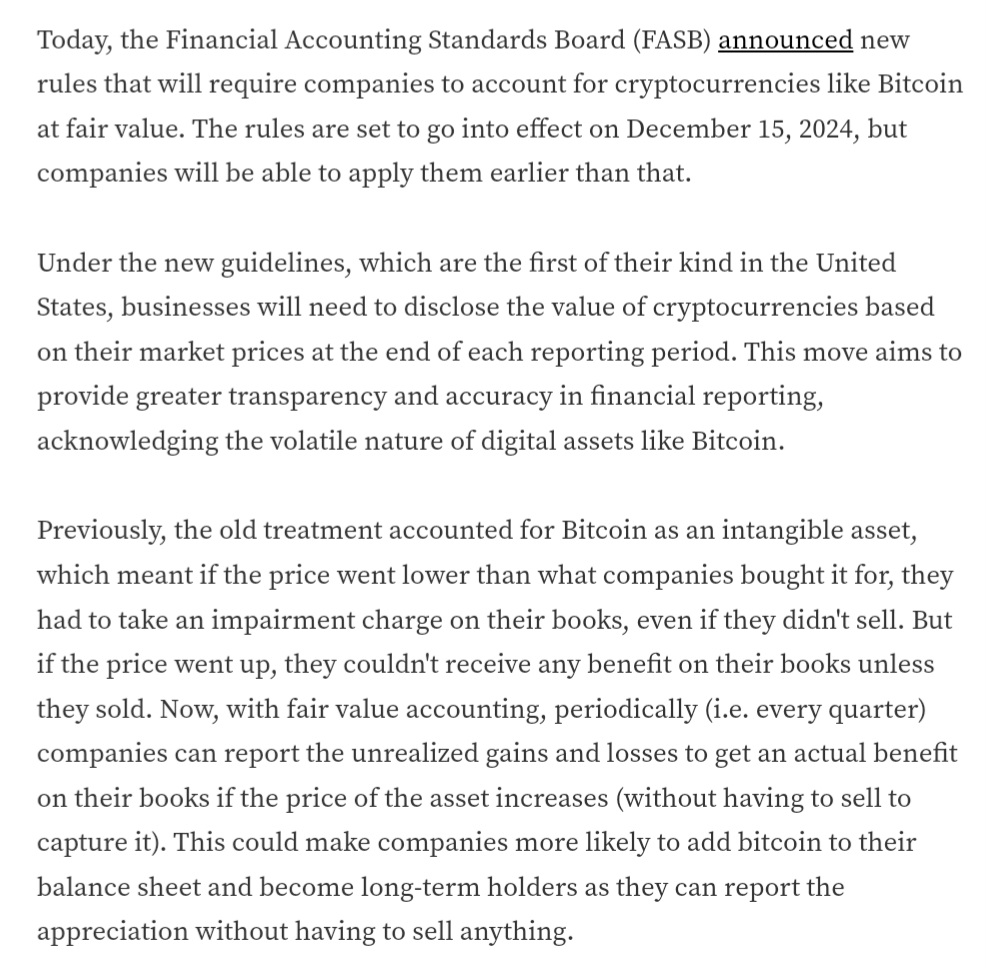
FASB is the private standard-setting body whose primary purpose is to establish and improve Generally Accepted Accounting Principles (GAAP) within the United States in the public’s interest. The Securities and Exchange Commission (SEC) designated the FASB as the organisation responsible for setting accounting standards for public companies in the U.S (source)
This one accounting tweak has huge ramifications for Bitcoin’s future, as the US and the world’s most financialised economy adopts fair value accounting, it forces Accounting Standard Boards in other countries to take the same stance towards Bitcoin as a treasury reserve asset, allowing their private companies to buy into the Bitcoin Accounting Standard… From now on companies holding bitcoins on balance sheets can mark to market every quarter at fair value, the increasing value of Bitcoin increases the value of institutional balance sheets and the company’s financial health, allowing it to expand operations and growth for the future… And because bitcoin’s issue schedule is completely predictable and halving every four years, all these institutions will be scrambling for a share of the 21,000,000 maximum cap, of which nearly 20 million have already been mined and with the issue schedule halved in April from 900 per day to 450 per day, will drive a demand for Bitcoin that far outstrips supply, I argue a persistent and insatiable institutional bid for Bitcoin could abolish the four yearly boom and bust cycles that have repeated three times since the 2009 inception… The liquidity unleashed into Bitcoin is sure to reduce its volatility, which increases stability against Bitcoin’s wayward price swings, that would make bitcoin even more desirable as a reserve asset and collateral to hold, contributing further to the feeding frenzy that revalues the whole balance sheet and solvency of corporate America and beyond even higher still! Just take some time to think about that…
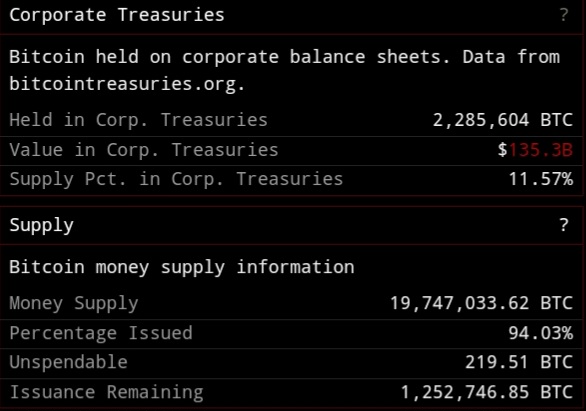
Bitcoin corporate treasuries currently at $135.3 Billion, 2,285,604 bitcoins, or 11.6% of supply, according to bitcointreasuries.net, courtesy of Clark Moody’s Bitcoin Dashboard…
Bitcoin Adoption by Western Governments – Parliamentary Laws
In addition to the unelected private bureaucracy and supervisory bodies, there are also public and elected bodies and the Laws of the Land, Parliamentary Laws and Politicians will have a bigger influence on the future of National Bitcoin adoption.
To discuss the West and the beating heart of the EuroDollar global banking network, against all expectations, the European Union have taken the lead with Markets in Crypto Assets – MICA signed into Law since the 20th April 2023, and to mixed reviews. Even so, European companies and banks now a have a far clear picture of what is and what is not possible with Bitcoin, with Germany’s largest bank, Deutsche Bank, one of the earliest movers offering crypto custody to its clients.
After looking as the most promising Union for adopting Bitcoin under the Presidency of Donald Trump, the United States have fallen to the back of the class during the Presidency of Joe Biden and the Democrats, their obvious hated of Bitcoin out in public, and strongly influenced Operation Chokepoint 2.0 and the mildly successful attempt to starve Bitcoin Exchanges and Crypto-Banks from the TradFi Sector. Despite the efforts of the Democrats, on Wall Street the financial system continues to warm with the dozen new ETF’s launched in January 2024 by some of the world’s biggest companies such as BlackRock and JP Morgan, showing an increasing appetite to invest. Even within Congress, there are Crypto Bills working their way through the legislative swamp, from the bipartisan Lummis-Gillibrand S. 4356 Responsible Financial Innovation Act – RFIA since July 2022, the Market Structure draft bill and Clarity for Payment Stablecoins Act 2023, by the Chair of the Financial Services Committee, Patrick McHenry and Republican House of Representatives Members, as the US falls behind in Bitcoin adoption and dependent on the second coming of Trump and a Republican landslide in Congress in November.
Finallu to London, where the Financial Services and Markets Act 2023 passed into Law, for regulating the crypto-currency sector. The lobbies of the Treasury, the Bank of England and the Financial Conduct Authority will consult with remaining lobbies in the private and public sector, that will decide the extent and the speed at which Britain will financialise Bitcoin.
Brexit has been a heavy blow to the City of London’s financial sector, with many European banks having repatriated to the Continent, more than likely behind the last Conservative Party’s efforts to transform Britain (read London) into a crypto hub (source)
The Future of Bitcoin in Britain
Britain was at the peak of its power at the end of the Industrial Revolution, it spent the second half of the Nineteenth Century running trade deficits with the US and Germany (in exchange for Pound Sterling’s and the City of London’s status as the world’s financial centre), the productive economy was sacrificed until Britain’s suicide in the First World War. By the end of the Second World War Britain’s power and Empire was spent, losing world reserve currency status to the US and London losing the world’s financial centre to New York. Britain would reinvent itself from the residues of financial hegemony, and the City of London became the main hub of the offshore EuroDollar that evolved following the Second World War, alongside smaller European centres in Germany, Switzerland, Italy and France. The EuroDollar and shadow banking exploded following the severing of the Gold Standard in 1971, coming to dwarf the actual Dollar in size and complexity, especially from the Eighties manifesting as the Big Bang and deregulation of London’s financial sector. The effects of the Big Bang were dramatic, and by 2006 many considered London to have recaptured the global financial centre, and co-incidentally this would prove the peak of the EuroDollar system.
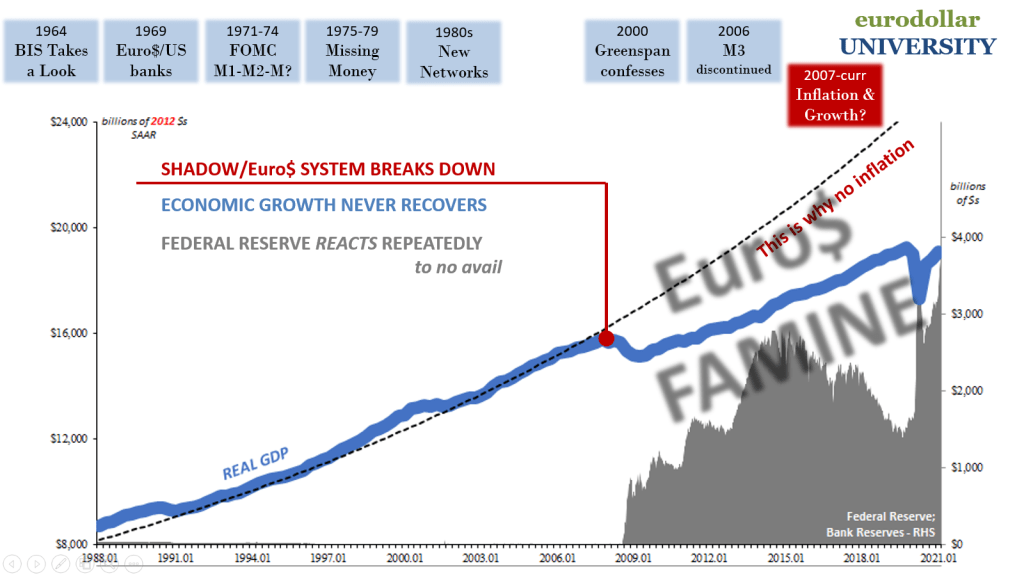
Peak EuroDollar (and London) is August 2007, when something snaps inside the system and trust between New York and London banks break down, unleashing the Greatest Financial Crisis since the Great Depression of the 1930’s (source)
EuroDollar shortages led to the Financial Crisis of 2008 (as Satoshi was releasing his whitepaper) and is remembered as one of the worst crisis in monetary history. Ever since the world and especially Britain has suffered from a weakness in lending amongst the banks, a by-product of low trust levels and aversion to risk that has translated into subdued credit creation hurting businesses and the economy in general, with GDP as one measure of economic productivity suffering and poverty increasing. Indeed, despite the best efforts of the legacy media and press to paper over the cracks since 2008, an increasing number are starting to recognise the period since 2008 as the Greater Depression and the Silent Depression, that no-one amongst economists, journalists, the Treasury or the Bank of England wants to discuss. Furthermore, the last sixteen years can be described as the end of world’s centraliastion aka globalisation, and the spluttering EuroDollar as the beginning of decentralisation and can be seen in the political upheaval of “de-globalisation aka re-nationalisation (populism) of the last ten years, such as the Brexit Referendum of July 2016 and Donald Trump’s election in November 2016.
The UK banking sector has suffered further since Brexit as a number of European banks scaled down or out of London’s financial headquarters, back to the smaller centres on the Continent, especially Frankfurt, hurting the financial sector of what can be argued is Britain’s major remaining export in this shell of an Union, with our increasing trade deficits that debase our currency, hasten the end of our industries, increase our debts, and breeds a dependence on foreigners and enemies for energy and industry that should be a matter of National Security to be produced domestically. With National Debt and interest expense soaring, in an energy and cost of living crisis, and a stagnating banking and credit creation sector heading into the the next Global Recession and Financial Crisis of the Twenty First Century, it appears obvious to the author that the Western Debt Unions and especially Britain will have to revalue stronger foundations for its monetary and accounting apparatus. By revaluing gold as historical and traditional collateral and also monetising Bitcoin and crypto-currencies as new collateral, this was the most probable reason for the movement of the prior Conservative Government to reinvent Britain (London) as a “Crypto Hub”, that obviously depends on how the British Bureaucracy regulates the new Crypto Act that recognises Bitcoin as a new monetary asset within the British Union.

The current strict regulations by the FCA are leading to the questioning of Conservative Party noises about turning Britain into a Crypto Hub (source)
As well as Operation Chokepoint 2.0 in the United States, a similar operation has been underway in Britain through FCA regulations, and the strict limits placed upon the High Street Banks (Lloyds, NatWest, HSBC and Barclays) and most Fintech Banks for buying and selling bitcoin on Exchanges, and as KYC/AML Compliance chokes the sector. Powerful financial and government lobbies still remain in one the world’s oldest financial unions, and will continue to try and slow down Bitcoin’s growth and adoption through unelected bodies such as the FCA, but it is ultimately Politicians and Parliament and lobbies that will decide the extent to which City of London banks and by extension the British economy, financialise Bitcoin adoption. If London’s Parliament decides to lightly regulate Bitcoin in this Island and critically drops tax rates, the barriers to rebuilding the British economy on the Bitcoin Standard will be lowered, allowing domestic Bitcoin businesses to thrive, and attracting foreign capital and businesses to move operations to a new and friendly global jurisdiction.

The British Crypto Lobby in 2023, was over 5.6 million or 11% of the population according to this June 2024 estimate (source)
Never forget that we are all ultimately customers of the British Banking System, and pay our taxes and elect Politicians to exercise the public will. Even though this seems unlikely at times, ultimately the banks are dependent on our custom and Parliament is dependent upon our taxes and votes to remain in business, and so ultimately the most powerful lobby over the monetary governance of Britain is the Public.
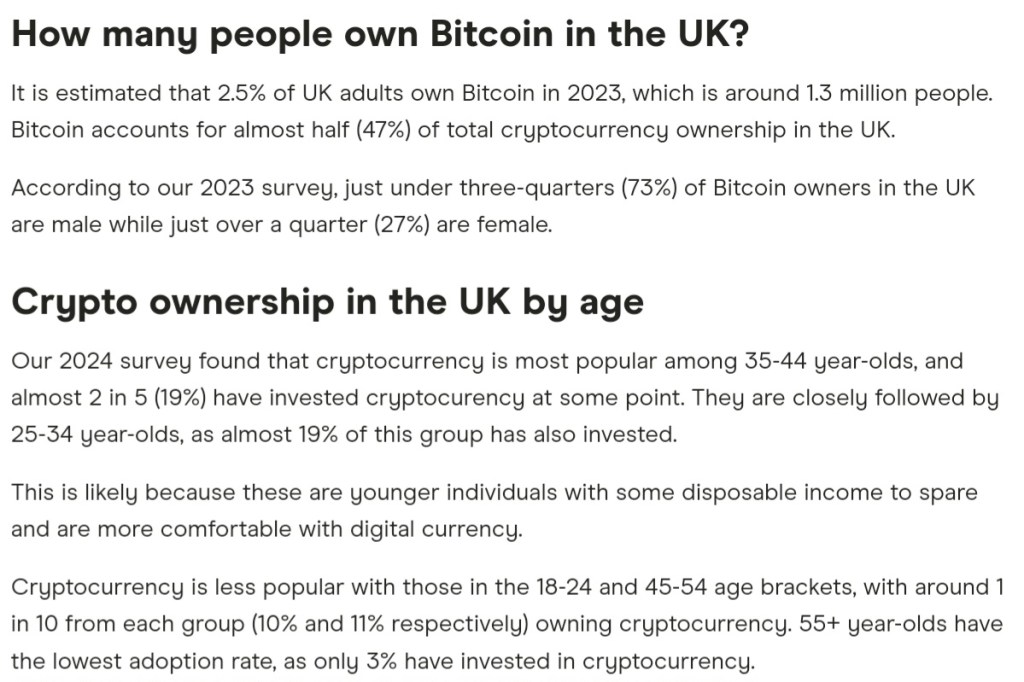
The Bitcoin lobby was 2.5% of the population or 1.3 million in 2023. However the 2024 update above suggests it is now closer to 5%, 2.6 million people.
As should be expected the British Bitcoin lobby is young, working, and three quarters are men. And even though only 5% of the public currently, the network growth and value of Bitcoin is going to grow the adopion trend among the younger demographics, as their wealth increases so the voice and influence within British Politics to pressure clueless MP’s.
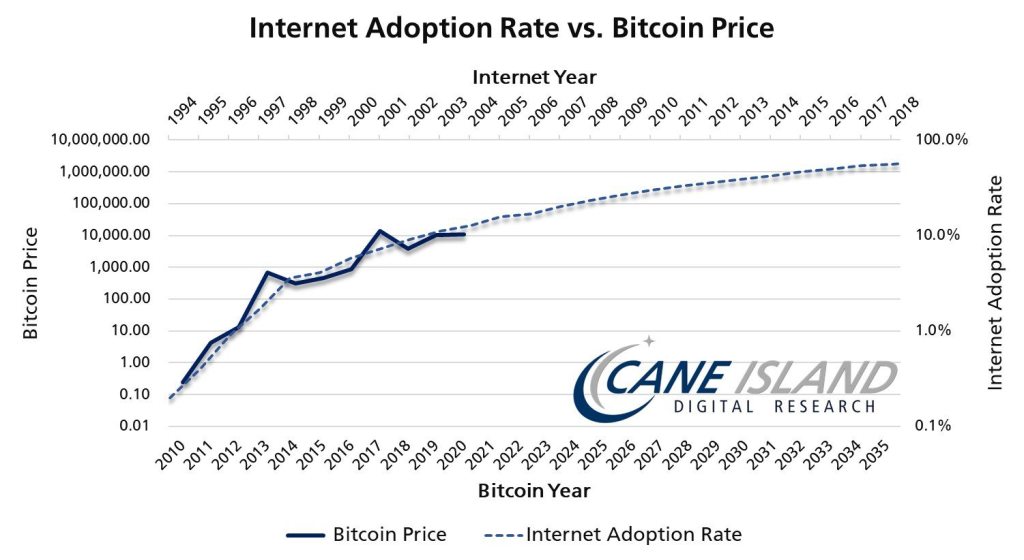
Comparing Bitcoin adoption with Internet adoption. Comparing 2009 to 1994, Bitcoin is today roughly where the internet was in 2009. We are still so early! (source)
The Max Plank Principle describes technological advancement happening one funeral at a time, in the meaning that over time young generations become immersed in new ways of operating while the old generations die out using the traditional methods, and this principle is incredibly important to understand in attempting to predict the future. By now there is barely anyone under the age of 30 that remembers the old age before the internet, and in another 15 years no-one under 30 will remember the old age before Bitcoin. If we wind forward a decade, when the Bitcoin lobby has swollen to a quarter or a third of the population, then this lobby will be voting for Politicians and Parties based upon their attitudes and policies towards Bitcoin. A lobby of 20% translates electorally to a swing of 40% between two parties, and can therefore make or break Britain’s political parties. This is the most powerful lobby to loosen Parliamentary and Government regulations on Bitcoin, and enabling the financial sector to monetise and increase Bitcoin adoption in Britain over the next decade.
The Future of Bitcoin in Wales
As part of a Legal Union for nearly five centuries Wales has no financial infrastructure of its own, it uses London’s inflationary currency, pays taxes into London’s Treasury, and receives public spending back to be wasted distributed by Cardiff’s Senedd in Corruption Bay. We are therefore completely dependent upon the infrastructure of the Union making any Independence from the top down from the Senedd impossible in the short term, but London bank infrastructure does allow the Welsh to buy Bitcoin on Exchanges and then withdraw to the Bitcoin network and self custody, which makes Independence from the bottom up likely and more likely as the Welsh adopt Bitcoin as an alternative monetary and accounting network. If we extrapolate from the estimated 5% of Bitcoin hodlers in 2024 within Britain, then an estimated 150,000 Welsh people hodl Bitcoin today, putting them on the path to monetary independence, the prerequisite to any legal independence for a Welsh Government in the future.
The future of Bitcoin in Wales brings us to Part Three of the Essay, discussing and theorising a realistic Independence Strategy and the essential Policies for an Independent Welsh, the only sustainable foundations for an Independent Wales.
End of Part Two
PART THREE: FUTURE

Independence Strategy
Part Three of the essay will discuss strategy and theory on the future in a Bitcoin Standard, and even though specific to Wales, it also applies to all other Nations over the world that will face the same dilemmas, as the trend of Centralisation and Union collapse under their insurmountable debts, and as Decentralisation and Independence create a number of new and smaller Countries in the decades to follow.
Monetary Policy
The most beautiful thing about decentralisation from the ground up by adopting the Bitcoin Standard, is that the public will have been adopting the new system for at least two decades before any Central Government, and as already discussed in Part Two the lobby for influencing Cardiff’s Senedd Members long established. This is dependent on the Welsh removing their bitcoins off Exchanges with the British Pound, and stored under self custody. Once the people are holding bitcoin themselves, this opens up the utility of Bitcoin’s network for transacting peer to peer trade, and buying or selling through a mobile phone using the payment layers being developed and deployed on Bitcoin today, from the Lightning Network acting as the connecting medium to sidechains, statechains, e-cash and the distributed digital banking network of the future.
Once an individual has adopted the Bitcoin network as well as hodling the currency they are in effect independent from British and Welsh Governments, and rather have put their trust and faith in a worldwide accounting standard outside of Government, and despite the legal and physical force of whatever is left of the Welsh Senedd, the public will decide how much attention to pay or how hard to squeeze Cardiff to bend to the democratic will. The all important point to understand is that the Bitcoin Standard eliminates the inflation, taxation and regulation apparatus of the British Pound, over the short to long term the trend will be away from the financial prison of the Pound to the financial freedom of Bitcoin, the bigger the incentive for Bitcoin users in Wales to lobby and influence Welsh Gov to lower taxes and barriers on using bitcoin officially. Any attempts by Welsh Gov to strictly regulate or raise taxes on the use of bitcoin in the economy would incentivise the public into the black market of peer to peer trade, avoiding inflation, taxation and regulation entirely, that would obviously decimate the Government’s fiscal spending plans and public sector employment to enforce taxation and regulation. In effect paying taxes to the Welsh Gov becomes voluntary on the Bitcoin Standard, and therefore the power and fiscal spending to steer the Country off the cliff will suffer enormously, and a foundation for de-nationalising and de-socialising the Welsh economy and the Country in the next few decades.
Bitcoin’s growing adoption among the public will also influence strongly the Welsh Government’s adoption of Bitcoin on the State level, and it could be argued the only way for Welsh Gov to survive and thrive in the long run would be to accept bitcoin for domestic taxation and foreign tariffs, and store in the Welsh Treasury as capital and collateral to back the National Currency, as we will call it from now on. To accept Bitcoin in payment of taxes or tariffs, it would need to legalise Bitcoin as legal tender and remove the current Capital Gains Tax of 20% on using bitcoin in trade. Lowering and eliminating this legal barrier would bring Bitcoin trade back from the black market to the white market, following the path of pioneers in El Salvador, the Central African Republic, and a growing number of National Parliaments in the world’s smaller countries considering and passing the laws for making Bitcoin legal and national tender. The trend is already establishing in the developing world, it is only a matter of time until the developed world will be facing the same trend.
Public and state adoption of Bitcoin lays the foundations for the banking system of the future. In the case of the Welsh Treasury storing bitcoins as their financial reserves, they could then issue national paper currency and the Welsh Pound, without the inflation and the monopoly over taxation and regulation. Indeed, any efforts to inflate the currency would show up nearly overnight, leading the public to abandon the currency and back to the digital scarcity and independence of Bitcoin. In the case of local and regional banking, Bitcoin would act as the accounting foundation for the public in lending to community or regional banks for an interest rate and yield on their deposits, and allowing banks to lend out those deposits as loans at a higher interest rate and yield to borrowers, to create or expand local businesses. Local or community banks could also issue their own paper currencies with values tied to bitcoin, which could be adopted by locals and businesses, bringing back the physical dimension to trade and returning some of the romance of the past back to local shopping. Banking will obviously cost a premium over using bitcoin via the smartphone, community banks will need to purchase a building, pay wages of managers and clerks, and the production cost of banknotes and anti-fraud measures. This is the inherent problem of banking that led the trend of fractional reserve banking and inflation so users and businesses will have to pay for this communal banking apparatus, however in a world of persistent deflation that is inherent to Bitcoin’s network, increasing purchasing power and falling costs of living, banking costs will effectively fall and become more affordable to maintain over time.

Adopting Bitcoin as a monetary/accounting standard could reinvent the colourful history of Welsh Banking (source)
This is of course far in the future for now, presently the grip of London’s Parliament and Banks is firmly around our throats, inflating, taxing and regulating the Union into a disorderly collapse. While the value of Bitcoin although massively inflating over the years is volatile day to day, against the stable day to day value of the Pound despite its continual debasement over the years. The trend and process of transforming Wales from measuring wealth in the Pound to measuring wealth in Bitcoin is going to take at least the next decade, a birth and death at a time.
Tax and Tariff Policy
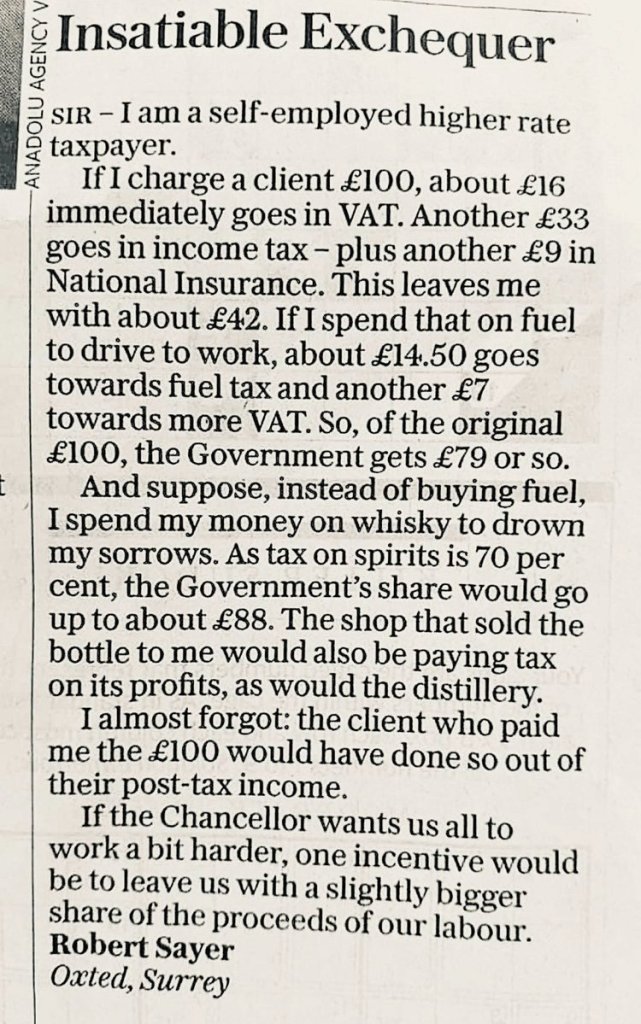
A short story to make the point, our tax rates and fiscal spending is out of all control
For the purposes of this section, taxes are defined domestically upon the indigenous population, and tariffs as external taxes on imports and exports.
To begin internally, as already discussed adopting Bitcoin makes taxation voluntary in that it is possible to sell bitcoin for national currency (the pound) officially and pay the 20% capital gains tax currently, or bitcoin can be sold for pounds unofficially through the black market without revealing a word to the tax authorities. There is also a third choice, in selling bitcoin for goods and services, peer to peer with someone willing to accept it in trade, which is again practically impossible for the Inland Revenue to detect without the declaration of the traders. Peer to peer trade through bitcoin will also destroy taxes on production, especially the income tax, national insurance, value added tax and corporation tax, because the incentive once familiarised with using Bitcoin will be to declare less and less tax over time, starving the Treasury of fiscal spending, starving public sector employment and weakening the authority of the taxman over free trade on the ground. This trend will emerge at the margins amongst the ranks of the self employed and small businesses that are today flexible for avoiding and evading state taxation through physical cash, but feeding into larger businesses and corporations over time mirroring the reduced budgets of tax authorites and enforcement.

It should be clear that eliminating the Capital Gains Tax legalising Bitcoin as currency, is the first domino to strike the government’s ability to tax income, corporations, sales taxes, and in general hurting the revenues and ability of government to tax trade
The digital and ethereal nature of Bitcoin is going to make a massive long term mess of fiscal revenues and employment of Cardiff’s central government, but government also taxes our physical property for which there is no efficient method of avoiding, and the most important of these is Property Taxes and Council Tax. Because a home and car as the most valuable and common property for individuals and families are physical, it is straightfoward for local or national authorities to licence and tax those items, through property and land registers (HM Land Registry) and vehicles (the DVLA with its headquarters in Swansea). Legalising Bitcoin as national currency would make it possible to pay these taxes in bitcoin, and because of the trend of bitcoin to increase in value over time the value of the taxes and local authority reserves would increase to make up for the losses in commerce taxes, while there would also be a strong lobby amongst taxpayers to reduce property and council taxes to reflect the increased purchasing power of bitcoin. The future looks far brighter for local authorities than central/national authorities based on these scenarios.
Milton Friedman predicts Bitcoin in 1999!
The other main classification of taxes that would aid in the funding of fiscal spending and in the control of central government to enforce via physical control over borders and transport infrastructure, is Tariffs. Tariffs on exports and imports was the traditional method of tax collection, because of government control of borders, and over roads, railways, canals, and ports. Furthermore, we have already discussed in Part One about Mercantilism and the British Empire’s rise to world power via Protective Tariffs on imports and generating trade surpluses, while the history of the fall of Britain to a post-industrial shell in chronic debt follows the Liberal mindset of Free Trade and running trade deficits with the rest of the world, and so Tariff Policy is an intrinsic part of Independence Strategy.
Theorising that England will be Wales’ largest trading partner under Independence, then Welsh Gov tariffs would have to reflect England’s tariffs. For example, if England placed a protective tariff of 10% on Welsh exports, this would in effect be a 10% subsidy for native English production over foreign Welsh imports. If on the other side Wales placed no tariffs upon English exports, there would be no corresponding subsidy for native Welsh production, and an effective 10% penalty for producing in Wales. This would lead to Wales running trade deficits with England, increasing our debt to England while undermining the Welsh economy in the long run. Therefore if England places 10% tariffs on Welsh exports, then Wales must raise 10% tariffs on imports from England, to balance trade flows while creating revenue for the Welsh Treasury for financing enforcement and policing of the main border checkpoints between Wales and England, such as the A5 and A55 in the North and the A40 and M4 in the South. Welsh Gov would also be enforcing tariffs with Ireland and the rest of the world, principally through the ports of Holyhead on Anglesey, and Milford Haven and Fishguard in Pembroke. We will be discussing control of the borders in more detail in Defence and Migration Policy.
In the future following adoption of the Bitcoin Standard, Welsh Government will lose much of its power for tax collection on Welsh inland trade, supporting and flourishing the wealth and independence of the Welsh public from central government, but it will continue to control borders and the main arteries of trade flows in and out of Wales over land and sea. This means that within Wales foreign imports will be more expensive than domestic goods, protecting Welsh industrial and agricultural jobs, and an effective subsidy to compete in the industries and goods that have to be imported into Wales. Trade restrictions, barriers and taxes on foreign countries lead to lower restrictions, barriers and taxes inside the country, and is a further example of the advantages of an Independent Wales.
Energy Policy
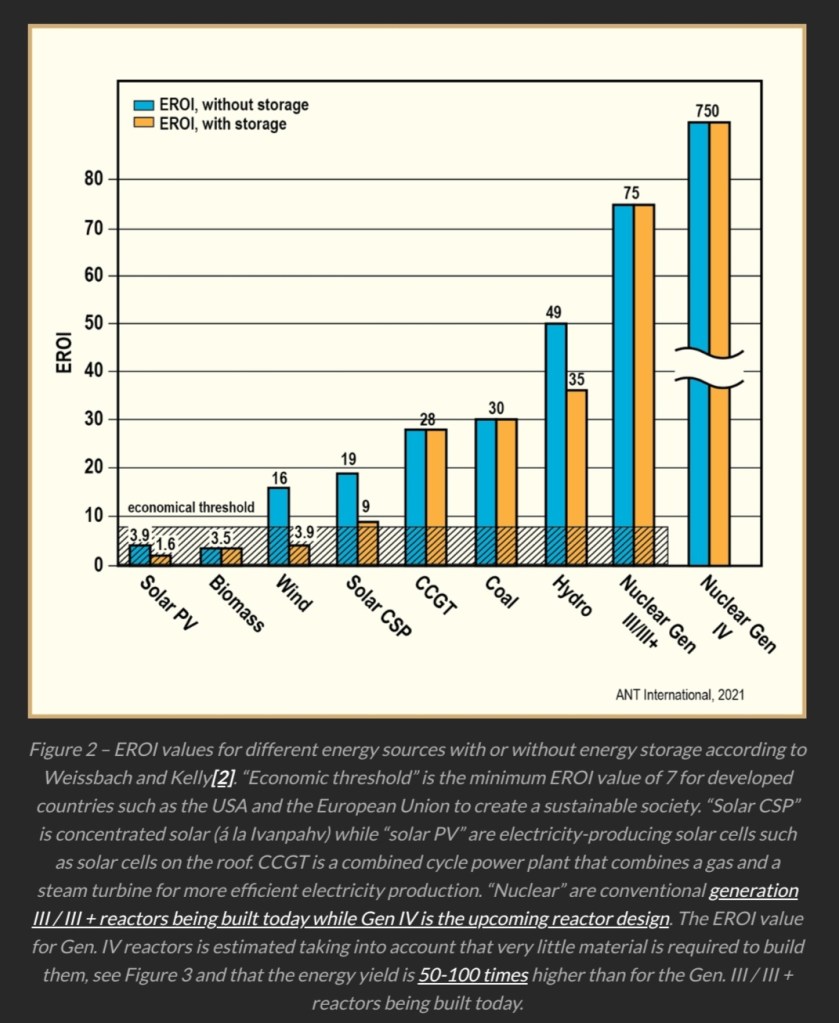
Energy Returned On Energy Invested – the most important number in any Energy Policy (source)
Third only in importance after monetary and tax policy is Energy Policy, as it is alongside money the foundation of production, trade, industry and economic growth, especially so in a digital money and accounting age that is completely dependent upon the production and distribution of electricity. Even though the roots of power stations and electrical grids of Britain are in the private sector and originate locally and distributed, following the First World War the Electricity (Supply) Act 1926 sees London Parliament centralise and standardise the grid to develop a national electrical network. Following the Second World War Parliament fully nationalises the electricity grid with the 1947 Act, alongside the coal and gas industries, and the birth of the nuclear industry with the Atomic Energy Authority Act in 1954, making Britain one of the earliest countries to create nuclear energy.
The energy and industrial sector catharsis of the Seventies and Eighties are already covered in Part One, since the Nineties the British Government under Conservatives and New Labour has moved away from the old cheap and reliable energy that founded the Industrial Revolution that Britain once pioneered, and towards unreliable and expensive energy from the weather since the turn of the Millennium. As electricity costs and energy poverty increase, alongside the threats of brownouts and blackouts when the wind is not blowing and the sun is not shining, it will become clearer to the Public and especially Westminter Politicians that redistribute all the subsidies and succour from British taxpayers to the energy sector, that our recent catastrophic experiment with wind and solar and power is completely unsustainable, and in the process of destroying our industries and economy that requires cheap and reliable electricity.
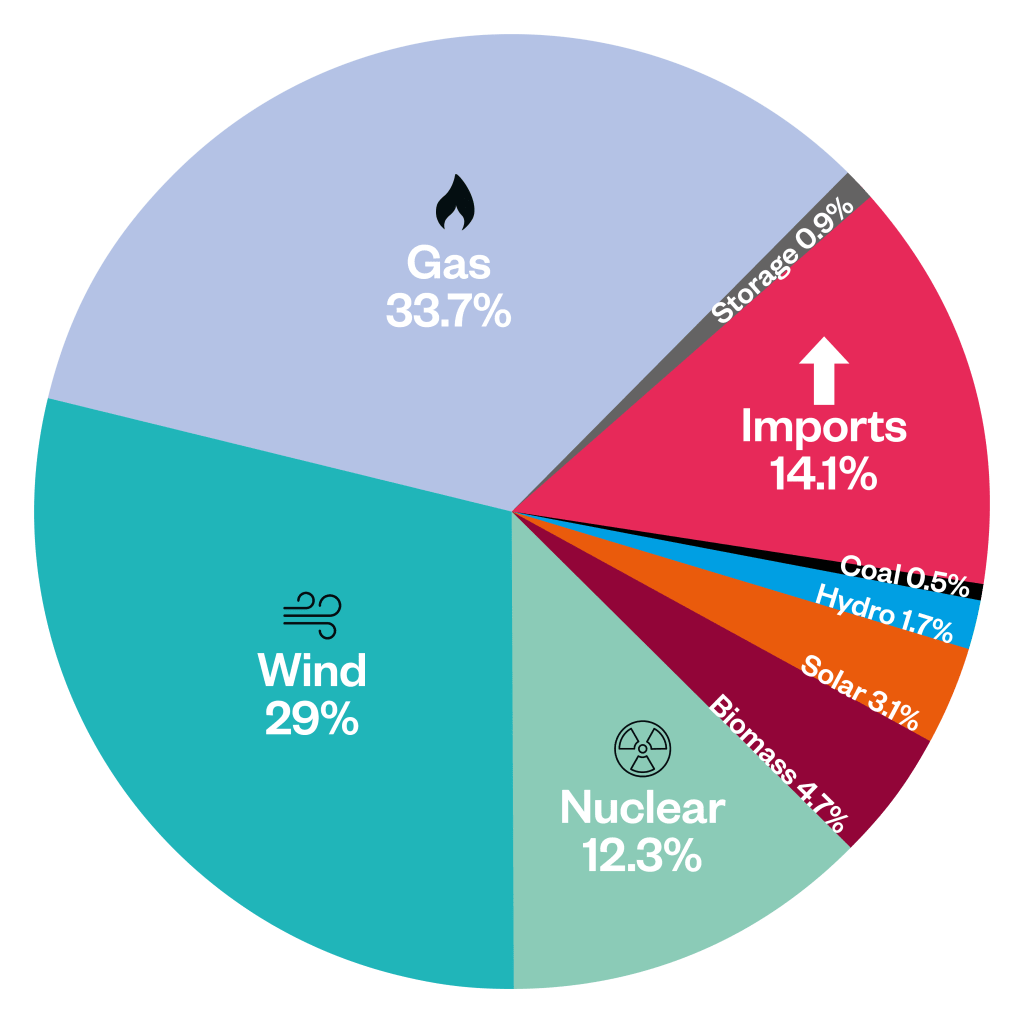
Britain’s energy mix to produce electricity in 2023, demonstrating that a third of our electricity is now created by the unreliable weather. Is is any wonder that imports are exploding and electricity bills have doubled in the last three years, and we are headed into a severe energy and cost of living crisis in the next few years? (source)
In the grip of the Climate Religion and the Carbon Gods, the British Government have closed down their coal sector and starved the gas and nuclear sectors, for the benefit of importing wind turbines and solar panels from our greatest geopolitical rivals in the East, with 60% of wind turbines and over 80% of solar panel production worldwide made in China, due to its cheap and reliable energy from coal that melts the metals and polysilicon and cement that are the inputs of this so-called “renewable” energy. Britain has exported its carbon footprint and all its environmental destruction to the East, to import this energy back as clean and green, pretending the up-front carbon and environmental destruction was never created! This short term mindset of unconscious Politicians have decided to enslave us to expensive and unreliable foreign energy imports, instead of investing in cheap and reliable energy domestically to compete with the energy supremacy of coal burning China, leaving us increasingly uncompetitive with the rest of the world, reflected in trade deficits and emptying what is left of this country’s industry, as they relocate to countries such as China, threatening National Security and Energy Independence in the process. Incredible!
From the cradle of the Industrial Revolution (and coal) to a Third World energy importer, Britain and Europe’s lobotomised Politicians have turned their backs on cheap and reliable energy, emptying the West of its industry to the countries that produce cheap electricity (source)
As the above chart on Energy Returned On Energy Invested demonstrates, the starting point of any Energy Policy for strengthening National Security and Energy Independence, is a moratorium on any further wind and solar projects, and use what is already built and operational for the next ten to fifteen years and the short life cycle of this catastrophic energy, and in the meantime develop strategies and national subsidies to ressurect the British coal, gas and nuclear sectors, with their high EROEI and 50-60 year life cycles. If Wales is ever to return its heavy industries and produce the materials that is essential for future independence at home, then coal, gas and nuclear have to be central to this policy.
Britain’s National Electrical Grid, allowing power stations to plug in and transmission to the distribution network to allow consumers to plug out (source)
Even in the event of the Dissolution of the British Union to its constituent Home Nations, the island’s infrastructure will remain connected, whether a road, railway, canal or energy networks, especially the gas transportation pipelines and the electrical grid. This allows the Home Nations to buy and sell electricity between each other, developing competition and possibly diversity of energy policy. No-one country can become over-dependent on another without endangering National Security and Energy Independence, so Wales will need to develop a strategy for subsidising, developing, and promoting power stations within Wales, also meaning that Climate Worshipers will have to suffer some pollution and environmental destruction. This is the price that must be paid for cheap and reliable electricity to power all the digital technology of modern Wales, and we are blessed by geographical fate in being rich in natural resources for creating energy, and inherit a number of renewable power stations built in the Union’s past.
Coal

We know since the Industrial Revolution, that the South Wales Valleys and the North Eastern strip are rich in coal deposits (source)
It is relatively easy to theorise that the ressurection of Wales’ coal industry will be far different from the one that died at the hands of Thatcher in the late Eighties, and a future of colliers plunging underground a hundred at a time, are unlikely. To be competitive with the rest of the world’s coal industries, Welsh Coal will be dependent on machines more than labour, meaning less jobs but cleaner and higher paying jobs, for the dirty work of digging for coal. The development will also likely be open cast over deep pit mining, because coal is such a cheap resource to excavate and coal stations are relatively cheap and quick to build for the energy created, any short term energy policy should include a new coal industry. This would be dependent on Welsh Gov development licences removing their boot off the necks of coal businesses, prioritising creating cheap energy and local jobs over the screeching of the green and renewable lobby.
Gas
Gas, like electricity, requires a transmission network to connect British gas consumers, the port of Milford Haven is an important terminal for gas imports by ship (source)
Gas provides a slighly lower energy density than coal, but burns a lot cleaner and creates less environmental destruction and scars than coal, while it is also much harder to transport over distances, adding the infrastructure requirement of gas pipelines, which is again National. Like electricity therefore, existing grids will enable the transport of gas within the Home Nations, and Milford Haven will play an important part as main import terminal of an Independent Wales.
Very interesting article on the history of Welsh oil and gas exploration (source)
As in the example of coal, for National Security and Energy Independence in gas, Welsh Gov can licence the exploration and extraction of underseas gas in Welsh territorial waters for domestic use and/or exports. Gas is already over a third of the British electricity mix, and with the transmission infrastructure already built and new gas power stations the cheapest of the fossil fuels to build cost effectively and quickly, gas alongside coal should play an important part of short term electrical policy, to support and grow industry and Welsh economic growth.
Nuclear

Welsh nuclear history is in the North, with Trawsfynydd Power Station since 1965, and Wylfa since 1971 (source)
Britain was among the first countries to produce nuclear energy following the 1954 Act, and uranium energy has proved over the decades to be an extremely dense energy source creating an abundance of clean, cheap and reliable long term electricity, with the disadvantages of acute environmental destruction in rare cases such as Chernobyl in the Eighties in the last decade of the Soviet Union and Communist collapse, the up front costs are enormous with long lead times in commissioning and de-commissioning power stations, and there are also costs and considerations in storing and containing radioactive waste potentially for centuries. Nuclear should therefore be considered as far more expensive and long term energy policy for the Government to invest in and subsidise, with the current generation technology.

Redeveloping the Trawsfynydd site with Small Modular Reactors would create clean, cheap and reliable electricity, and estimates of 500-2600 jobs for electrical, mechanical, systems and safety engineers (source)
It is also common sense that it is much easier and cheaper to redevelop historical nuclear sites, than construct a power station and grid connections from new, and so probabilities favour Wales’ nuclear future remaining in the North. Indeed, Welsh Gov has already established Cwmni Egino in 2021 to redevelop the Trawsfynydd site for Small Modular Reactors and next generation technology to create the clean, cheap and reliable electricity and a foundation for industry and economic growth in the North. There is also recent correspondence that preliminary infrastructure works are continuing on the proposed £20 Billion Wylfa Newydd scheme for either a new reactor, or a series of small modular reactors. Redeveloping these two sites would be a major boon to North Wales in attracting new industry, and playing in to the potential of North Wales as future Bitcoin mining hub.
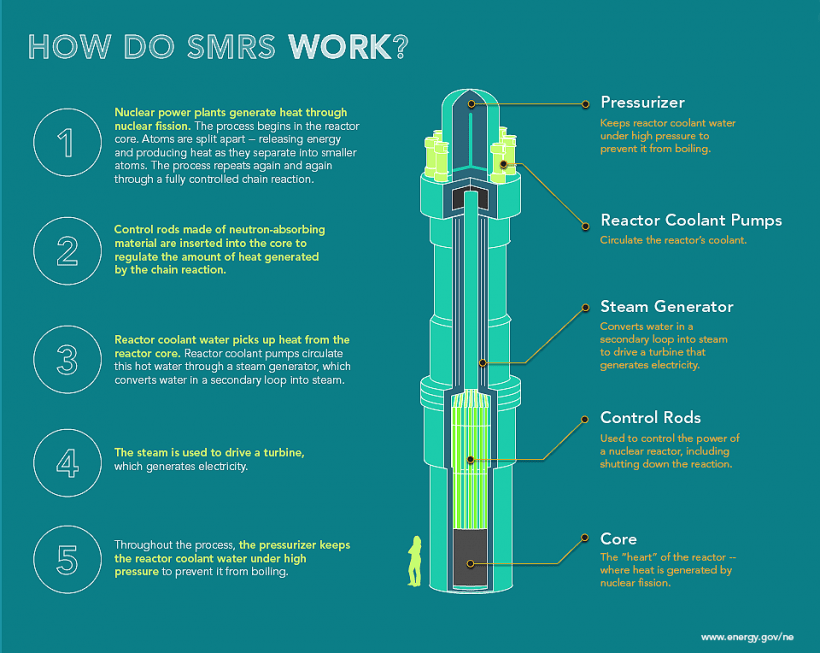
Small Modular Reactors are receiving some hype in the media, and within Government’s lately. The future is bright! (source)
Hydro
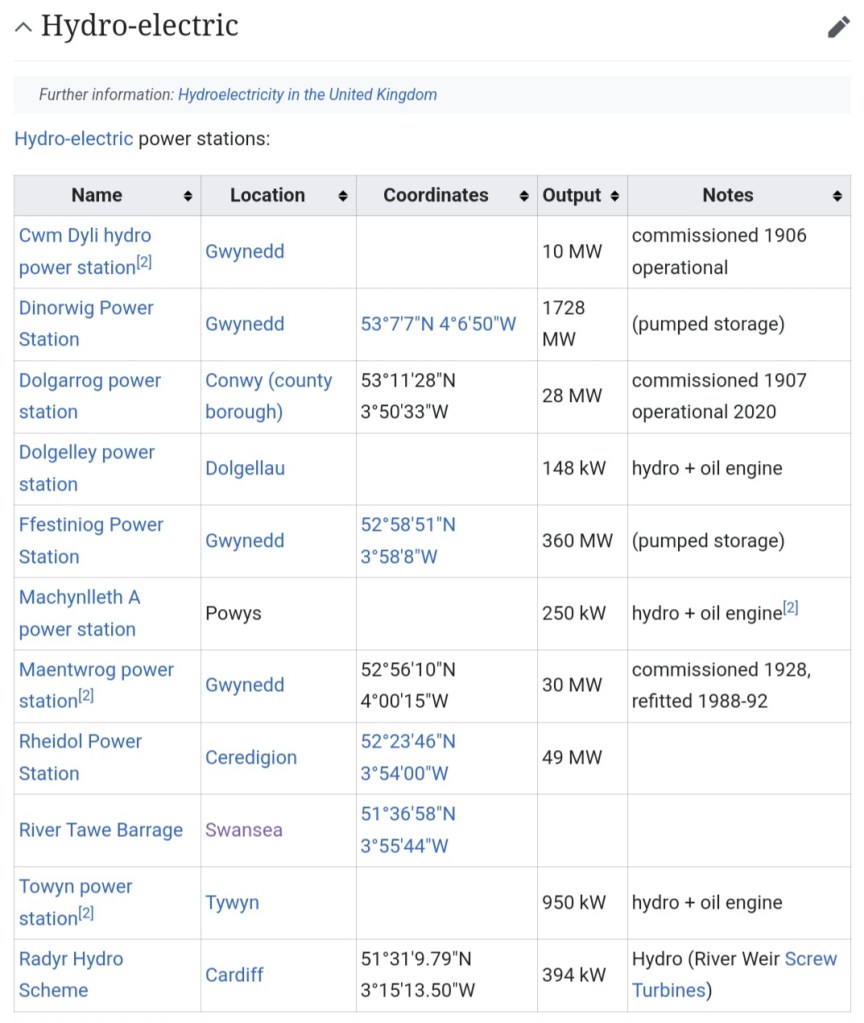
Shortlist of Wales’ largest hydroelectric plants (source)
It could be argued that water is Wales most renowned resource, alongside its mountainous terrain especially in the North, by geographical destiny its rivers and lakes lend toward harnessing the energy of water through hydroelectric stations. Standing out on the above shortlist are two stations that possess a pump to recycle storage for continuous cycles, imitating the properties of a battery, making hydro far more reliable and valuable to a national electricity grid, freeing it from the unreliability of rain and weather. Because the demand for electricity is sporadic in nature, with huge demand spikes at the top of the morning and the top of the evening, before and after work, hydropower stations with pumped storage were developed for creating a flood of electricity to supply this demand for only a few hours a day, while in the small hours when everyone is asleep and electrical demand at its lowest, the water is pumped from the bottom lake to the top to be stored for the following cycle. Even though it uses more electricity to pump the water back up than coming down, because the station sells the electricity to the grid at highest prices and buys it to pump it back at the lowest prices, a profit spread can be captured while protecting millions of families in Wales and the North of England with reliable electricity when the demand for it is at its highest.
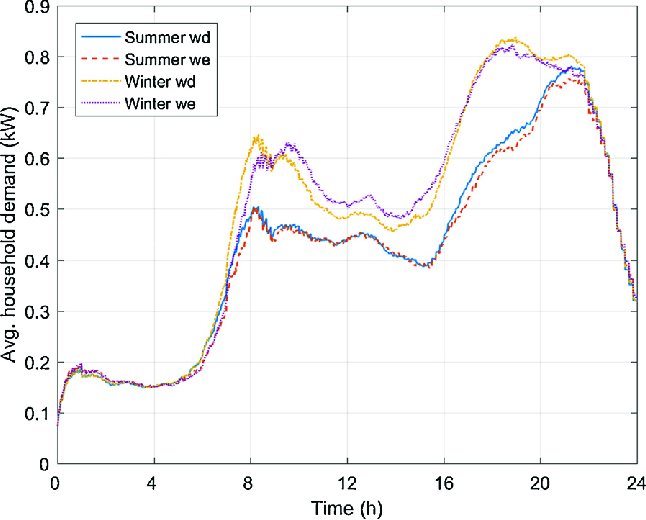
Electrical demand over the hours of the day, and over the Seasons. Sporadic demands increases the value of hydroelectric with pumped storage (source)
Ffestiniog Power Station is a 360-megawatt plant with storage up to 1.4GWh operating for four straight hours and is an engineering masterpiece, but the example of Dinorwic Power Station in the heart of Snowdonia towers as one of the largest energy and engineering projects in British Government history, taking ten years (1974-1984) and costing nearly half a billion that was worth a lot more half a century back. But for this enormous sum, Llanberis’ Electric Mountain can produce 2000-megawatts of power with a storage capacity of 9.1GWh, an incredible resource of electricity at short notice to ease strains on the national grid. Hydro will play an important part in in Wales’ energy future under the current order or under a new order.
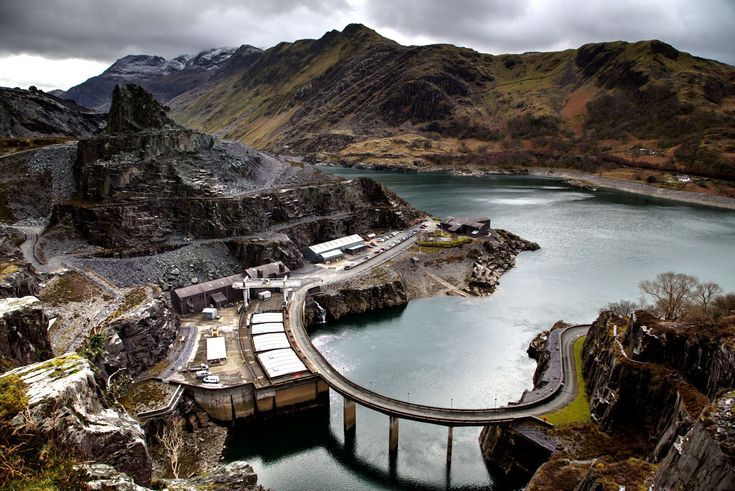
The largest man made cavern in Europe was excavated between Marchlyn Mawr Lake and Peris Lake to create Dinorwic Power Station (source)
The huge costs and environmental destrucion of large hydro projects means that hydropower is not cost effective in the short run, it is likely therefore that few of these projects will be developed in the future. However, the Stations already built are essential for balancing grid demands, and justify their maintenance costs in the future.
Wind
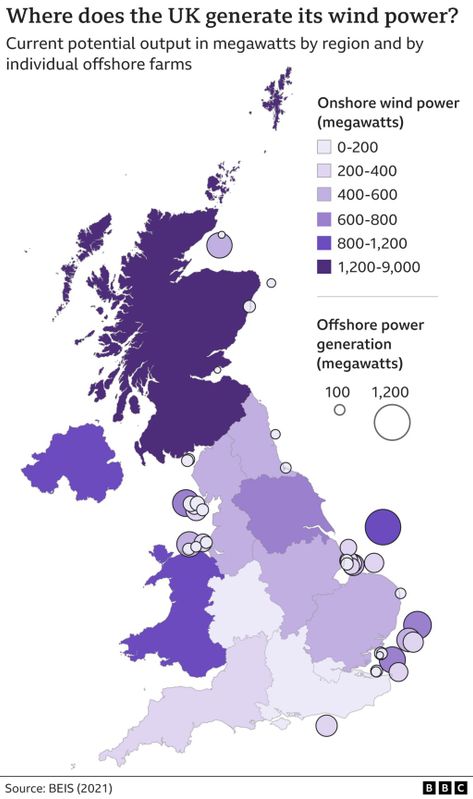
Another abundant resource in Wales is wind (source)
British Governments in the wake of Thatcher have been hypnotised by the green and renewable lobby, beginning with onshore wind farms, until the restrictions of a fading David Cameron Government in 2015, and since then moved offshore. Indeed, the fundamental problems of wind as an unreliable resource has been completely ignored by Westminster’s Parliament and their unending subsidies to the wind sector, resulting in the production of a third of our national electricity currently. In the same time the electricity costs of British consumers have exploded contributing heavily to the energy crisis the West has suffered since the Covid debacle, rendering the UK dependent on electricity from France’s nuclear power fleet, and re-firing coal plants in the last two winters when the wind wasn’t blowing. Additionally, higher interest rates and increasing coal prices to melt the metals and the cement and all the rare earth minerals that go into the modern wind turbines, have increased so much lately as to threaten the viability and future of the renewable wind sector, as such an essential component of our electricity grid. It is likely that the foolishness of trying to power a techno-industrial economy off such an unreliable resource as wind will start winding up soon, as the legacy media and London politicians wake up out of the coma of their disastrous energy policies, with the shift back to coal, gas and nuclear. The author sees no long term future for the wind revolution, losing its subsidies and capital misallocation, but still leaves us with the present generation of wind turbines that will for the next decade or two and their short life cycles compared to coal, gas and nuclear power stations, continue to generate intermittent electricity.
The main disadvantage of wind as an electricity source is there is no predictable time to when it is blowing, and so can lead to shortages of electricity threatening the stability and demands on the grid with blackouts, while on the other hand in strong winds turbines overproduce electricity when there is little demand, that also threaten the grid with blackouts. This could be balanced and solved perhaps by a storage network and batteries, but imagining the rare earth metals such as lithium and cobalt that would be need to be excavated and refined to build this network boggles the mind, and impossible without further environmental destruction and chronic pollution in the countries of the East. This problem of electricity storage brings us to the short term solution of stranded wind energy, and doubles up as an energy policy for an independent Welsh Government, Bitcoin mining.
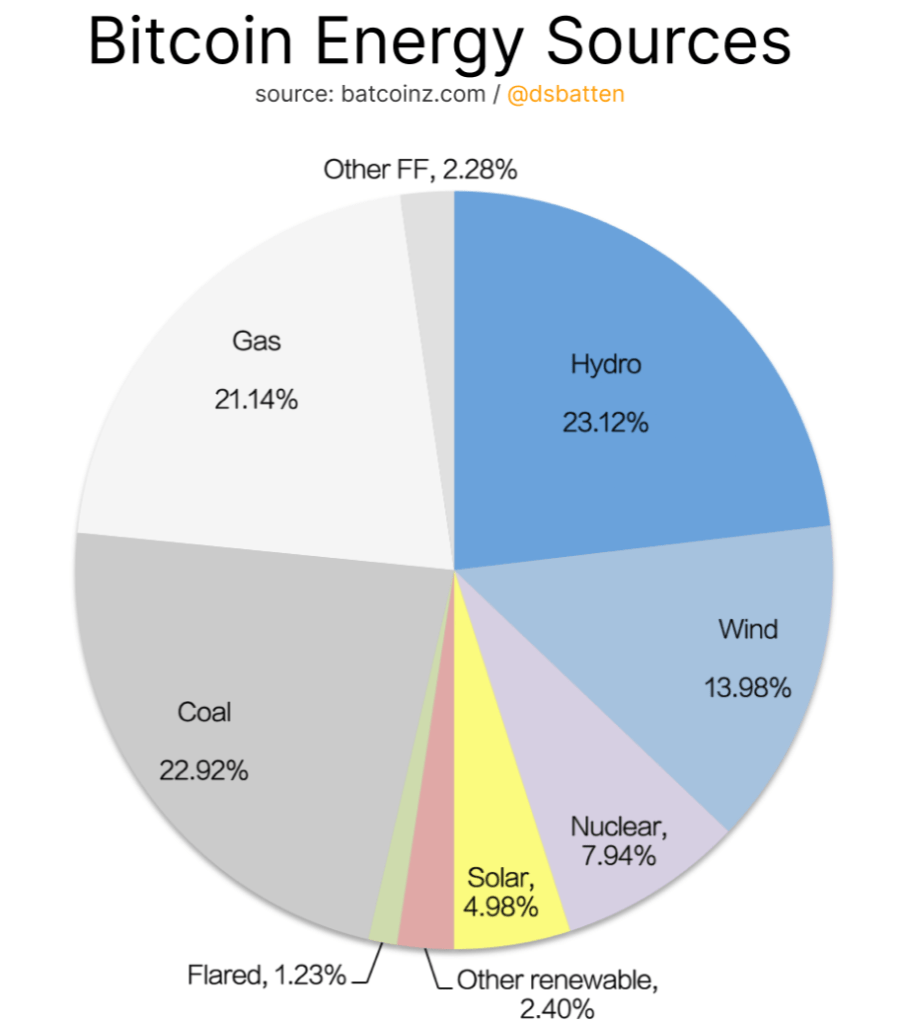
Bitcoin energy sources worldwide (source)
As demonstrated in the above chart, Bitcoin is attracted to renewable sources of electricity because they are unreliable, and therefore more profitable to mine at certain times. The advantages include co-locating Bitcoin miners quickly and flexibly in remote areas while it is possible to turn the mining computers off and on in seconds, reacting to the unpredictability of the weather. Bitcoin can also be considered an electrical battery, by converting electricity into digital currency with a sixteen year track record as a premier store of wealth, and in effect increase the value of the electricity mined today far higher in the future. For this reason mining bitcoin will become a more important policy for every electricity company and power station to reduce wasted electricity in every country over the world, connecting the energy network worldwide and through the internet. This will become even more imperative for the renewable energy sector, because of the unpredictable weather and flexibility of Bitcoin miners, mining heavily in periods of over-abundance of renewable electricity (and cheapest prices), and switching off the machines during periods of shortages when there is greater demand upon it (and higher prices). The cheap rates of renewable electricity off the grid as compared to the higher rates of electricity on the grid, means that Bitcoin has evolved more toward wind and hydro electricity historically, alongside solar providing nearly half of Bitcoin’s energy mix today. Bitcoin will become invaluable for stabilising electricity companies especially in the water, wind and sun sector, heading into uncertain times, and perhaps even making the companies profitable and sustainable without the subsidies and handouts of London Politicians drowning in energy affordability crises.
What is true for electricity companies, is also true for National Governments. As discussed in Part Two, a handful of Nations are already mining bitcoin on the State level, and because national grids and electricity companies are in public sector hands in most of the world’s countries already, it should be obvious the intersection of Bitcoin with energy and governments are meeting soon, over the world. By turning state electricity into bitcoin, a country can create a Bitcoin treasury or settle international trade, pressuring and forcing other countries to also mine bitcoin. And looking at Wales’ rich resources in electrical energy, from coal, gas and nuclear to wind and water, the Welsh Government would be in a strong position to take advantage of Bitcoin mining, for the treasury and fiscal spending.
Before ending a long section on energy, as essential as electricity is to living standards and economic productivity in modern Wales, diesel (and petrol) are perhaps even more essential. Despite all the hope and hype of the electric vehicle revolution, it doesn’t compare to the advantages of fossil fuels and oil distillates. Indeed, diesel especially is the main foundation of today’s moving machines, from the tractors that maintain and increase agriculture productivity in the countryside, to the construction industry and transportation moving stuff around the country, oil is therefore essential to the present and future of this Welsh economy.
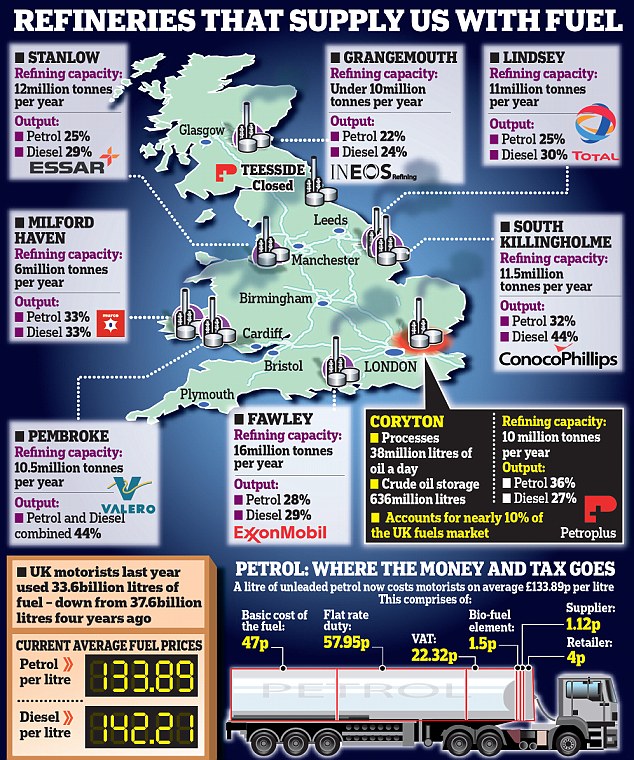
Britain’s oil refiners in 2012. The Milford Haven refinery has been shut but the Pembroke refinery is still open, so at least Wales has one domestic refinery producing fuel (source)
The Welsh Government, outside of oil exploration licences in Welsh waters, would be dependent on oil imports either from the North Sea (and Scotland) or from the European continent and the Middle East, in either case we would be running a trade deficit forcing us to export our produce to maintain a balance of trade. Cutting taxes on fuel would also make it cheaper for Welsh agriculture and industry to produce. Oil imports and domestic refineries are extremely important to the future of an Independent Wales.
Defence Policy
The history of Wales is a sad series of external invasions, from the Romans, to the Irish, the Saxons, the Vikings, the Normans and the English Crown. Wales’ geographic fate consists of coastline on three sides and a land border with a far larger country has made Wales open to invasion, so defending and defence has to be one of the most important policies of an independent country.
With a coastline of nearly 1700 miles, would require a Navy operating out of the main commercial ports and tying in to Tariff Policy, after all the reason for the imperial wars of European and British history was for and against free trade, and for enforcing protective tariffs (Mercantilism) to recycle into the growth of the Navy to protect the merchant ships and trade flows. In addition to trade, a Navy would defend against overseas attacks by foreign enemies. Wales’ recent history without a native Welsh Navy would force us to create a Navy from scratch, but we would inherit the Royal Navy’s infrastructure in Wales for building one.
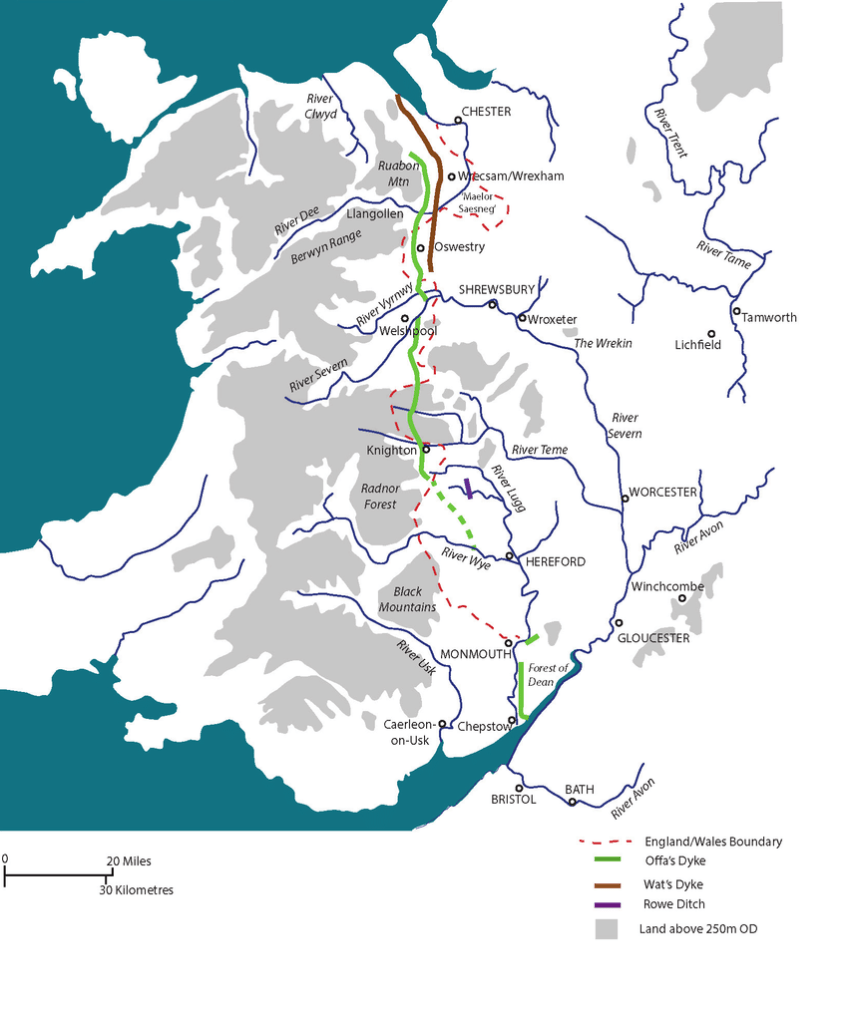
Offa’s Dyke begins construction in the Eighth Century (source)
The hard border between Wales and England begins officially with Offa’s Dyke in the Eighth Century and a major early medieval engineering project, but over the centuries as England slowly conquers Wales politically and militarily the borders melts, and by the Welsh Acts of Union when Wales is legally a part of England, there is no need for a border as such. In any question of Independence that will increase as the Western Unions break down, and as newly independent countries grow in number and shrink in size in the Twenty First Century, then hard and physical borders are the main way to protect against a land invasion, and a critical part of enforcing Tariff and Migration Policy controlling the flow of trade and people.

Wales’ modern but soft border with England since the 1536 County/Shire System (source)
The advantages of a hard border for independence would be erecting a physical barrier against a foreign army, and also control the flow of trade and population entering and exiting Wales. The disadvantages would be the costs and resources to erect the barriers, and the costs of surveillance and enforcement. In the case of Wales and splitting one country into two, perhaps England would have the same incentive to build a hard border and share the costs of the 160 mile wall separating two independent nations. There would also need to be gates and checkpoints and border police to enforce, while also allowing the flow of trade and people. The wall would cost a tremendous amount of money and resources but is a one time cost, and only low ongoing costs of repair and maintenance thereafter. The permanent costs are the policing of choke points and would probably be financed out of the Tariff Budget, paying for itself through taxing imports from external countries. The biggest controversy arising from a hard border would be land and property rights violated, including splitting farms, villages, and the requirement of checkpoints on the dozens of back roads of the Welsh Marches from north to south. When discussing such an expensive and challenging infrastructure design and build, it is much easier to talk than to act.
In addition to the Navy and the border, there would be a requirement for an Air Force and an Army to defend the country. To take the air force first, we would likely be inheriting the infrastructure of the RAF including 34 Stations over Wales, but we would have to import the aircraft and fuels, alongside pilot training. Building and maintaining an Air Force is another costly item on the expenditure list, and would have to reflect the spending restrictions of the Welsh Government as an independent country, again likely financed from the tariff budget.

Lastly to the army, which is a far more interesting subject. The old traditional way of maintaining a defensive army was through arming the aristocracy and the peasants via Militias, an amateur, distributed, and communitarian/regional army, favoured by monarchies because of the costs and threats of a full time standing army. As Parliamentary and Democratic forces overpowered monarchies, the last few centuries has evolved to national armies, centralised, professional, and a full time occupation. There are huge differences between the two mindsets, the first army from the bottom up and trusting in the native population to arm and defend their Country in the case of invasion for relatively low Government resource and spending, and the second army top down, centralised, disconnected from the population on the ground and working on the orders of a central government, and a major spending item on the budget of modern governments.
The trend under a professional army is to arm for conquering other countries or colonies as an offensive force while restricting the native population from bearing arms as a protective force, and it is always jarring to hear politicians glorifying the use of arms and armies overseas, while glorifying domestic restrictions on the ability of natives to arm themselves, without taking a second to contemplate the hypocrisy. Indeed, looking back at Welsh history, one of the main purposes of the Penal Laws of 1402 by English politicians was to disarm the Welsh, to stop attacks but also to disarm the Welsh against English armed encroachment. Also in the case of the new United States Republic broken free from the yoke of the Empire, and following their experiences in the Revolutionary War of 1775-1783, in the 1789 Constitution the First Amendment and the right to free speech, to be protected with the Second Amendment, the right to bear arms.
With the coming of the Industrial Revolution in the Nineteenth Century came also the revolution in the production of cheap and reliable guns, and to an extent balance the increasing power and threat of the domestic population against democratic government and their armed forces. British population armament peaked around the end of World War Two with the German threat, and since the Fifties witnessed progressive efforts to disarm the British public under the cover of public safety, penalising the law abiding gun owners while enobling the illegal gun owners of the black markets who have no interest in following any laws. The New Labour handgun ban following the actions of one criminal in the Dunblane Massacre of March 1996 was a big step forward in disarmament (except for the criminals of course), and in most of the countries of the world restrictions and prohibions have increased, especially in the cities where armed crime statistics are on the rise, while in the countryside where legal firearm ownership is higher, gun crime rates tend to be lower. The official gun ownership rates of England and Wales are less than 5% today.
Based on the financial probabilities alongside the decentralisation trend, both working together to undermine the debts and fiscal spending of Western Unions in the next few decades, Unions will breakdown to create numerous smaller and independent countries. The ability of national governments to maintain professional Armed Forces will suffer, leading financial cuts and the starving of the war industry and arms companies, with the probability that armies will devolve back towards the traditional, of local or regional militias to defend the country in the event of an invasion. The governments of the future will therefore have to trust in their domestic population and give independence in the form of relaxing firearm restrictions and/or subsidising firearm ownership, training and exercises, and geographical strategies in topography for defensive purposes.
Switzerland provides a modern example of this type of army, a country of 9 million people in mountainous territory and bordering powerful historic countries and empires, Germany, France, Italy and Austria. Amazingly, Switzerland has been an independent country since 1291 through neutrality, haven’t fought in an international war since 1815, and avoided the destruction of Two World Wars endured by its neighbours. Switzerland’s military strategy includes a small professional army of 9,000 full time soldiers, with another 110,000 compulsory and voluntary soldiers. Military regulations include compulsory military service for men aged 16 to 20, with exceptions, and voluntary for women, with training lasting between 18 and 21 weeks, it is a requirement for every man to store and secure his firearm and ammunition at home, making Switzerland one of the world’s most armed countries, with low firearm crime rates.

A quote attributed to Admiral Isoroku Yamamoto on any strategy by the Japanese Empire to invade the United States during the Second World War, because of the Second Amendment (source)
Law and Order Policy

Following the dissolution of the Union Wales would be an independent nation, but would also inherit English Law, that restricted the Laws of Hywel and the old Welsh Law since the Rhuddlan Statute of 1284, would have the choice of adopting and adapting Welsh Law from English Law, or return to the primitive laws to control crime and retribution. Indeed, modern state prisons are another symptom of Parliamentary centralisation with a central bank printing press creating an ineffective and bureaucratic justice system, to penalise criminals on the taxpayer’s purse rather than the old order of compensation and the indentured servitude of the criminal to his/her victim. For examples, Galanas was an inter-family compensation law for murder and common to the Celts and Anglo-Saxons, as was Sarhad for physical slight or libel. Whichever way the cookie crumbles, in a future of decentralisation and in a financial order where it is easy to evade central government taxation and starve the legal system, will inevitably localise Law, increasingly financed by Council Taxes, for County Courts and jails.

The biggest side effect of the collapse of the English and Welsh Parliamentary legislative swamps, will be the reduction in administration of the law and starvation of the legal sector
Having dealt with Law comes enforcing Order, that historically was administered by a Sheriff or Policeman. Before the Nineteenth Century, communities would arrange the police to maintain and enforce Order and London’s Government had no direct interference, until the establishment of the first Professional Police in the City of Glasgow in 1800, through a Parliamentary Act. The modern history of police centralisation is synonymous with Robert Peel, establishing the first centrally planned police order in Northern Ireland in 1814, still identified to this day by their nickname “Peelers”. The central planning of professional policing was taken up by Peel as Home Sectretary from 1822, and Peel established the London Metropolitan Police in 1829. Further Parliamentary Acts were passed in the 1830’s to present borough policing, and by the 1850’s nationalised policing was established.
Despite the centralisation of the police as a legal branch of Westminster Parliament, order was enforced locally and on the ground. There was a policeman for every village, who knew his community if not from his community, strengthening the relationship between enforcer and enforced, romantically portrayed in programmes such as Dickson of Dock Green. The reality since the Second World War and the Nationalisation of the British economy is that the number of laws has increased, tying up the police in bureaucracy and paperwork to administrate the Ten Thousand Commandments in back offices, while gutting local policing and the village policeman and disconnection from the ground, reaching its peak in the last few years with Wales down to four regional forces, with political chatter of further centralisation to one Wales Police, as Cardiff’s Senedd eyes more central powers over the rest of Wales.
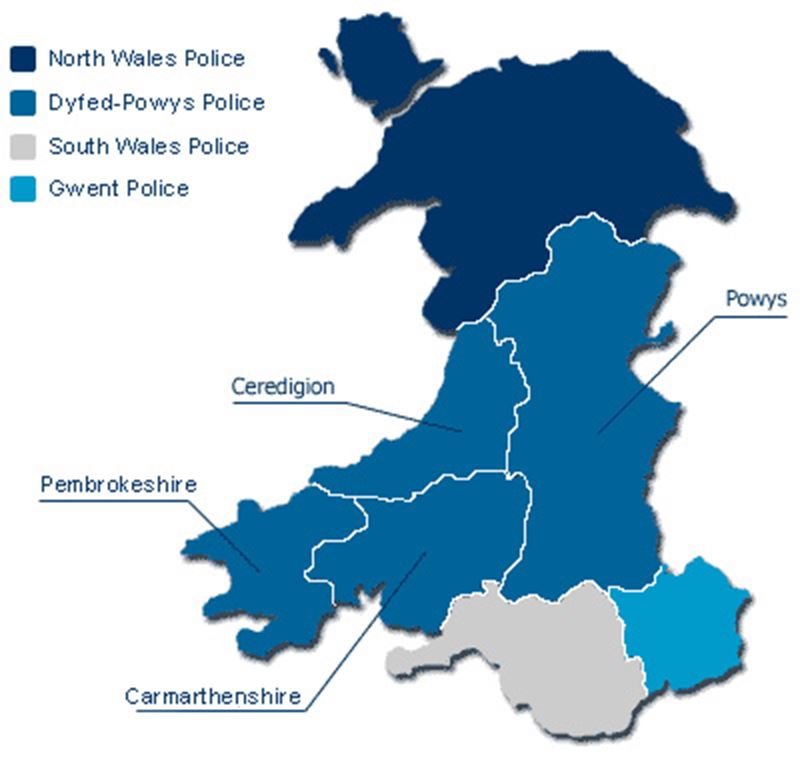
The four police regions of Wales (source)
As we move into a future of decentralisation and the increasing failure of Parliamentary Acts and Fiscal spending, Law and Order will decentralise towards the old order of local police that is already half funded by local authorites and Council Taxes. It is also possible that local authority failures could lead to further decentralisation, and towards community based law and order, that existed before the last two centuries.
Migration Policy

An imagined Welsh Passport (source)
Migration policy ties into defence and border policy, in the meaning that Wales for the first time would be controlling its borders, and trade and population flows in and out. The traditional method to control immigration and emigration for the last century has been through identification papers or cards, whether a passport or driver licence, in addition to visas with classifications for travelling and tourism, education and study, work and employment, or a permanent visa/legal citizenship. This system is already operational within the United Kingdom, and anyone arriving at Cardiff airport or the sea ports of Holyhead and Fishguard, requires identification documents to enter the Union from Wales.
One of the main purposes of the Union of 1707 between England and Scotland was to expand a Trade Customs Union, and the biggest side effect for migration policy was freedom of movement within the British Isles, and between England, Scotland and Wales. Following the dissolution of the Union that would have to come to an end, the price for Welsh Independence are new restrictions on travel or living in England, Scotland or Northern Ireland, in addition to the existing restrictions in the rest of the world. The reality of devolution is the British population will have to get used to passports and visas between the home nations with significant implications for Britain’s internal demographics, promoting the development of cultural isolationism, and the increase in cultural diversity between the home countries.
Obviously as policing and enforcing hard borders costs resources, so does enforcing migration policy at the costs of a new department of administrators and public sector employment, processing domestic requests for passports and visas to travel or live overseas, and processing requests and issuing visas for tourists, students, workers, or those seeking permanent residence, in addition to enforcers of migration policy in ports, airports, and the border between Wales and England.
Welfare Policy

The card everyone receives on their sixteenth birthday. Welcome to adulthood, the Welfare State and paying taxes! (source)
In the decentralised future described, tax and fiscal policy will shift from inland revenue to customs revenue on imports from abroad, that will have to fund the army, the navy, the air force, and policing the borders of an newly independent country. The coming of Bitcoin and the increase in anonymous peer to peer trade will make it easy for the Welsh to avoid National Insurance, income taxes, value added taxes, and all the other taxes on domestic trade, that will obviously increasingly drain the fiscal spending of the Welsh Government. This will lead to the weakening of Government and its inability to afford the payouts of welfare state dependents, whether a state pension in retirement, to public sector pensions, the National Health Service, and all the promises of a public monopoly since the explosion in the welfare state following the Second World War. As discussed in Part One, the peak of Parliamentary powers came in the late Forties with the Nationalisation of Britain’s energy and heavy industry infrastructure, alongside transportation, health, and the other services that used to be private. The Stagflationary Seventies and the sorry state of Britain under the New Communism brings the country to its knees, the Eighties was the decade of privatisation for energy and heavy industry, for better and worse. The Stagflation of the Twenties of the Twenty First Century will accelerate the collapse and privatisation/localisation of remaining national monopolies over health and other services where there is no competition today, and we must fund with our extortionate taxes.
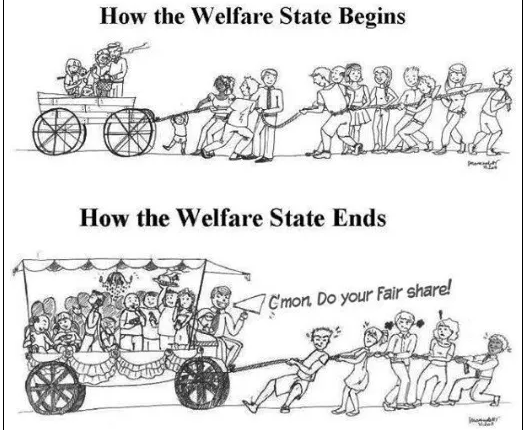
It could be argued that the Welfare State is already unsustainable with the demands of more dependents on less contributors, and a prime cause of the demographic collapse birthing less children to pay into the scam system in the future, only hastening its demise. As the younger generations realise they won’t be receiving state pensions or a reliable health service for their national insurance contributions, they will increasingly avoid it completely by adopting Bitcoin (source)
To close the chapter on any argument that government services are “free”, we only need look at our tax servitude backed by the threats of prison for anyone who tries to avoid them. To take National Insurance first, the current rate of 13.8% on workers from age sixteen onwards as everyone realises when the card comes in the post, as insurance against unemployment, sickness, retirement and death, alongside the basic income tax of 20% for a tax burden of one third of earnings, before adding any of the other taxes. Despite all the hard earned and valuable resources the Welfare State swallows, unemployment, sickness and pension benefits never keep up with the rate of inflation that devours their future value, while the enormous resources thrown into the bottomless pit of the Welfare State go to employ administrators and the bureaucratic sector in the paperwork industry, rather than improving the efficiency of frontline services. In short, as the demands and costs of the welfare state increase, inflation, taxation and the national debt will further squeeze the younger generations, to such an extent that they will choose to avoid by adopting a currency that cannot be inflated or taxed, starving the Welfare State until its collapse under unsustainable forces.

Despite record expenditure of nearly £187 Billion for the National Health Service in the most recent financial year, the sixth largest employer on earth, and the UK’s largest employer with 1.5 million full time jobs, beds for patients have fallen from 240,000 to under 160,000 over the last two decades (source)
If there is no longevity to the Welfare State leviathan as it is today, then what will replace it in the future? The simple answer is to return to the age before the National Insurance Act 1946 and National Health Service Act 1946, re-decentralising and denationalisation/privatisation from central government, and towards private insurance for unemployment, sickness, retirement and death. Avoiding dependence on the Welfare State and National Insurance would save nearly 14% of income, that could be recycled into private insurance against the uncertainties of work, health and life, and is already on the rise in Britain with one in eight Britons, despite paying the Stamp their whole working life, paying to go private for operations and healthcare rather than suffer on years long waiting lists in a public health system. Additionally, the adoption of Bitcoin and deflationary currency increasing in value over time, is a natural insurance to protect individuals and families against the uncertainty of the workplace and life in general, as the costs of living decrease so do the costs of healthcare and retirement as they become more affordable. The movement towards private insurance will also decentralise the healthcare system towards more local hospitals, and the promise of training local doctors and nurses rather than a national health service dependent upon importing third world labour, stealing the best health workers of these countries to work in Britain that hurts the healthcare systems of the developing world.

As volatile as Bitcoin’s price can be day to day, over the last 13 years its annualised returns have been 150% against national currency, and developing into a very valuable insurance (source)
Independence is an easy word to throw around by intellectuals proposing devolving dependence from the Parliament of Westminster to Cardiff’s Senedd, but true and sustainable independence is independence from government, and escaping its inefficient and expensive services. Adoption of a worldwide digital currency at home gains network effects and value from a global scale, while promoting independence from national government and its collapsing currency, that will obviously weaken fiscal spending and the claw of the state over its dependents, transforming the mindset from dependence to independence and freedom.
As national taxes on income and trade will become easier to avoid, avoiding local taxes and council tax will be far harder. A physical house or business are easy targets for taxation, giving local councils the ability to collect taxes and finance their future. On the expenditure list, local authorities already finance County infrastructure such as the police and courts and local order, to services including refuse collection, highway road maintenance, schools, and social services. If county councils were also starved and unable to fund all the fiscal spending above, then these services would demand further decentralisation to the local/parish council, directly funded by users/customers, far cheaper and more efficient to be sure. Even so, the probability is high for County Councils to be able to tax and fund local authority, but priced in bitcoin, the costs of living including council tax will be declining as a percentage of net worth year after year, cushioning the individual and families against the costs of funding local government.
Housing Policy
| Year | House Prices in Pounds | House Prices in Bitcoin |
| 1st January 2013 | £ 163,056 | 14,823 ₿ |
| 1st January 2014 | £ 178,124 | 272 ₿ |
| 1st January 2015 | £ 188,566 | 891 ₿ |
| 1st January 2016 | £ 198,564 | 629 ₿ |
| 1st January 2017 | £ 206,665 | 239 ₿ |
| 1st January 2018 | £ 211,792 | 19 ₿ |
| 1st January 2019 | £ 212,694 | 71 ₿ |
| 1st January 2020 | £ 217,911 | 40 ₿ |
| 1st January 2021 | £ 231,644 | 10 ₿ |
| 1st January 2022 | £ 260,771 | 7 ₿ |
| 1st January 2023 | £ 258,155 | 19 ₿ |
| 1st January 2024 | £260,791 | 7 ₿ |
House prices in pounds, against Bitcoin. Sourced from British Average House Prices, and Bitcoin in Pounds chart
Housing and house prices are a burning topic in Welsh history, from the Stagflationary Seventies and the acceleration of English wealth hoarding second homes in rural Wales, to the arson campaign of Meibion Glyndŵr through the Eighties over North and South West Wales, and the flood of elderly foreigners who have settled here forcing our young people and most valuable resource, to move away in search of work and cheaper housing. Due to the inflation and debasement of Pound Sterling over the last half century, the Cantillon Effect flowing out of the City of London and Westminster Parliament have enabled those closest to the printing presses to hoard cheap property in the areas furthest away from the presses, that have taken houses out of the traditional housing stock and are now second homes or holiday lets for tourists, driving the value of the remaining housing stock higher and out of reach for young locals, forcing them to leave rural Wales to the rest of Britain and the world. The perverse incentives of the inflationary British Pound is to empty rural Britain of its youngsters sucked towards the printing presses of London and secondary cities, to be replaced by the elderly who have profited most from investing in the decades long housing boom and storing their value in property over currency, for obvious reasons.
A smaller Cantillon Effect is playing out within Wales too, following the establishment of the Assembly in Cardiff Bay that is now the Senedd, over the years the money and fiscal spending flowing via Cardiff’s central government have attracted the Welsh rural population down to the big bad city for subsidies and public sector employment, sucking productive and valuable resources out of the countryside and into the big cities of the Union. This whole destructive incentive structure that promotes nationalisation and centralisation while undermining localisation and decentralisation, is derived from national currency and central banking, so it is important to discuss the incentive structure under a competing deflationary currency, in a word, Bitcoin.
The above chart of house prices demonstrates two things: that an ordinary house has risen by nearly £100,000 in the last decade, while that same house has collapsed from 15,000 bitcoins down to under 10. The chart therefore demonstrates how catastrophic Pound Sterling is as a store of value compared to housing, and how catastrophic housing is as a store of value compared to Bitcoin. Indeed, defeating the inflationary forces of the British Pound and superceding it with Bitcoin and its deflationary forces is going to turn the price discovery system upside down, with massive implications for the relationship between capital and labour, and between young and old.
Under inflation, it is the value of labour that is debased through the purchasing power as the value of capital increases, acting as a subsidy for hoarders and the older generations at the expense of penalising labour and the younger generations, driving a capital affordability crisis that increasingly destabilises society, and releasing dangerous tensions between the minority who own property, and the majority who do not. Under deflation this relationship is flipped to the opposite, as labour stored in money (bitcoin) devalues capital making it more affordable for the young to become property owners. Deflation is also an effective penalty or tax on capital and the older generations that will be adopting Bitcoin last, but Bitcoin will incentivise housing and capital hoarders to sell their properties to invest in a better store of value, distributing property more equitably between old and young, stabilising society as more of society become property owners and defenders of private property, at the expense of the rental sector, holiday lets, second homes, and the tourism industry.
A further detailed essay will be published on the Affordable Housing Crisis on welshmoney.blog in the future, on this burning subject.
Education Policy

In earlier times due to the limitations of communication and travelling, education tended to centralise in institutions of learning, evolving from the rare universities of the middle ages to the development of primary, secondary, and college education over the centuries and centralised by Parliamentary Acts, towards a national education system, and even worse, a National Curriculum. It doesn’t take long to imagine why Politicians and government regulators would yearn for central control of national education, for standardising subjects and education methods for Britishising and Nationalising the next generation, and tame as much as possible for their future as a cog in the machine maintaining the Union. Pupils can also be tested and examined with the information included in the national curriculum to identify potential and intelligence, so that they will leave home for the University Cities of Britain, with a good chance they will not return to enrich communities, but sucked closer to the jobs and money of the British State. Further long term damage was wreaked by the fantasies of Tony Bliar and New Labour at the turn of the millennium to send too many of the young to universities and into debt, to compete for made up jobs created in the public and bureaucratic sector, and for degrees in fields (especially the humanities), where there were never enough jobs or an industry could sustain.

The coming of the internet and a decentralised mode of communication, information sharing and education, is already undermining the education system that is yet to fully play out, the next decades will see the loss of control of central government over education spending and the collapse of the national curriculum, alongside public sector unemployment as education privatises and decentralises to local authorities and taxes, and/or voluntary payment for child and adult education locally. Despite the disruptive powers of the internet over the traditional education system, the schools and buildings will still exist over Wales, to be repurposed for the more realistic education requirements of a future Wales, in local education for children and adults, career education for training skills for the jobs and sectors on the ground, in agriculture, construction, engineering and industry, night classes for adults, etc. This will enable local eeducation from the ground up and for keeping the young at home to enrich the community, rather than education as a tool to suck the gifted out of their local communities towards the monetary printing presses of Welsh cities and public sector employment.
Transport Policy

The roads are as old as humanity, having started as local transport networks to allow moving around and trade, over the centuries the movement was toward centralisation in Parliamentary hands, to pick the winners and losers in the wars between merchants for faster methods of transport. Centralised transportation infrastructure began with the canals in the middle of the industrial revolution, via Acts of Parliament came the Canal Mania between the 1790’s and 1810’s, but soon enough Westminster would abandon the canals for railways and faster transport technology over Britain, by investing in railway companies and feeding the Railway Mania of the early 1840’s as covered in Part One. Railway supremacy lasted a near century, until the invention of the motor car at the beginning of the Twentieth Century. Following the Second World War and the 1947 Transport Act that nationalised the highways, railways, canals, ports, and even bus and lorry companies for a short period, British transport infrastructure came directly into the hands of Westminster politicians.
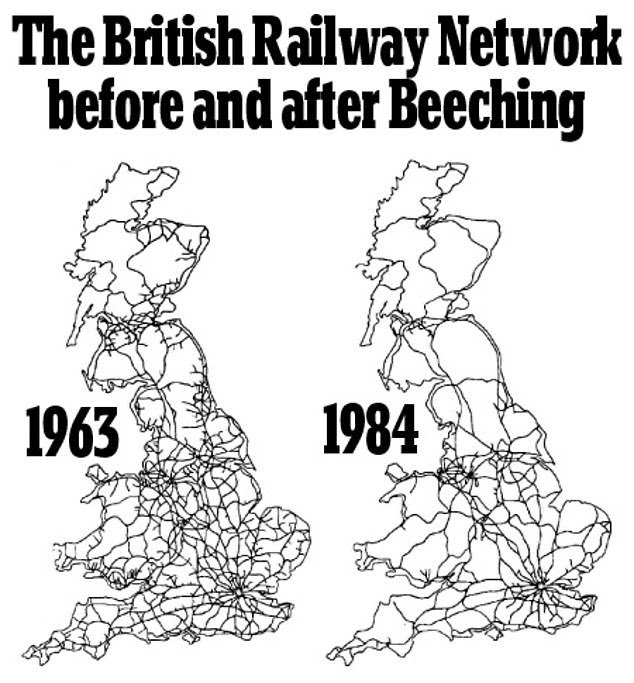
With the Beeching Cuts in the Sixties, railways and trains in rural areas suffer due to the shift of Parliament towards motorways and cars (source)
After the Second World War the British government decides to prioritise roads over railways, and following the German development of the Autobahn from the 30’s, in 1949 came the Special Roads Act, and the beginning of the motorways with the official opening of the M1 in 1959. Subsidising the roads under the relentless lobbying of the car industry, came at the expense of gutting the railway network of rural Britain alongside public transport, the last half century has witnessed the nationalising of motorways and dual carriageways and the opening up of Britain by car, undermining local economies and their independence, for the benefit of national dependence upon agricultural and industrial networks.
As the trend of tax losses hurts central planning and undemines Westminster Parliament and Cardiff Senedd spending in a decentralised future, it will also starve the ability of National Government to continue their spending on roads and motorways to rip up the countryside further, we are likely close to the peak of new road building, and the future will therefore be a matter of financing and maintaining the present highway and motoway network, either via tolls or Council taxes and decentralising the maintenanve of roads to local councils. The same will be true for the railways, and with the failure of central government it is possible to ressurect private and voluntary railways, as is already happening with old railways being rebuilt and reopened by volunteers and enthusiasts recently, following the cuts of Beeching. Decentralisation could also radically change Britain’s flying infrastructure, and the movement away from huge central airport hubs such as Manchester and London, toward a network infrastructure of smaller local airports, making domestic and international travel far more convenient for rural populations.
Agricultural Policy

There is nothing more essential to an independent future for any country, than the industry that produces our food (source)
A prosperous agricultural sector rests on two main pillars, outside of monetary policy as the foundation of the future, in energy policy and toll/tariff policy. As a National Government should at least consider subsidising cheap and reliable energy to increase productivity and domestic production, it can also be argued strongly for subsidising agriculture as a part of national security for feeding the Country. The disadvantages of direct subsidies is creating agricultural dependence on government and its paperwork industry, which also enables half witted politicians to force their destructive bureaucratic policies and insane climate regulations to centrally plan agriculture, determining what farmers can grow and not grow. Rather than direct subsidies, and for the benefit of agricultural independence from politicians and the state, indirect subsidies could include Energy Policy for producing cheap electricity and fuel to the Welsh agricultural sector increasing their competitiveness compared to other countries, and enriching farmers directly. A balance of trade would also have to be ran with the rest of the world’s agricultural sectors and reciprocative tariffs with external nations, rather than the chronic trade deficits the British Government runs today with Europe’s agricultural sector and some of the Commonwealth countries, allowing a flow of cheap foreign food from the Continent to undermine the food prices and values for British farmers.
More than anything, adopting a decentralised and deflationary currency like Bitcoin will increase the value of money and the savings of Welsh farmers, enabling reinvestment into farms and starve the debts of farms that today work for the bank and debt serfdom for life, and hostages to Bank of England interest rate policy driving poverty, depression and suicide among British farmers.
As we see with increasing agricultural protests exploding through Britain and the European Continent in the last year, Western authorities will learn the lesson of pissing off farmers. Farming independent of central government regulation is a cornerstone of Welsh Independence
Industrial Policy
As goes the agricultural sector, so goes the industrial sector. For Welsh industry to thrive, cheap energy is a critical foundation alongside a balance of trade and reciprocative tariffs to compete with foreign imports, and again a matter of National Security, for producing ores, metals, supply chains, and domestic machinery to avoid dependence. Central government failure will also lift many of the national regulatory and environmental restrictions, allowing the decentralisation and localising of Welsh industry, promoting diversity and competition, creating local and self sustaining employment.
Language Policy
Language policy flows downstream from all the policies discussed above, for keeping Welsh speakers in their communities and environment, rather than being sucked away towards Britain’s cities and the English language. We have already discussed how monetary policy and the Cantillon Effect of the Pound attracts Welsh speakers towards London’s printing press, the present educational system that empties rural Wales of its best and brightest towards the education system and public sector employment of the Union, our catastrophic energy policy hollowing out small and local industries and employment in Welsh agriculture, and the housing affordability crisis where the old outcompete the young and send them away from home. All the policies of the Welsh Government to promote Welsh in schools and within the public sector, are not going to correct the trend of the dying of the Welsh language in its West Wales hearlands and on the ground, and the language will continue to die as long as this present system survives.
The only strategy therefore for keeping the Welsh language alive in the heartlands and a ressurection in non-Welsh speaking areas, is in isolating ourselves from Britain and develop an inward independent country with its own culture and language. In a decentralised future where Bitcoin replaces the Pound as our financial and accounting foundation, deflation will consume inflation and the taxes and regulations of Westminster and Cardiff, destroy the education matrix that sucks young people towards universities and the cities, and collapse house prices making them affordable for the young and indigenous to remain at home, raising the families and Welsh speakers of the future.
Conclusion
The purpose of this essay is to share ideas and stimulate thought, based on the past, present and future of Wales. The study of Welsh history was essential to understand where we have come from, and the most important events that have influenced our past. The study of the present is essential for today, to the crossroad we have reached and what realistic choices we have in the years to follow, as historical continental trends move away from established old orders, to new orders slowly establishing. The study of the future is theoretical, describing what is possible and probable as the new order establishes and expands.
We are in an extremely interesting and exciting period in Welsh history, and the world more generally. After five centuries of monetary and political centralisation since our unfortunate Protestant Reformation following the invention of the paper printing press, it could be argued centralisation peaked either following the Second World War or at the end of the Seventies, but the Nineties and privatisation of the internet was the beginning of the multi-decade decentralisation trend, starting with communication. In the last three decades we have moved into a digital life, for better and worse, collapsing the cost of communication to nearly free, and a radically altered relationship with our political elites, now realising the reactionary forces of the internet against their dreams of centralising and controlling the future and further destruction of the nation.
Following the disruption of communication and education, the next digital frontier of disruption was trade and the slow but steady move toward e-commerce, that has certainly disrupted traditional high street shopping and also dragged the banks and tax authorities into the new digital world. It is safe to disclose that our political elites and banking system are now as addicted as the general population and the private sector to a digital future, as we see today with the manic censorship of the old order fearing losing their monopoly over their subjects. The biggest remaining monopoly, and the last to be disrupted that will turn the whole world upside down, is the monopoly of national currencies over trade and the debasement of commerce through inflation and taxation.
The final frontier for the internet in decentralising the world to its utmost, is monetary competition by competitors of the internet age, culminating in the invention of a decentralised accounting system, digital and native to the internet, solving the Byzantine General’s Problem that was the fatal weakness of the old digital age, requiring centralised custody and enslaving to one point of failure. Since Satoshi’s solving of the problem, all of a sudden a decentralised system is not only possible, but a reality that will continue to consume and swallow the centralised systems we have spent the last centuries imprisoned within, since 2009 Bitcoin has grown to international scale serving tens of millions of people all over the world, and future adoption to hundreds of millions, before billions of users.
As we approach Bitcoin’s sixteenth birthday, we are entering the age when Bitcoin moves from the private sector to the public sector, forcing Countries to adopt Bitcoin as capital/collateral and store of value in National Treasuries and mining bitcoin with nationalised electricity, that will explode national competition for securing the welfare of their domestic populations, with the movement towards legalising and exempting Bitcoin from taxes. With Bitcoin’s decentralising forces operating on a national level, will accelerate and cushion the process of decapitating International Monetary Unions, and an all important foundation for the explosion in small and newly independent nations of the Twenty First Century, including Wales. As a part of Welsh Independence, Bitcoin will also destroy the taxation and fiscal spending of the Cardiff Senedd, weakening the control and socialist claw of Welsh Labour over Wales that has defined the last century of our Nation, liberating us for a future of local, self sufficient flourishing.
The next decades promises amazing changes for us all!

Bitcoin donations gratefully accepted:
bc1q49a3y9anq3a2pjqvq3gm8wj8aqqld3pnva9phwna2ftdar73mf3qak275j

Gadael sylw
Ysgrifennwch sylw…

 Welsh Money Blog